
When control rows shift between one component card and the next, the misalignment can speak louder than the feature description. This Forge review started with the shared row layout for doors, Jetty and Braces. Art direction continued beyond appearance into what actually happens after a click.
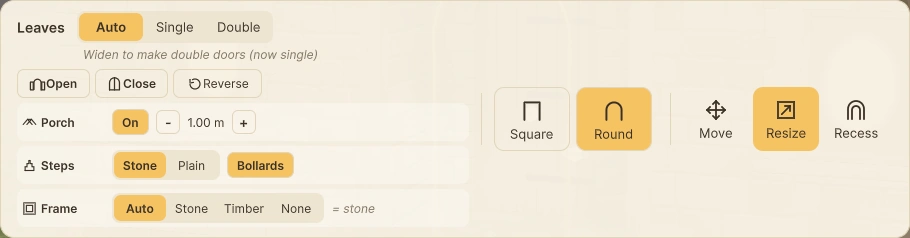
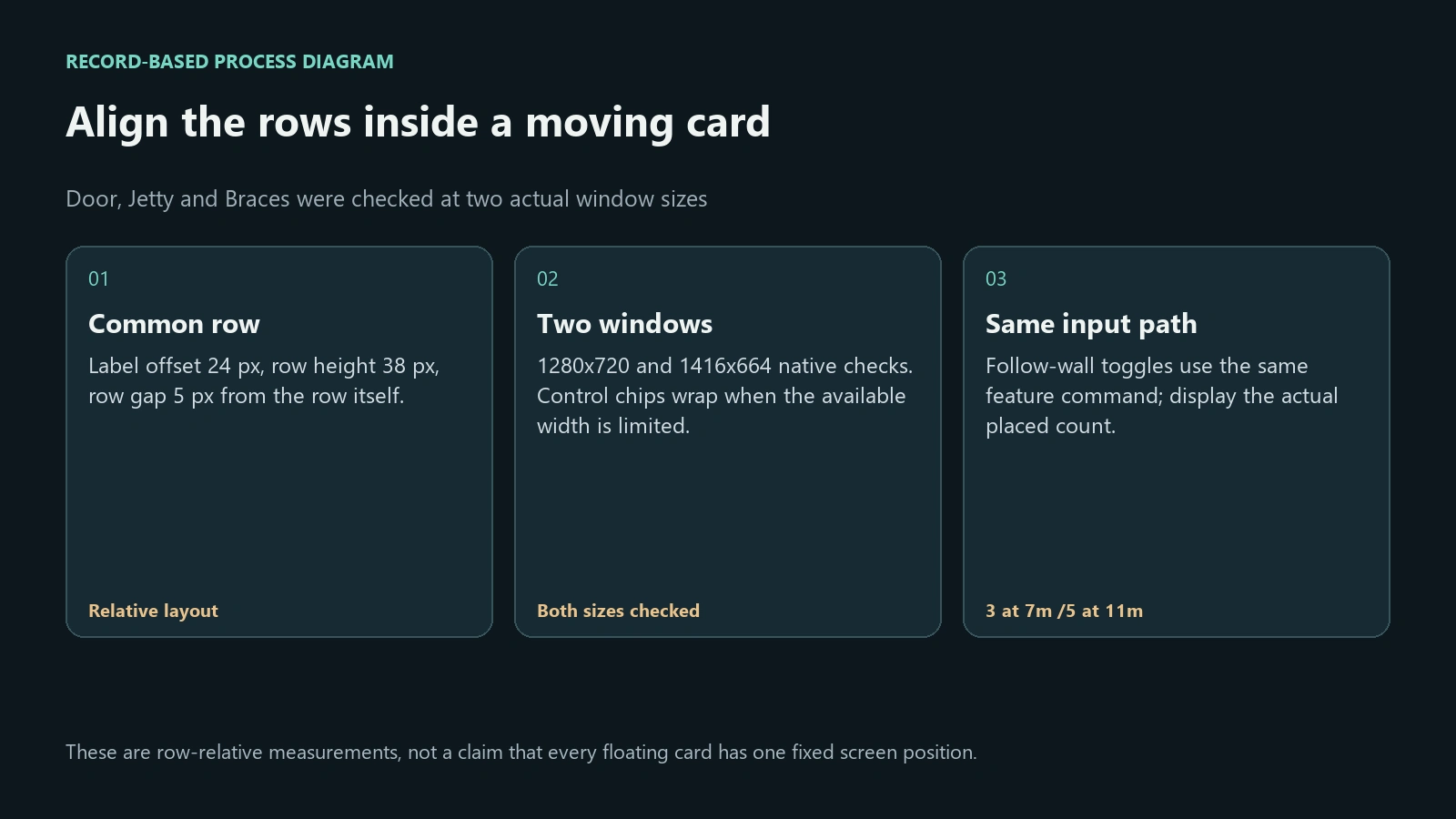
Door and window cards now use the same row structure, checked at two window sizes. Label offset, row height and spacing were compared relative to the card itself. That does not mean every floating card has one fixed position on the screen. Number chips wrap when space is limited. Follow-wall controls also show the count actually placed, rather than only the requested number.
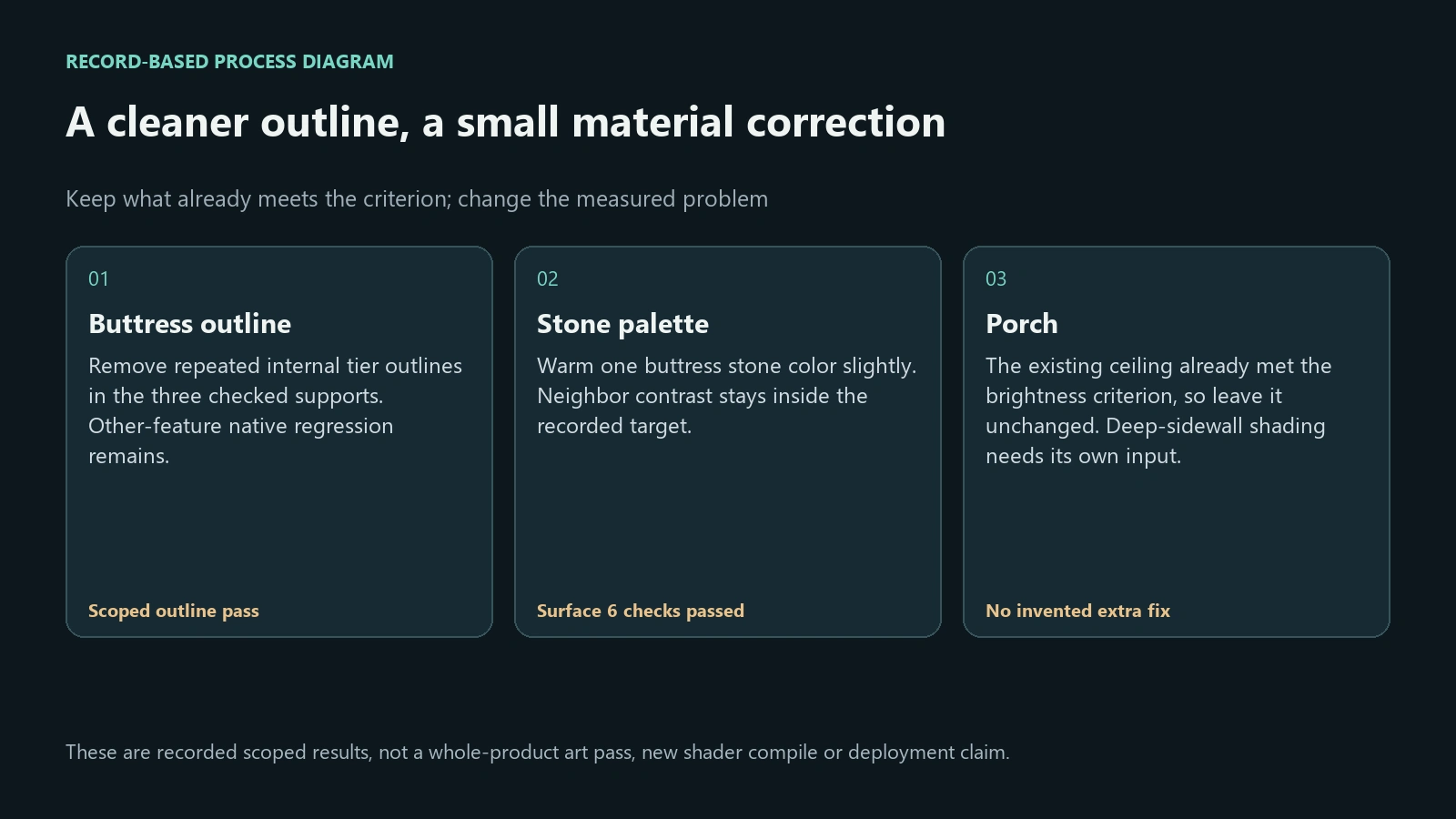
Buttress selection outlines were cleaned up too. In the three checked supports, repeated tier boxes gave way to readable outer bands. Other features have not received the same fresh native comparison. One stone palette color was warmed and brightened slightly. The porch ceiling already met its brightness criterion and was left unchanged; a dedicated deep-sidewall shading input remains a separate need.
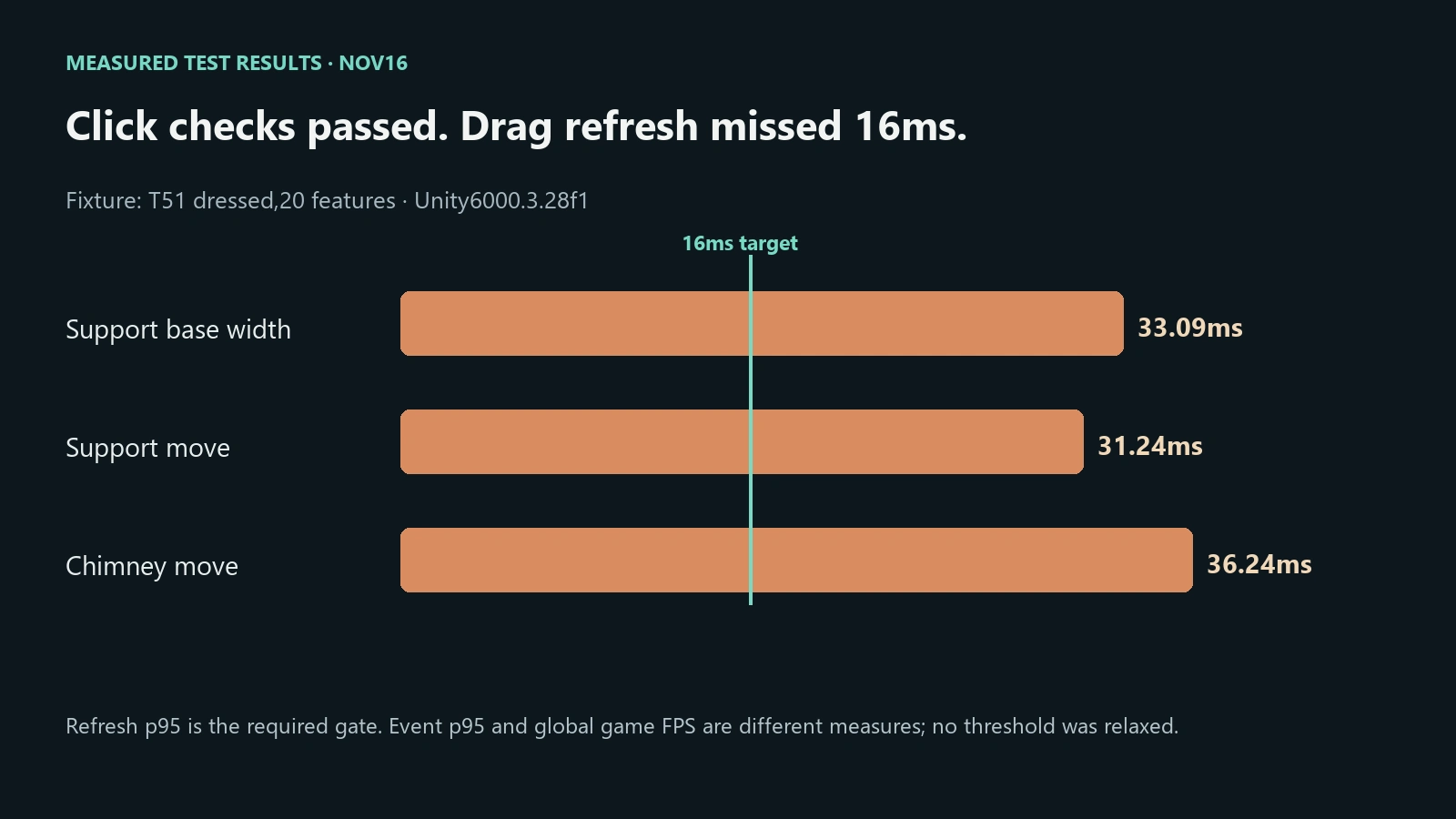
Dragging received a different verdict. The required check used a 16 ms limit for refresh p95, a measure of the slower part of the recorded updates. Support width, support movement and chimney movement returned about 33.09,31.24 and 36.24 ms. Neither separate event timing nor global game FPS was used to reinterpret the result as a pass. Cleaner controls and faster response are different rows on the sheet.
There were 34 actual click checks. Each checked one recorded operation, a changed document and restoration of the previous document state with one Undo. Those checks passed, and the tested saved document files stayed unchanged. The six Surface checks passed too. The failed required drag target still keeps the overall result on hold. A red box does not lose its vote because it is surrounded by green ones.
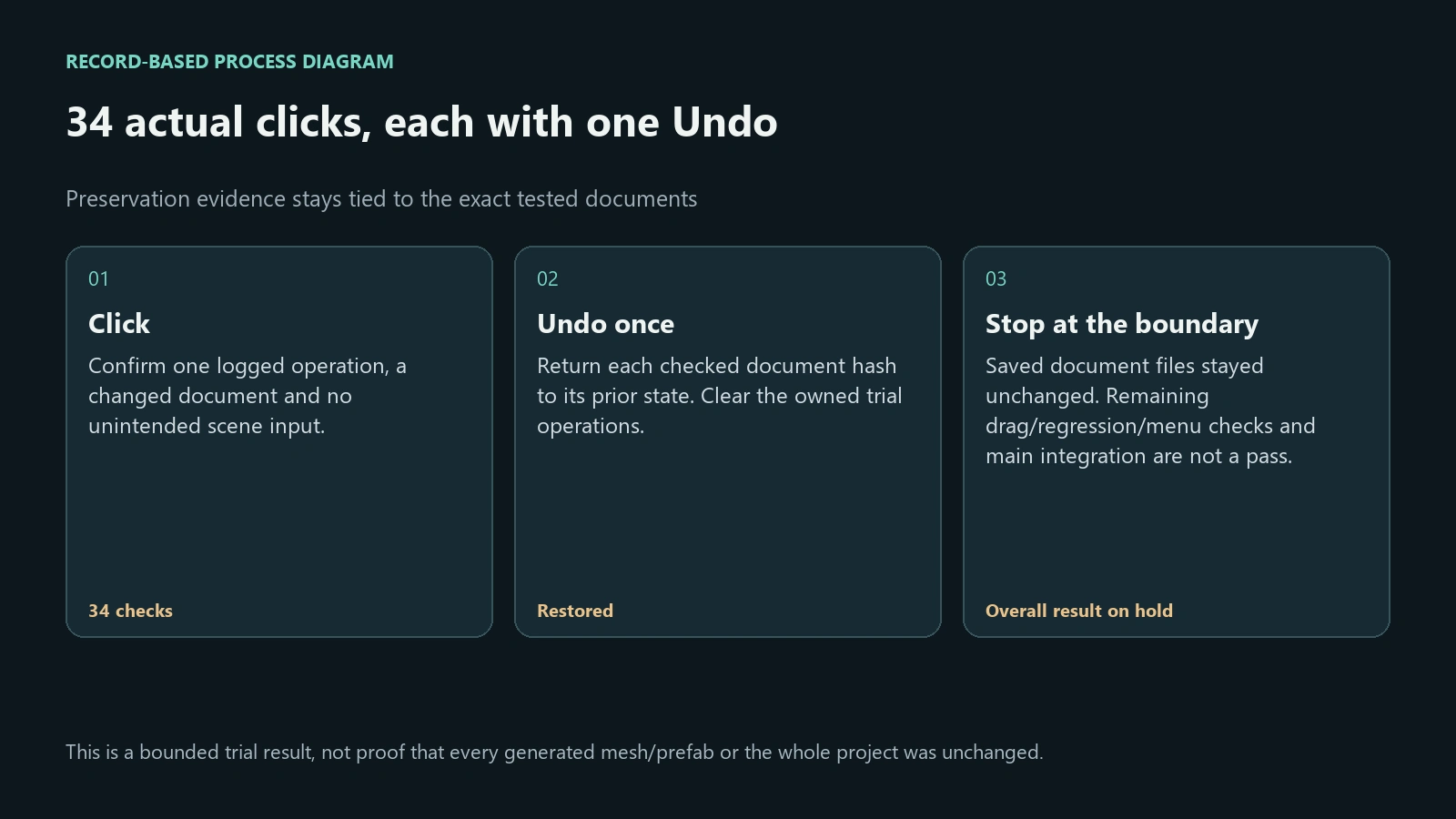
Existing menu-policy errors and other-feature outline comparisons remain recorded. This report establishes the scoped trial and corrections, not main integration or product deployment. Trial-state cleanup was recorded at handoff. The useful result is a document that shows both the improved controls and the part still responding too slowly.