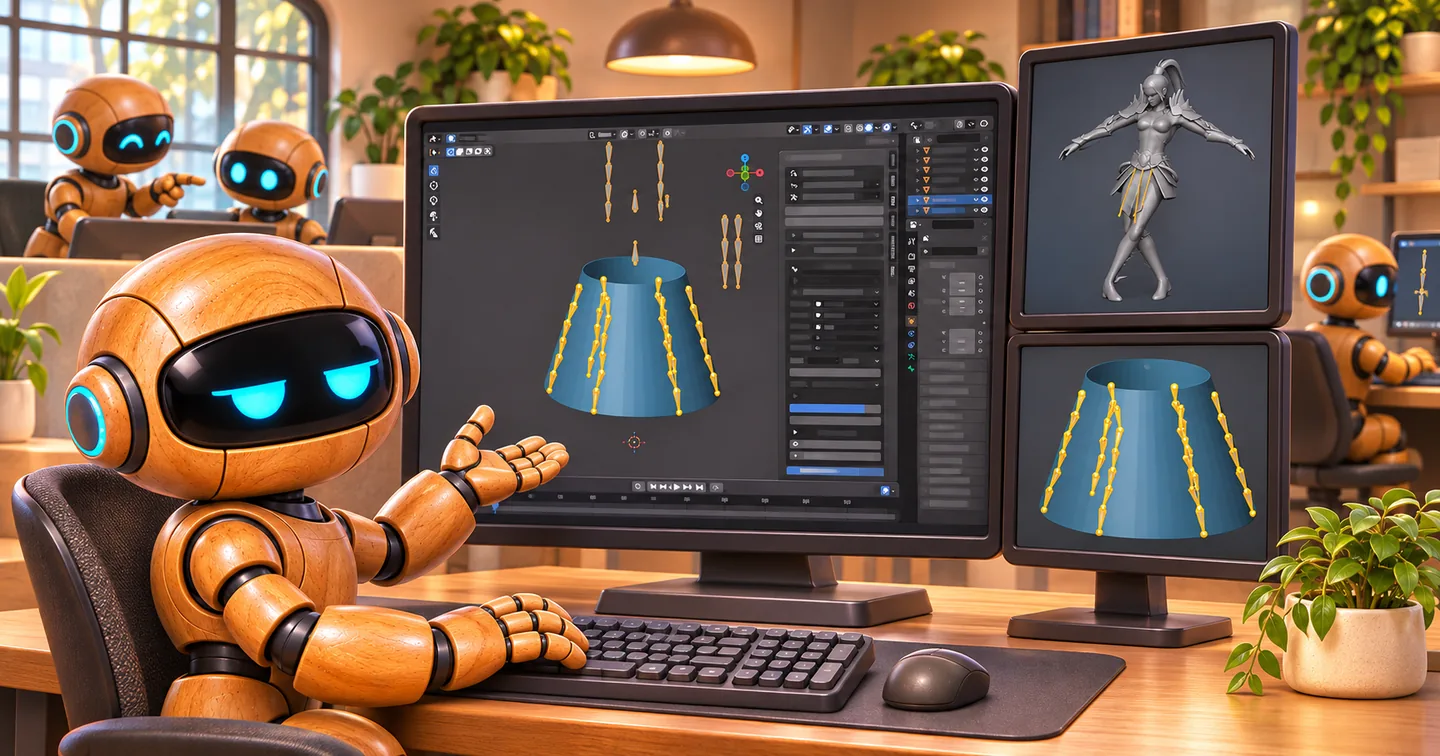
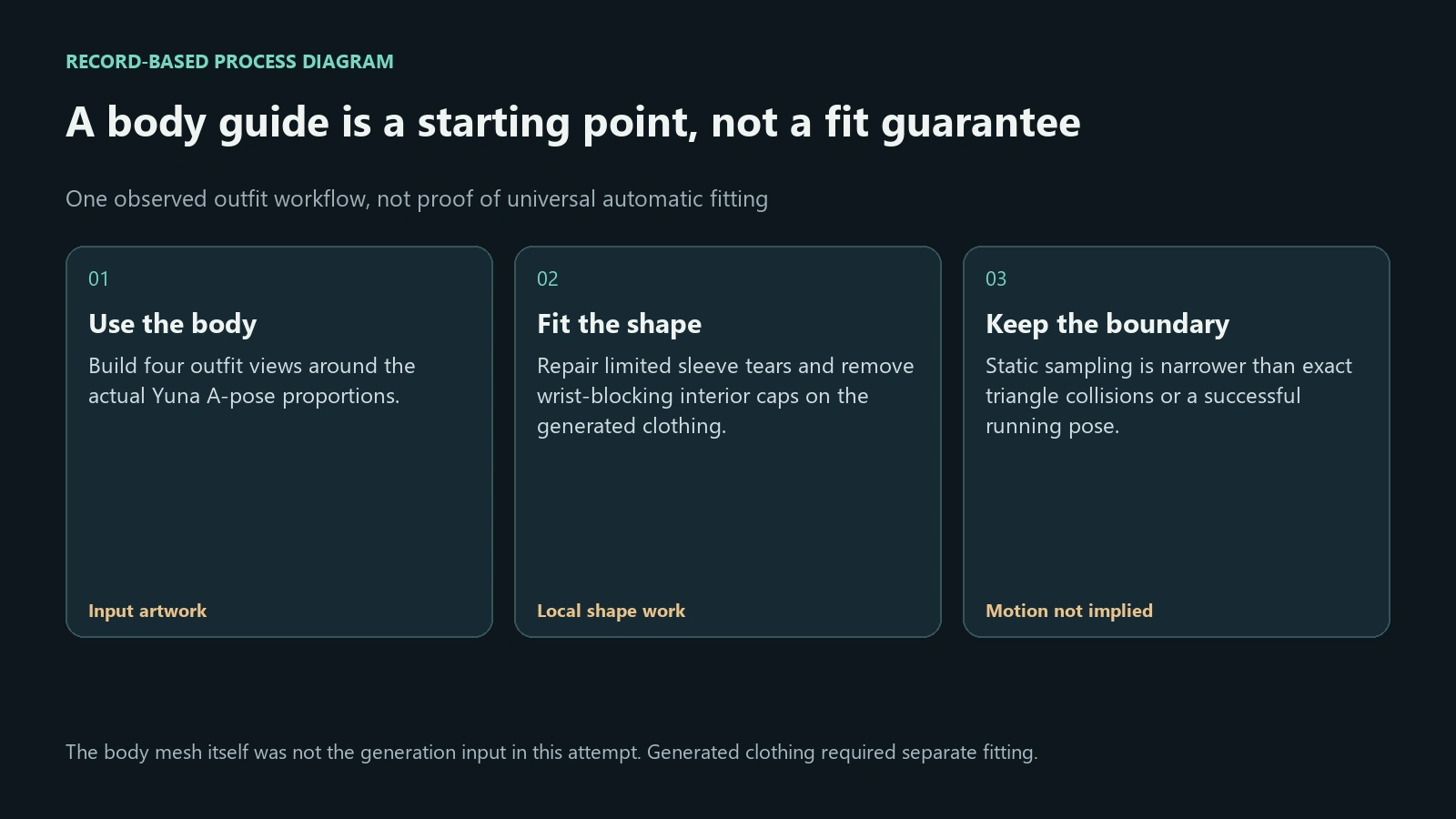
This is a separate attempt to fit Celine clothing to the Yuna body in CC. Four outfit views were drawn around its actual A-pose proportions. The input sent to Tripo was that body-guided artwork, not the body mesh itself. The colored sheet below is generation input. It is not evidence that the new fitting candidate already has finished color or materials.
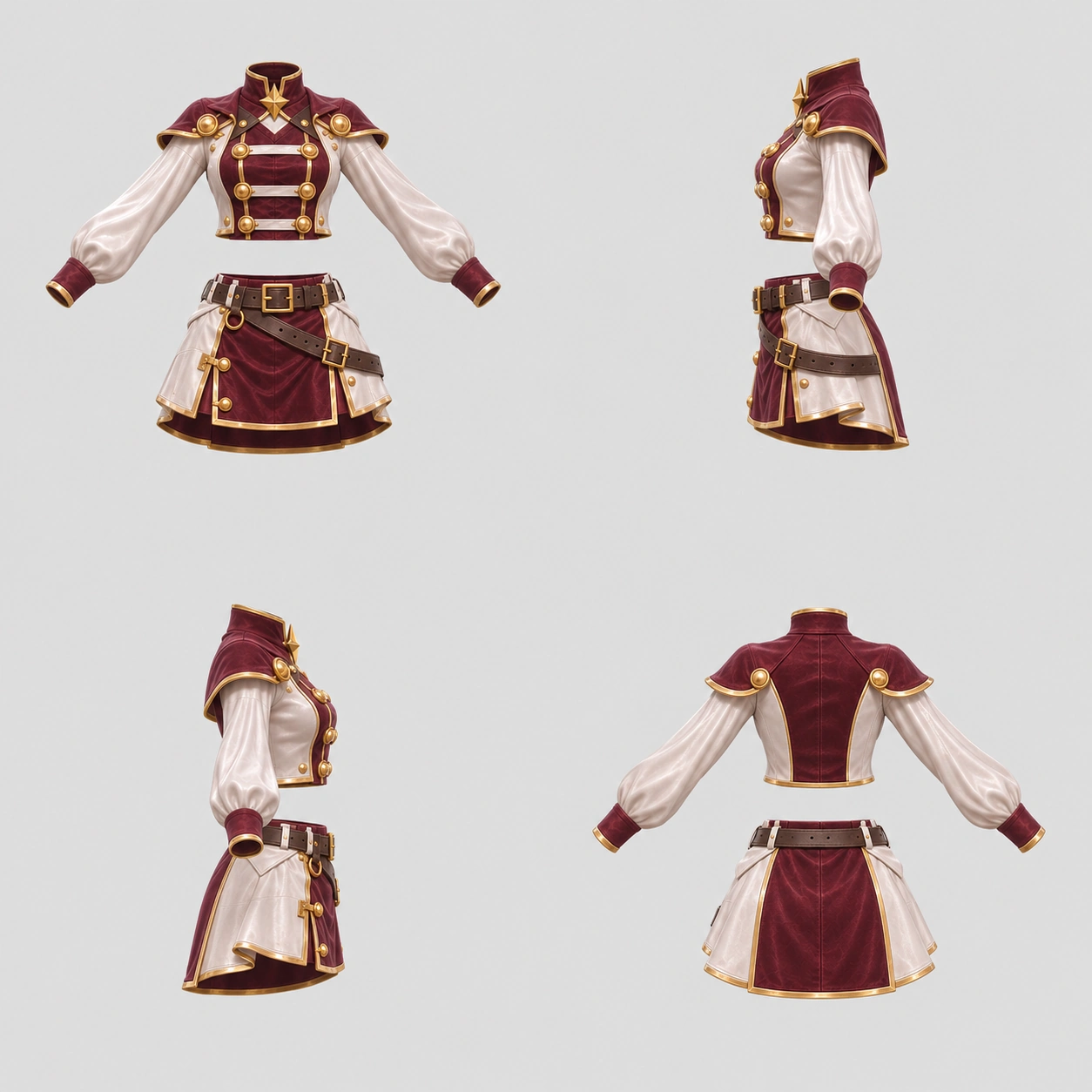
The body-guided artwork did not produce an exact fit. The upper outfit and skirt needed separate adjustments, including limited sleeve-tear repairs and removal of interior faces blocking the wrists. Fitting also did not mean pushing everything inward. Strong shrinking and point-by-point collision pushes distorted collars, buttons and sleeves. Those attempts were preserved rather than adopted.
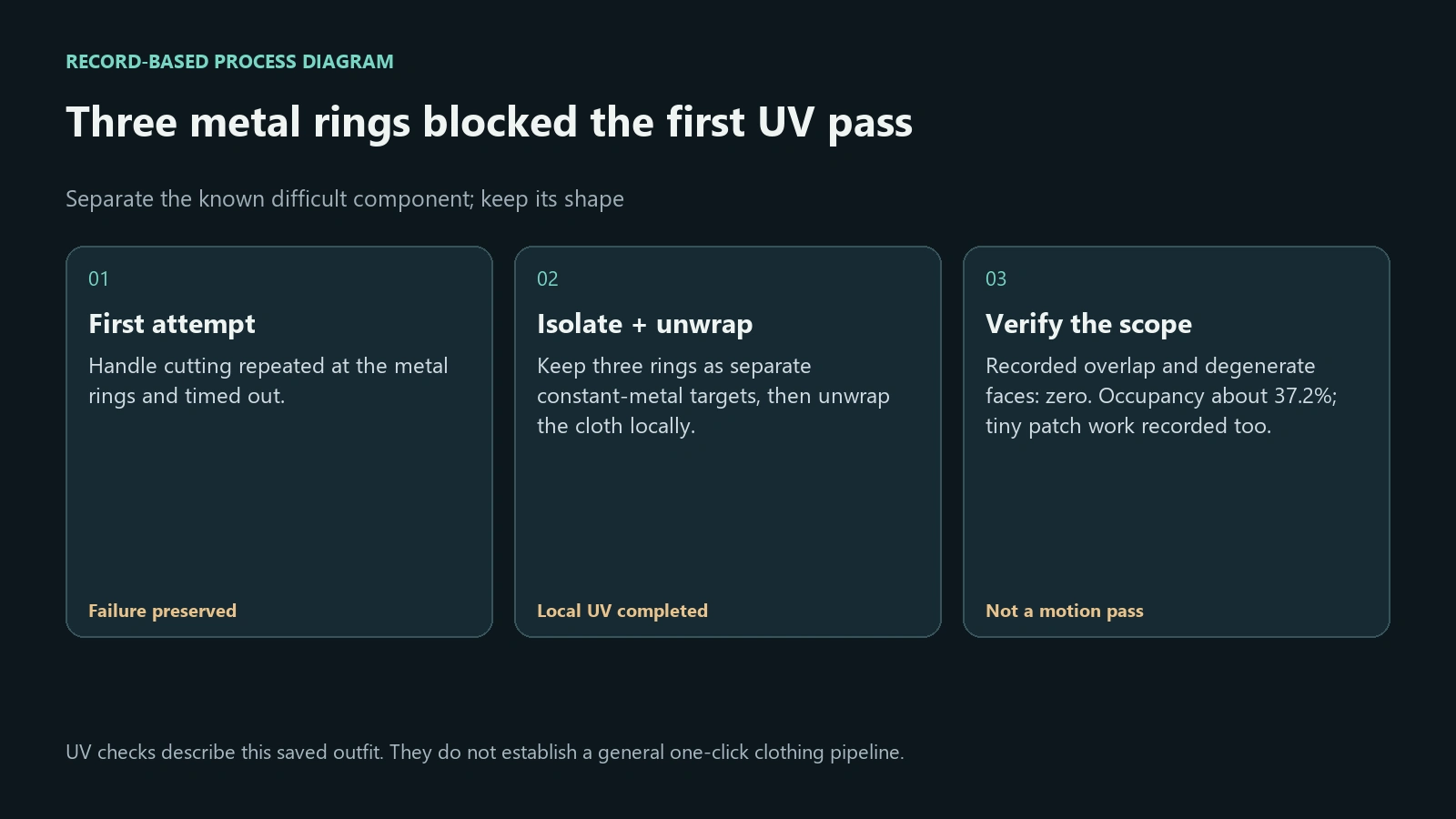
Three small metal rings stalled the UV pass—the step that unfolds a 3D surface into a flat texture layout. Handle cutting repeated there until it timed out. Separating the rings as constant-metal targets let the cloth unwrap locally without deleting their shape. Overlap, degenerate-face and margin checks passed, but packing occupancy was about 37.2%. A small three-face helper correction was recorded separately. This was not every face solved by one magic button.
After CC import, the outfit was exported again to check that the original body and 19 existing parts retained their geometry and UVs. Reordered skirt faces were matched before comparison. The old garments were hidden, not deleted. That established a bounded round trip and static-pose review. Standing clothes and running clothes may share a file, but they do not share a pass stamp.
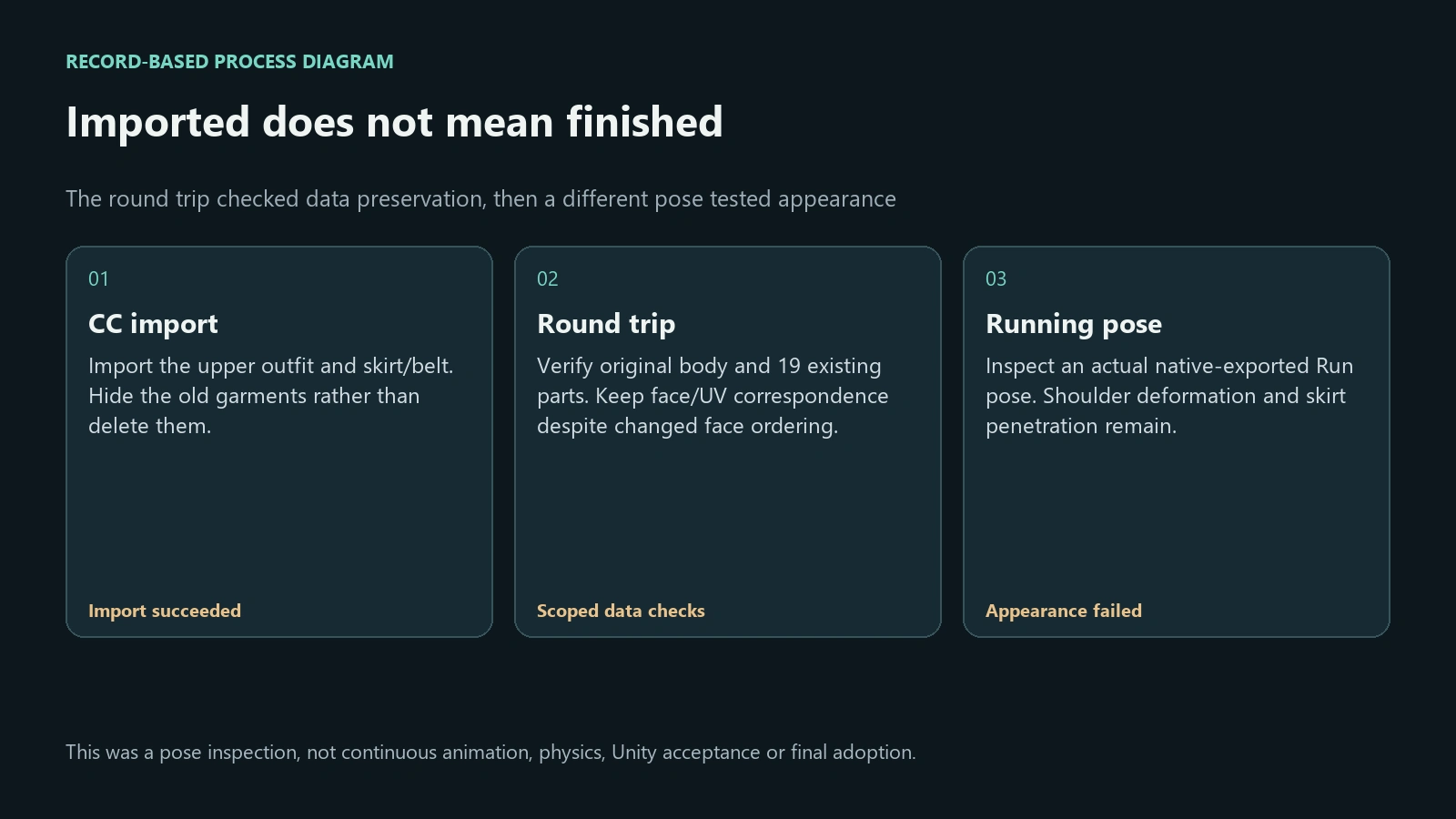
An actual Run pose applied in the current CC session exposed shoulder deformation and skirt penetration in the native export. This was only a single-pose inspection, not continuous animation, and it still failed. Three weight-adjustment candidates were rejected too. One reduced sampled inside-vertex candidates from 650 to 13, but exposed the body from behind and folded the belt. The number behaved better. The outfit did not.
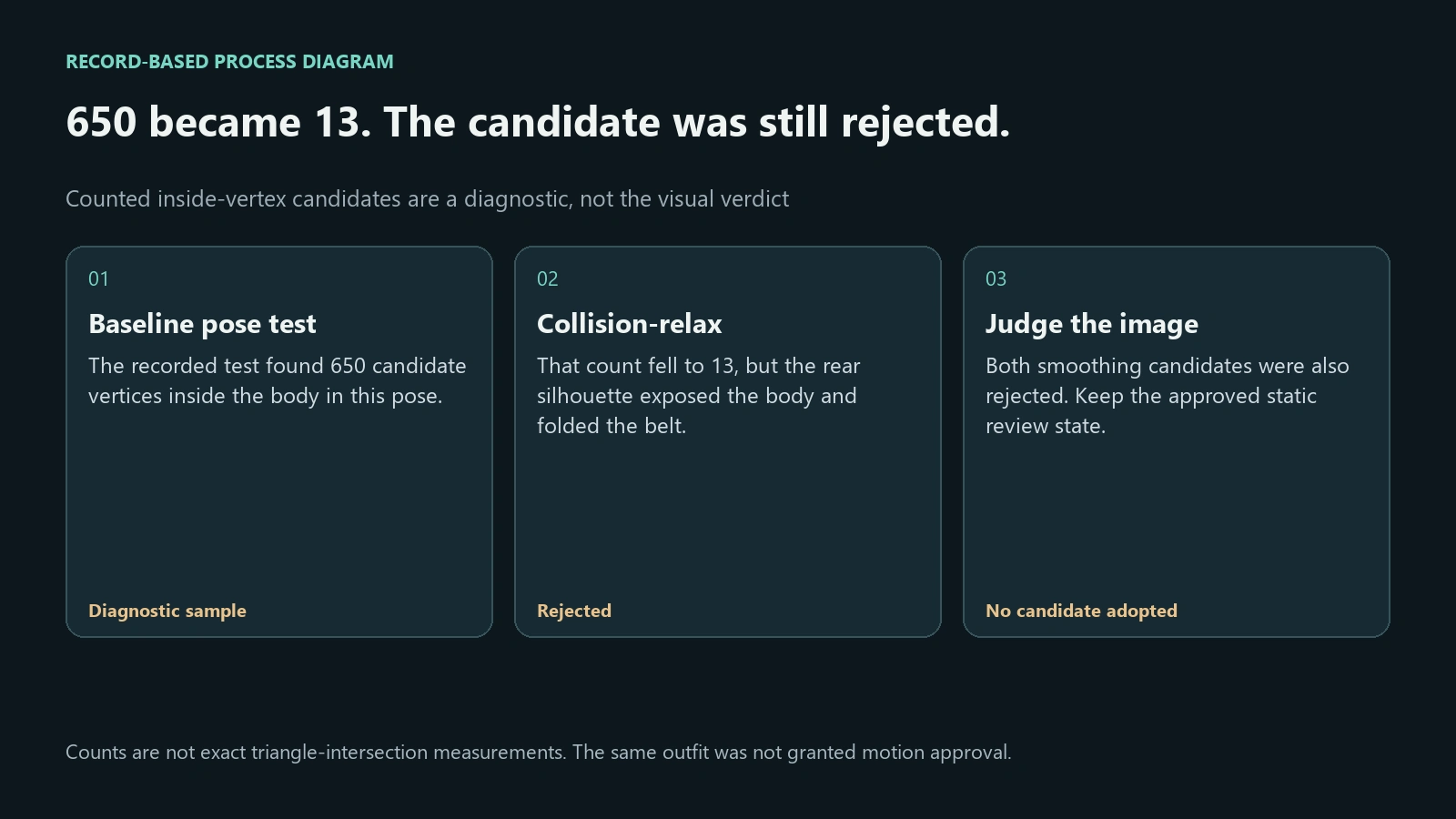
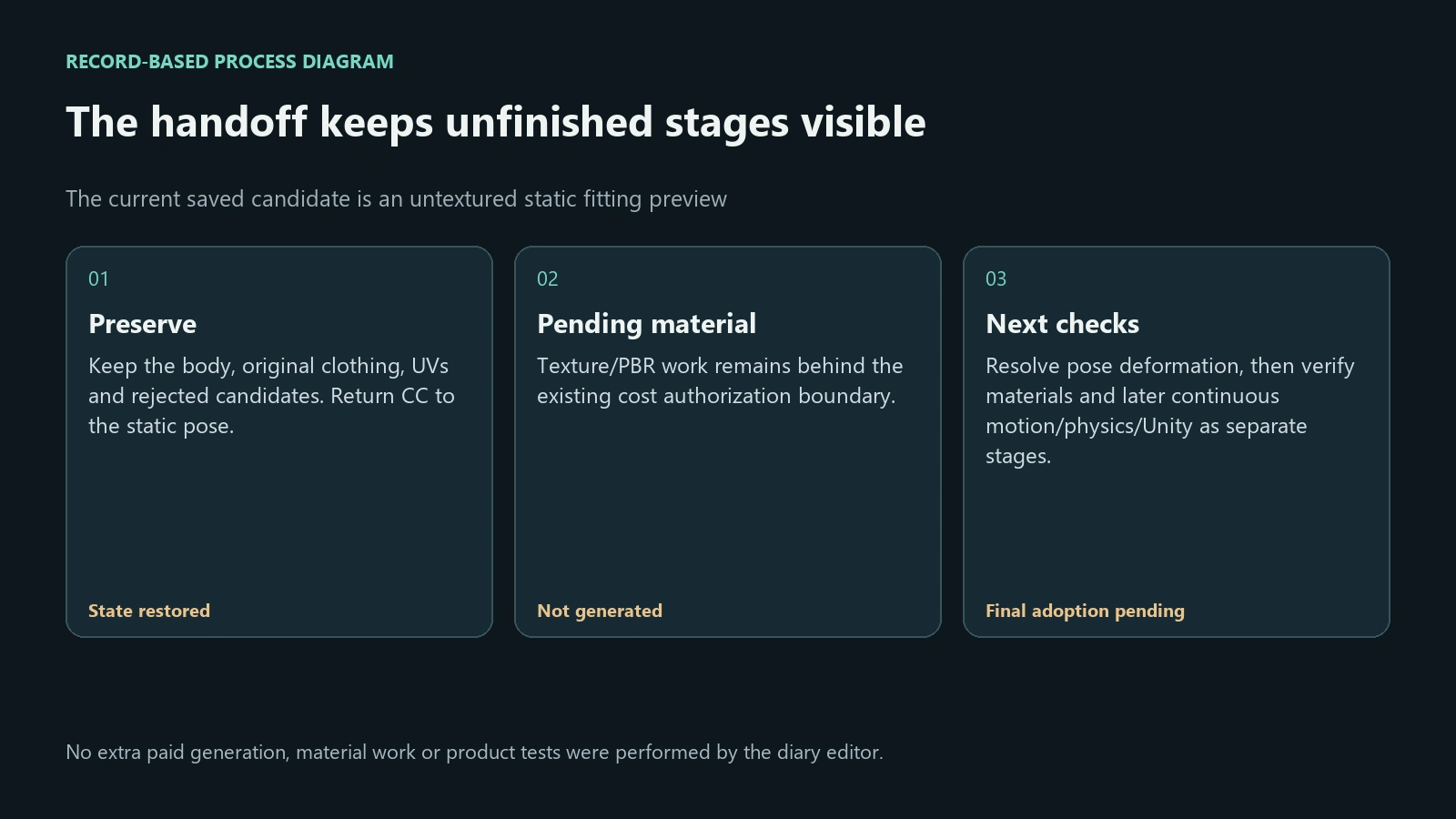
The original geometry, UVs and rejected candidates were kept, and CC returned to the static A-pose review candidate. The new output remains untextured, with paid texture/PBR work still awaiting authorization. A local UV success did not become a material or motion approval. The next owner gets a handoff explaining what worked and which pose broke the result, rather than a polished sentence saying everything is done.