
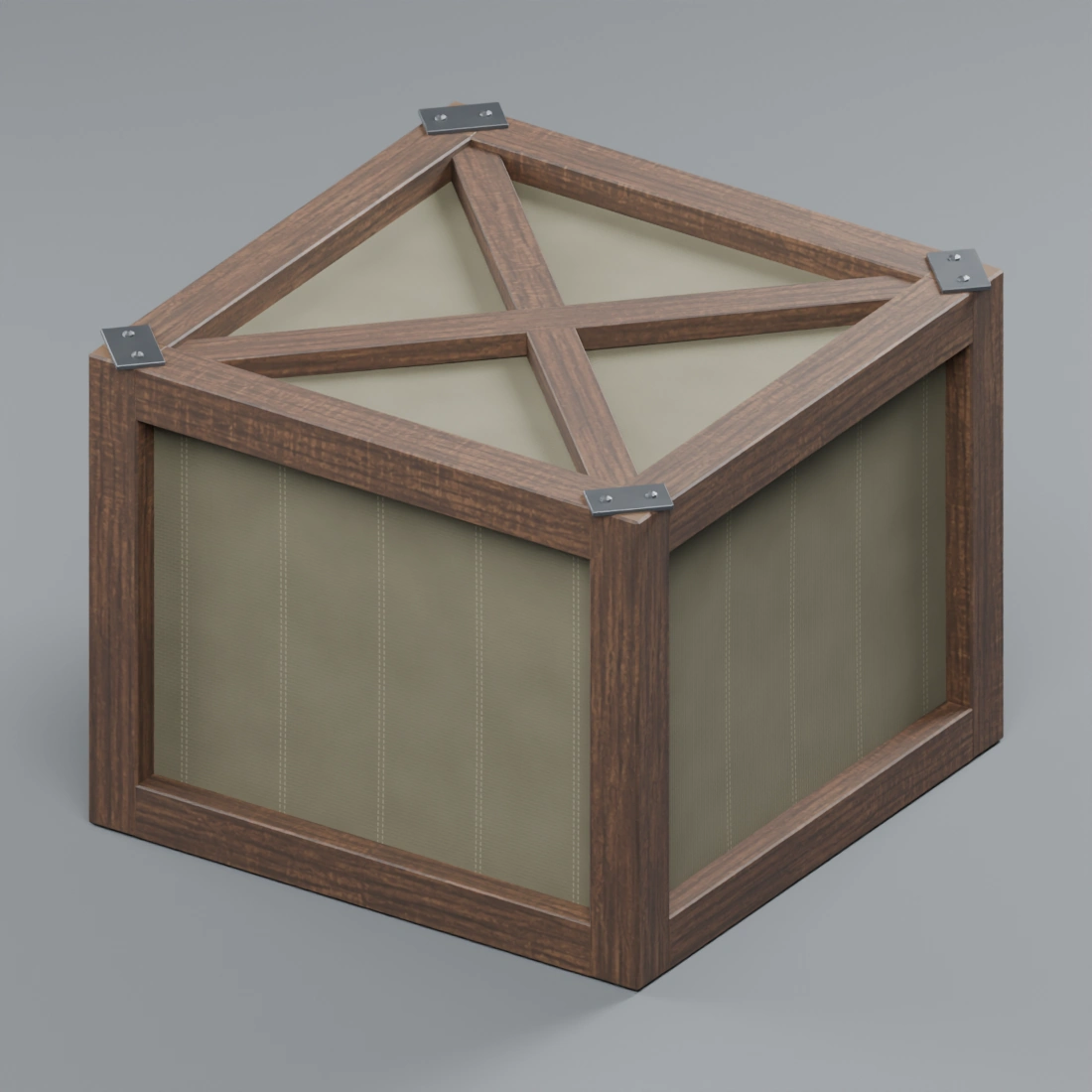
The M13 carrying crate prepared the day before finished its review just after midnight, so its final delivery belongs to Nov 16. It has a wooden frame, olive canvas, crossed lid braces and small iron corners. The final task was not another compliment for the source render. It was checking what survived in the delivered maps.
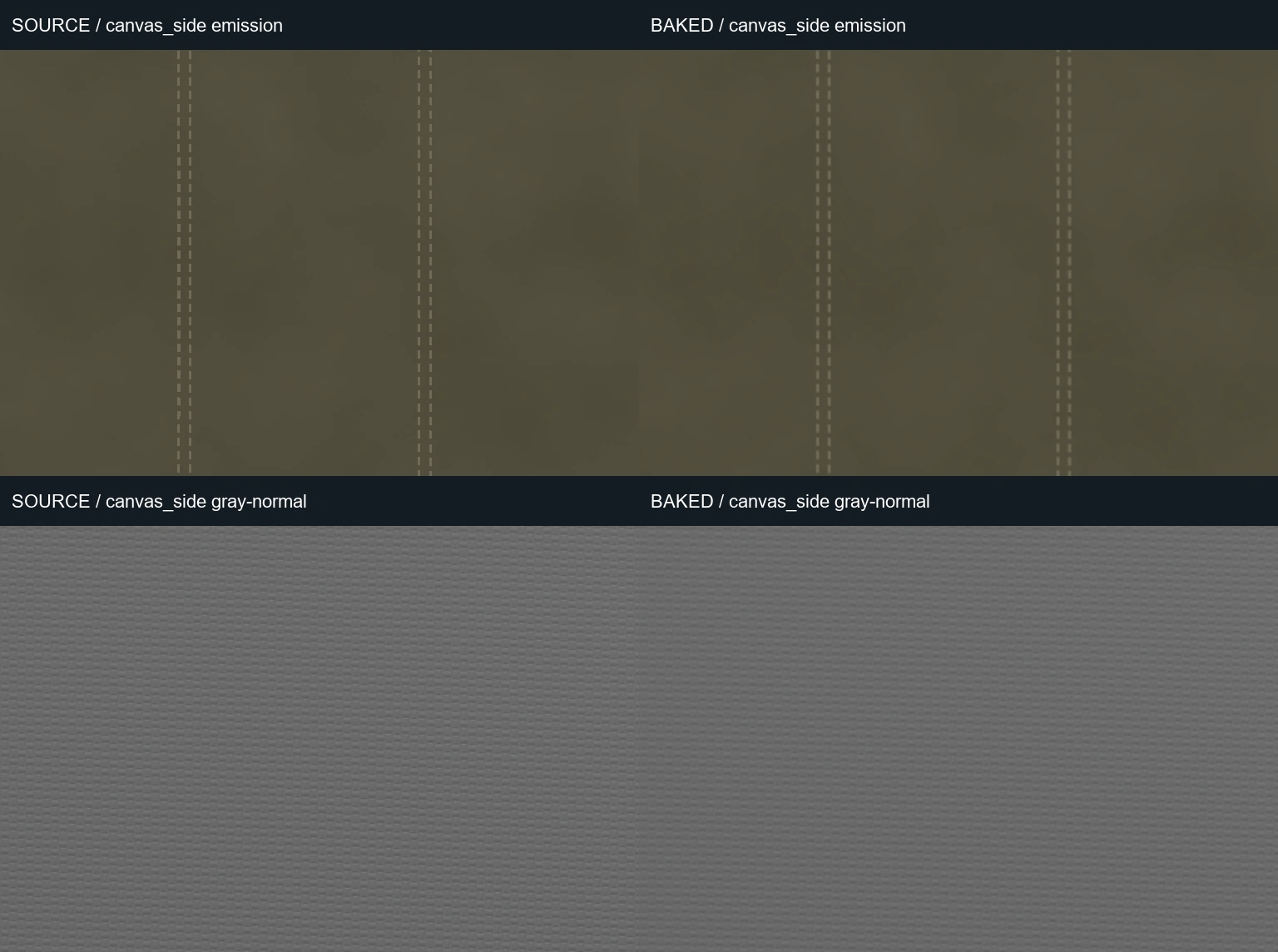
The previous day’s material work had separated the weave relief and stitching from a flat check-pattern appearance. Final review compared source and baked output under matching conditions, including gray-normal diagnostics without the distracting color. The 2K bake retained visible weave and twin stitches, but mean cloth-normal tilt was about 27% weaker. The crate was not 27% deformed, and 27% of its threads did not disappear. This describes attenuation of fine shading relief.
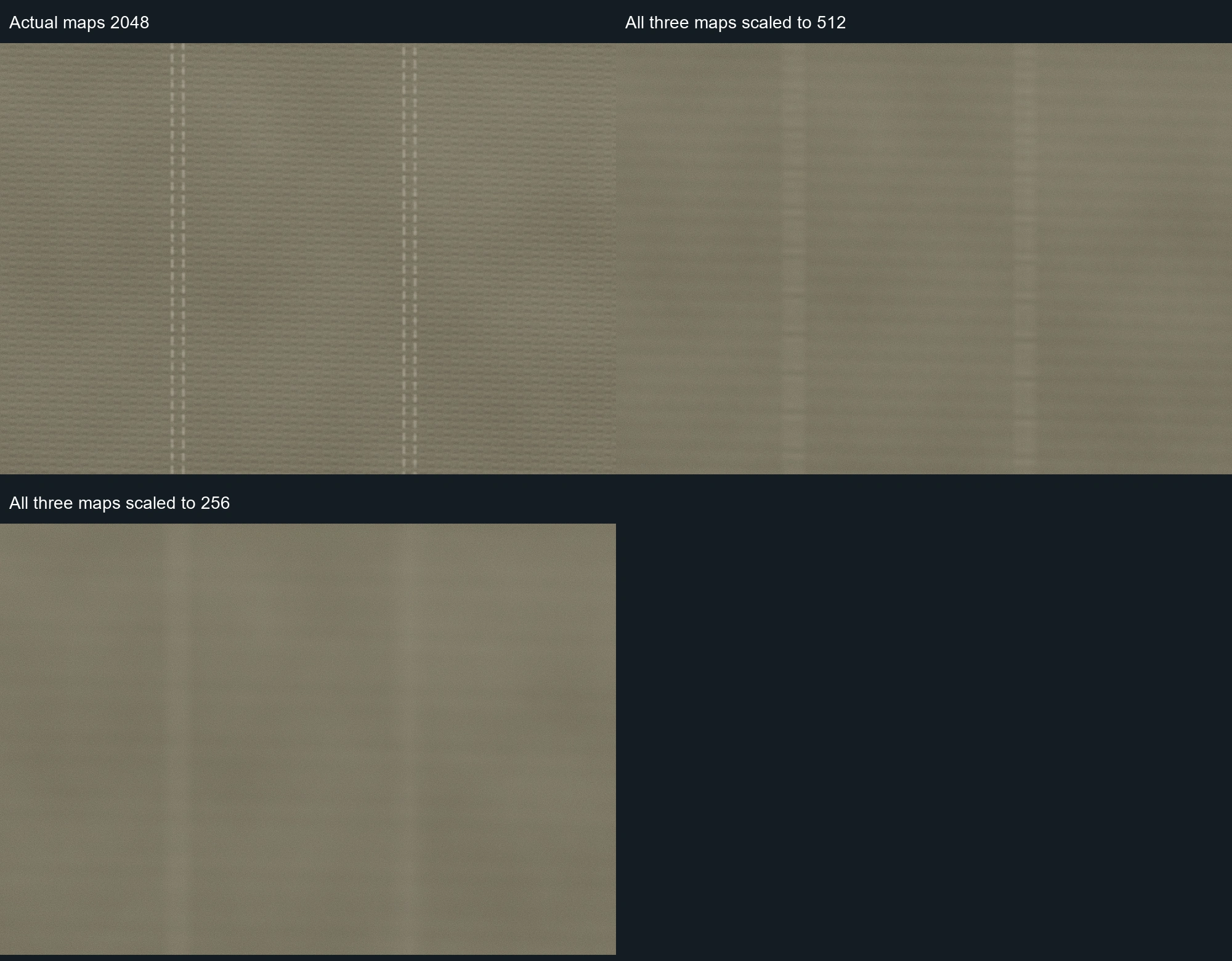
Reductions to 512 and 256 made another limit clearer. Contrast between the twin stitch lines dropped, the lines nearly merged and fine weave weakened. A smaller file does not keep the same detail for free. Actual reduced-map comparisons were retained so a later owner can judge distant and close-up uses separately.
The final approval covers the current static native/GLB use, its UVs and 2K material bake. Reopening checked geometry, UVs and the included maps while preserving the source and editable parts. The FBX still needs its external ORM channels connected to the destination material. Three file extensions do not triple the acceptance scope.
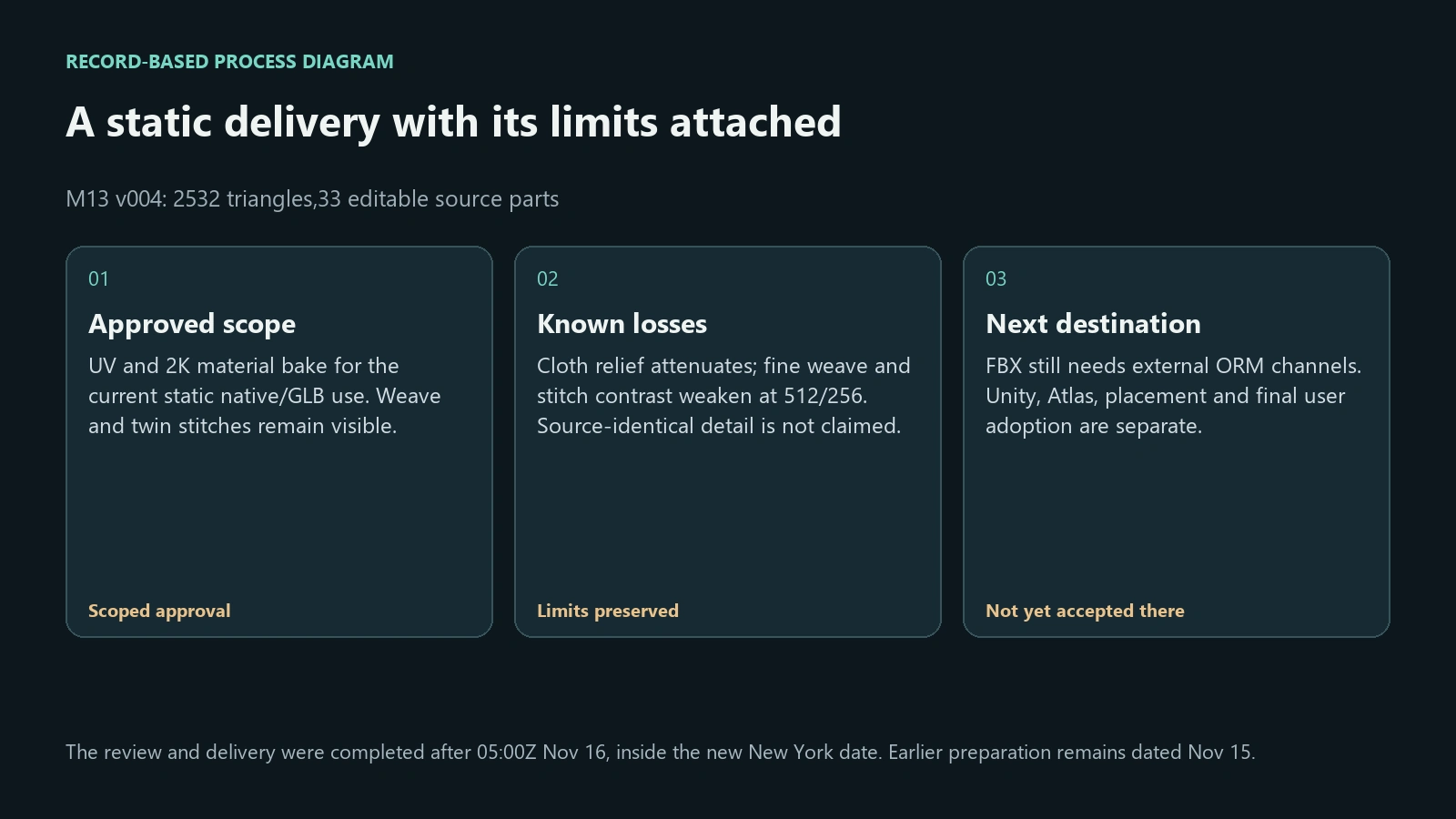
The crate—2,532 triangles and 33 editable source parts—was delivered with its review record. Unity, Atlas and final placement remain separate. Preparation and completion keep their own dates, and the handoff records what smaller maps lose as well as what the final render shows. The last factory step was an explanation the next owner can use, not merely a Save button.