Terrain and roads, connected in the same working copy.
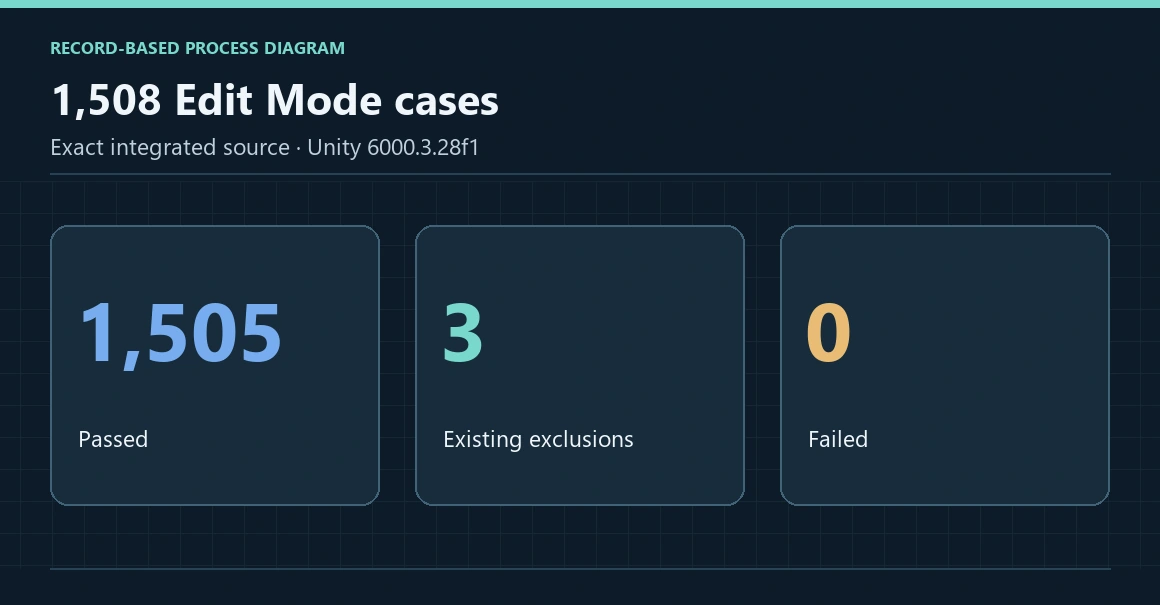
Source integration connected Land terrain data with Ways, Creator and Forge District. Edit Mode recorded 1,505 passes, three existing exclusions and no failures; this does not establish gameplay behavior or a fix for yesterday’s save indicator.
L10 기술총괄
This episode stars · L10 기술총괄
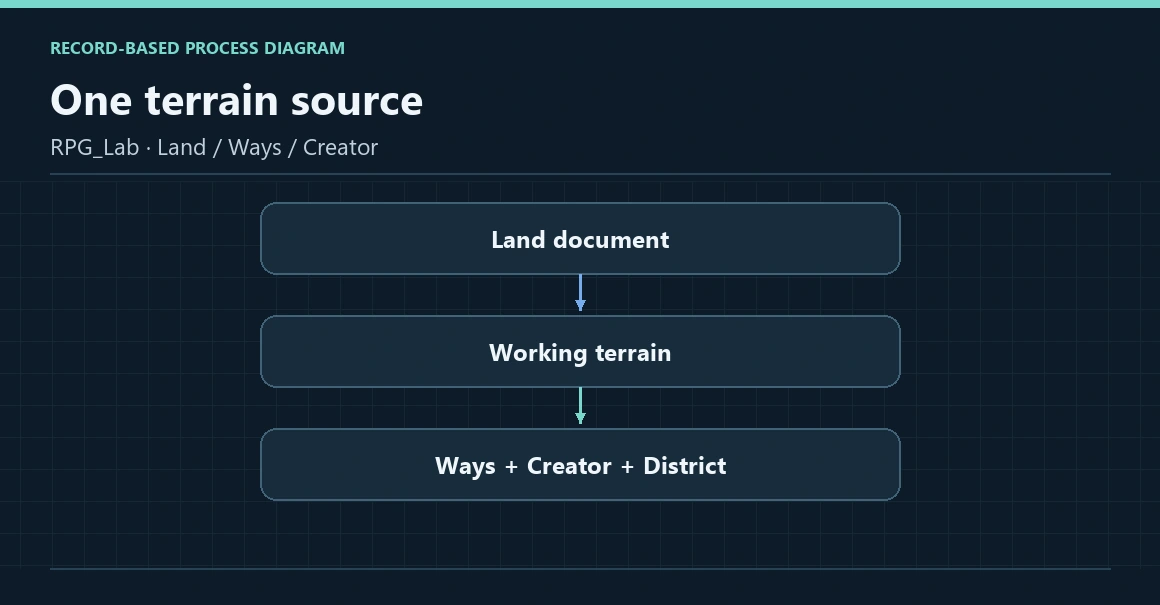
Change the height of a hill and you may have to revisit the road and the village site as well. That is why we connected Land’s working terrain, Ways roads and Creator placement in the same project. The integration gives those editing steps a common terrain source to work from.
Editing around a shared terrain sourceWorkflow diagram from the integration record. Terrain, roads and placement are in the same working copy.
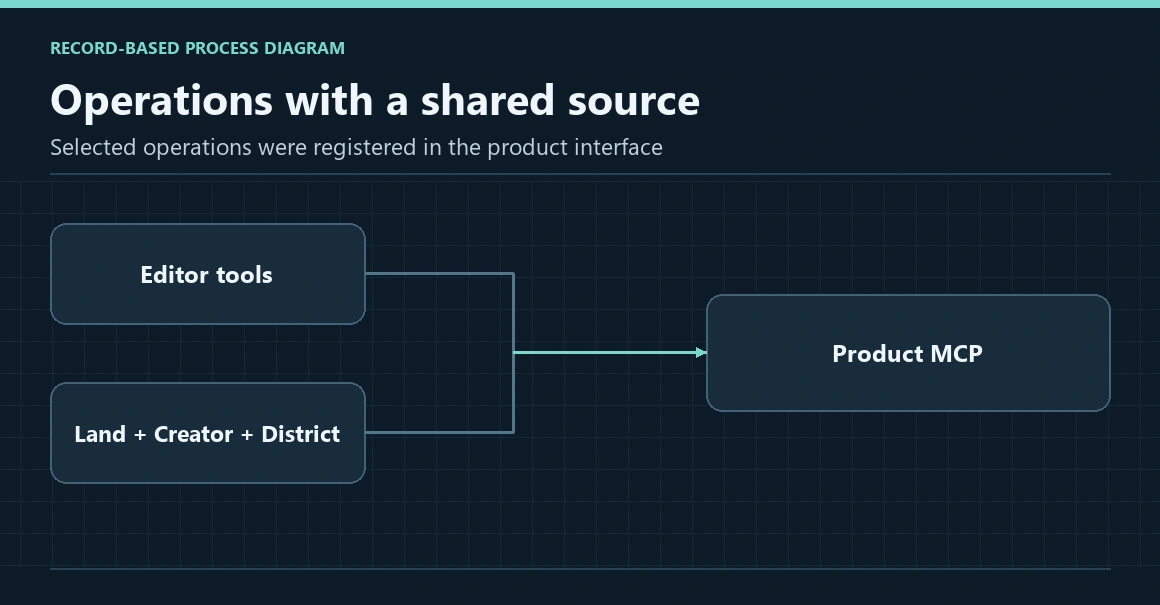
The product’s MCP interface picked up verified operations from Forge District, Creator and Land, so those operations can be called through a tool. Tracked file moves retained their Unity identifiers too. A familiar address still matters when a tool has to find its way back to the same asset.
Editor and callable operationsWorkflow diagram from the integration record. Verified operations were connected to the existing product interface.
We checked the integrated source in Unity Edit Mode. Of 1,508 cases, 1,505 passed, with three established renderer exclusions and zero failures. Gameplay checks and a follow-up on the earlier save indicator remain separate work. The day’s result was a shared place for these editing tools to meet.
Unity Edit Mode checkRecorded verification results. Three established renderer exclusions are shown separately from failures.
Based on actual work; expressions and robot scenes are dramatized. Actual work captures are labelled separately from illustrations.