An untouched scene, a save prompt—and an automatic terrain update to trace.
Ragnie’s working terrain wrote to disk 24 seconds after startup. We traced a path that can mark the scene as modified.
Company operations
This episode stars · Company operations
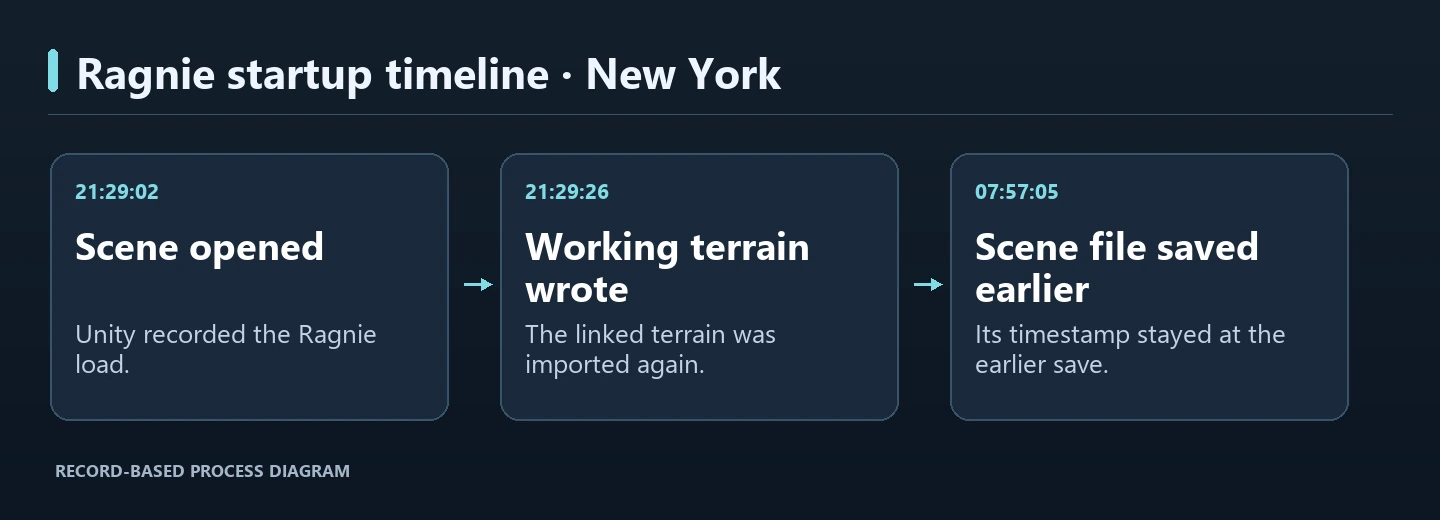
A save indicator appeared on a village we had opened for a look. The file times gave us a lead. About 24 seconds after Unity opened Ragnie, its linked working terrain was written to disk. The village scene file still carried its earlier save time.
Different timestamps for the scene and terrainRecord-based timeline matching the editor load, working asset write, and earlier scene file timestamp.
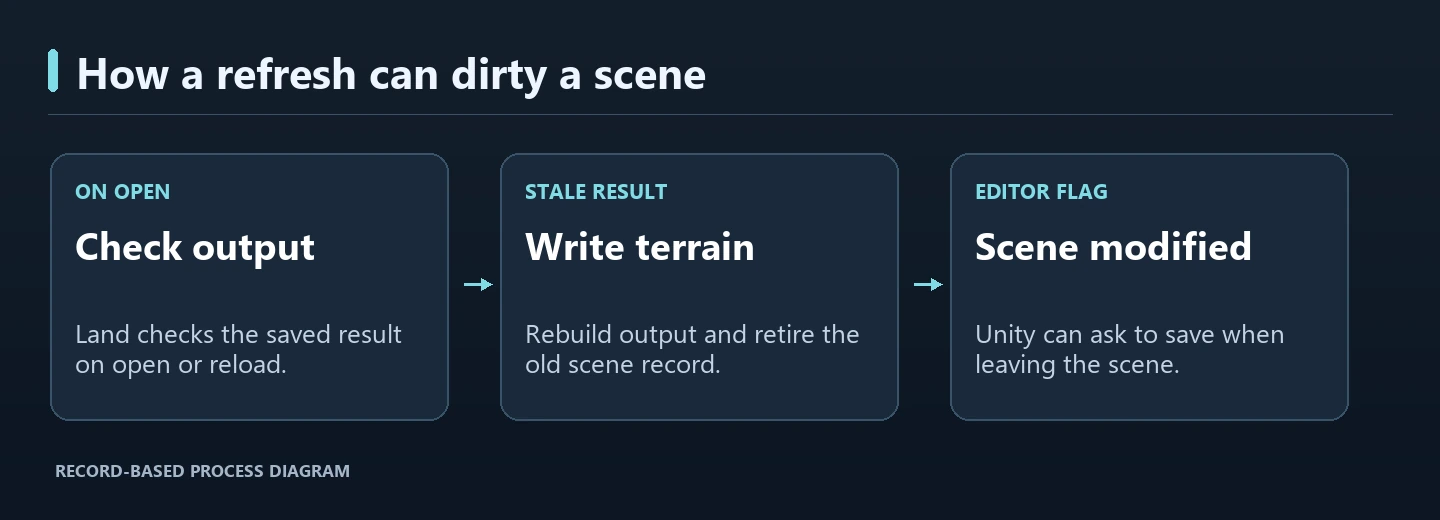
Land checks whether its terrain output is current when a scene opens or scripts reload. When it finds older output, the tool can rebuild it automatically. The write adds a fresh terrain record, clears the old record in the scene and tells Unity that the scene was modified. That can lead to the save question when you try to leave.
From automatic refresh to a save flagSource-based diagram of the write path that can mark the scene modified.
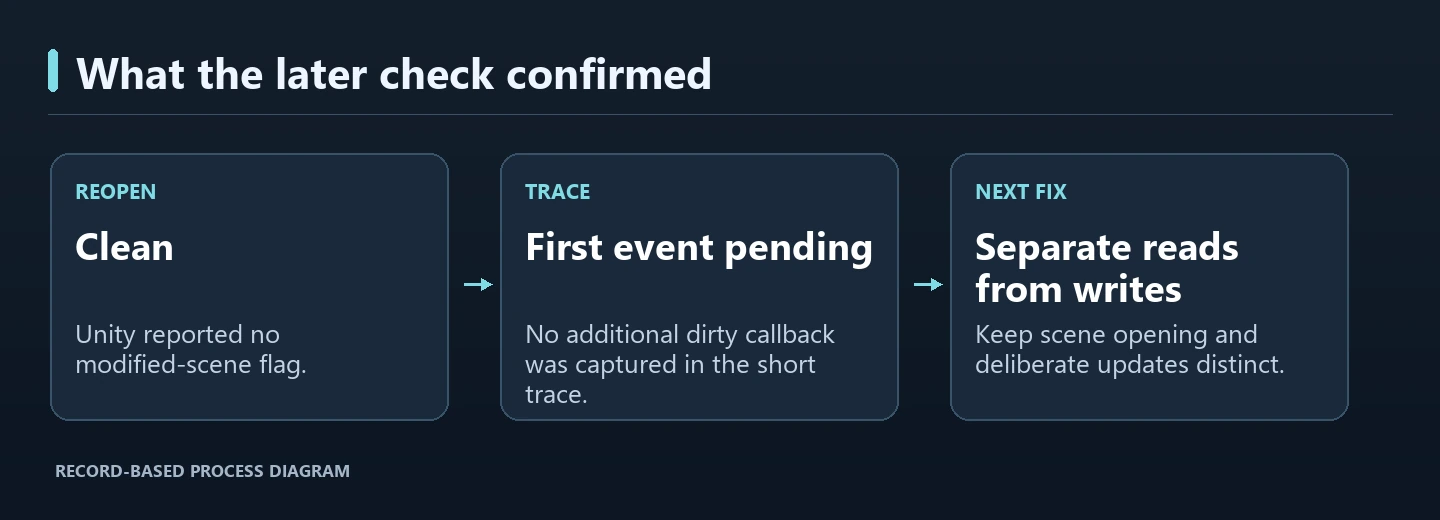
The next read after reopening the scene showed it clean. A short trace did not capture the first dirty callback or reproduce it on another scene. The evidence identifies one concrete path into the save prompt. It gives the next fix a place to start, where opening a scene can turn into writing to it.
The clean reopen and remaining workRecord-based diagram of what the investigation observed and what remains.
Based on actual work; expressions and robot scenes are dramatized. Actual work captures are labelled separately from illustrations.