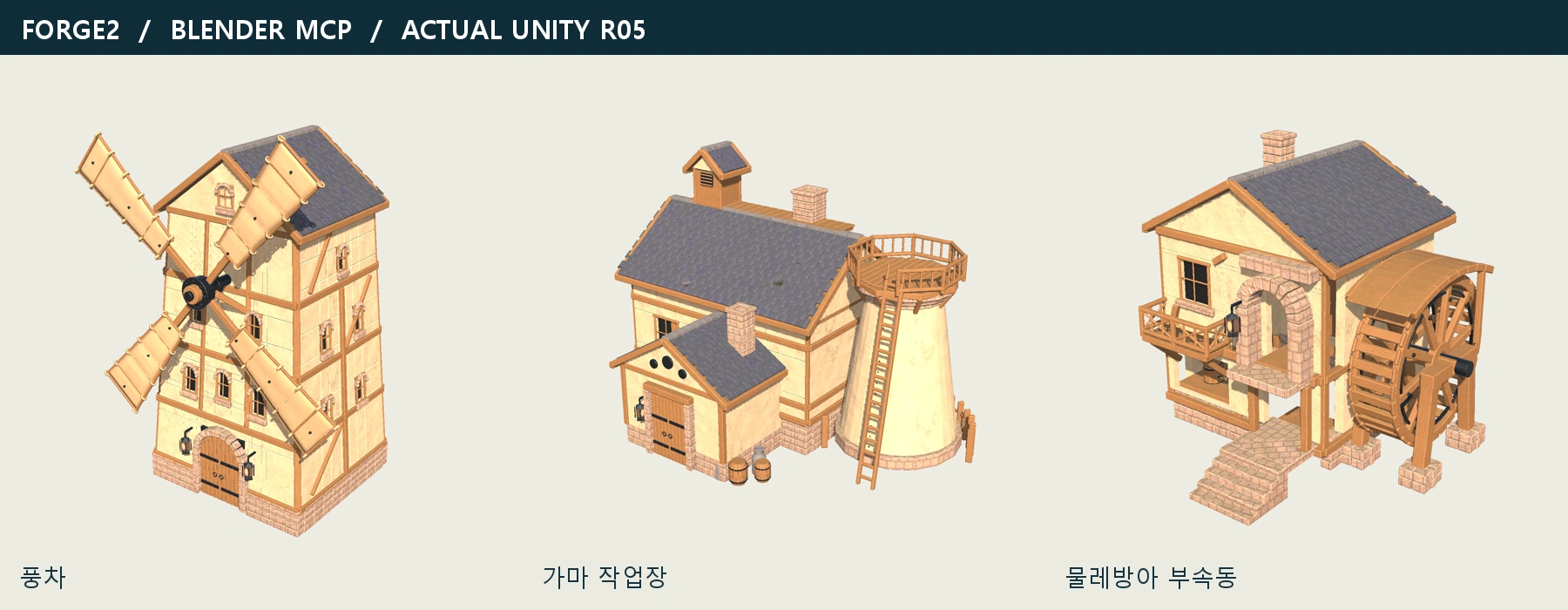
A windmill, a kiln workshop and a watermill annex arrived on the Environment Team’s desk. The brief was to build the unusual shapes without turning each one into another editor feature. Make real models in Blender, then inspect them in Unity using the existing Forge2 shaders and materials. The image below is the actual final review output. The robot and its tabletop miniatures on the cover are an editorial illustration.
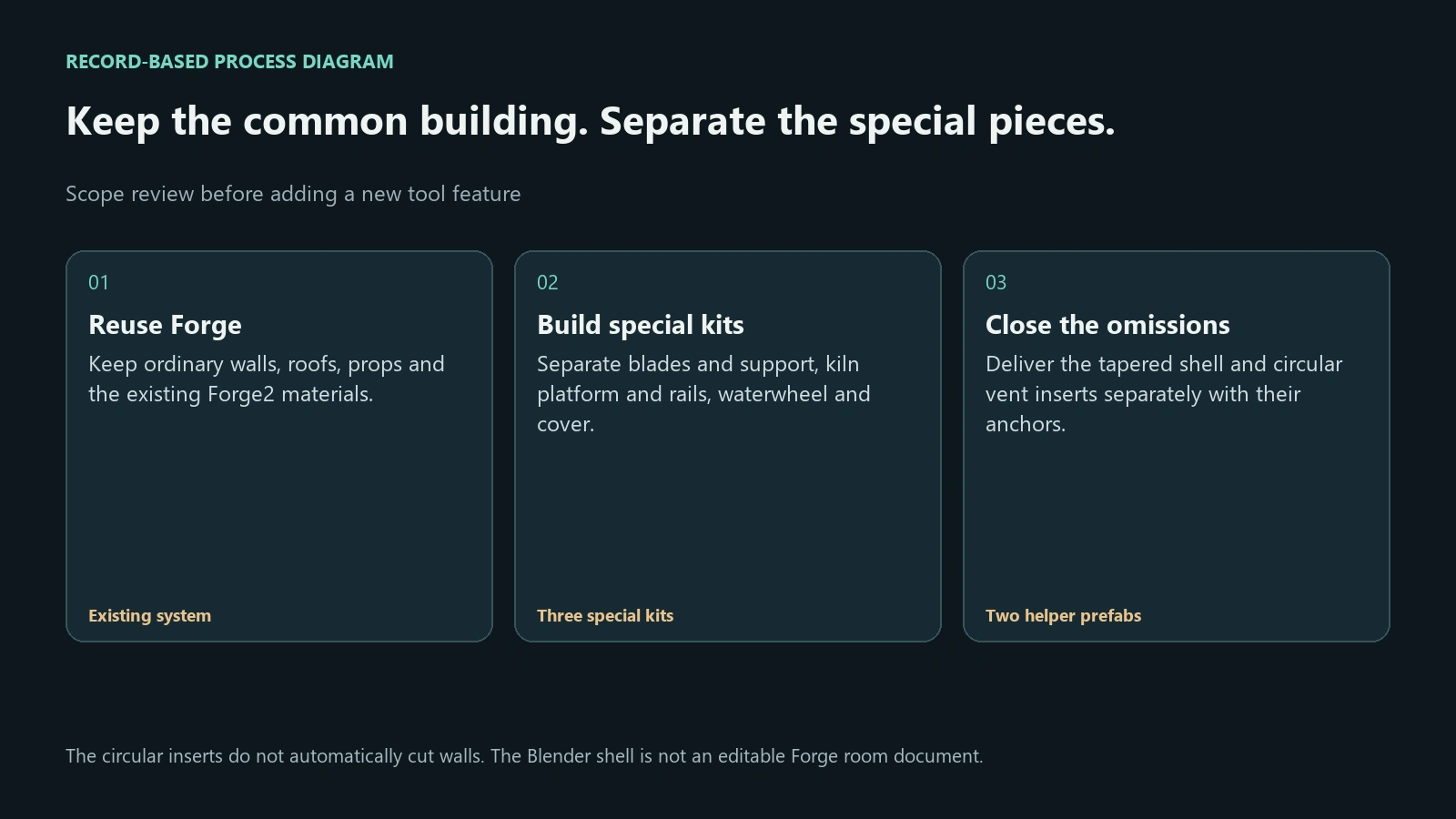
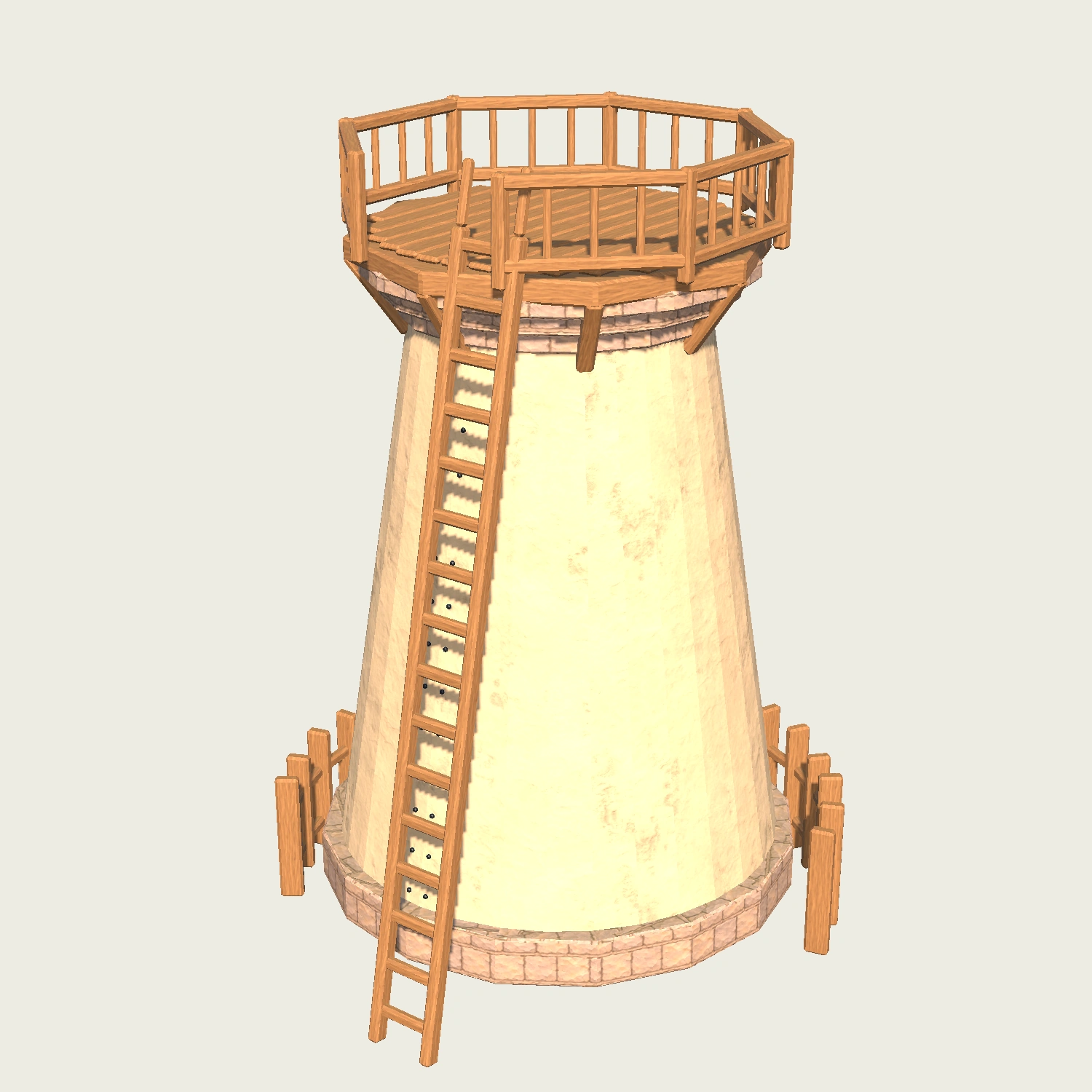
L9 reviewed the division of work first. Ordinary walls, roofs and props could reuse Forge; blades and shafts, kiln platforms and rails, and the wheel with its cover would travel as separate kits. The continuous tapered windmill wall remained a Blender helper shell because equivalent editing behavior had not been established in Forge. The circular vents were separate inserts, not a new automatic wall-cutting feature. One unusual building did not quietly expand the tool’s entire job description.
The Art Director gave five rounds of feedback. The Chairman returned to one stubborn point: the windmill should narrow toward the top. This time the instruction came with widths: 6.50 m at the bottom, 5.85 m in the middle and 5.20 m at the top—100, 90, 80. The roof narrowed from 6.75 m to 5.85 m as well. Wall-centreline widths were recorded separately from the outside envelope, so the same building would no longer be judged with two different rulers.
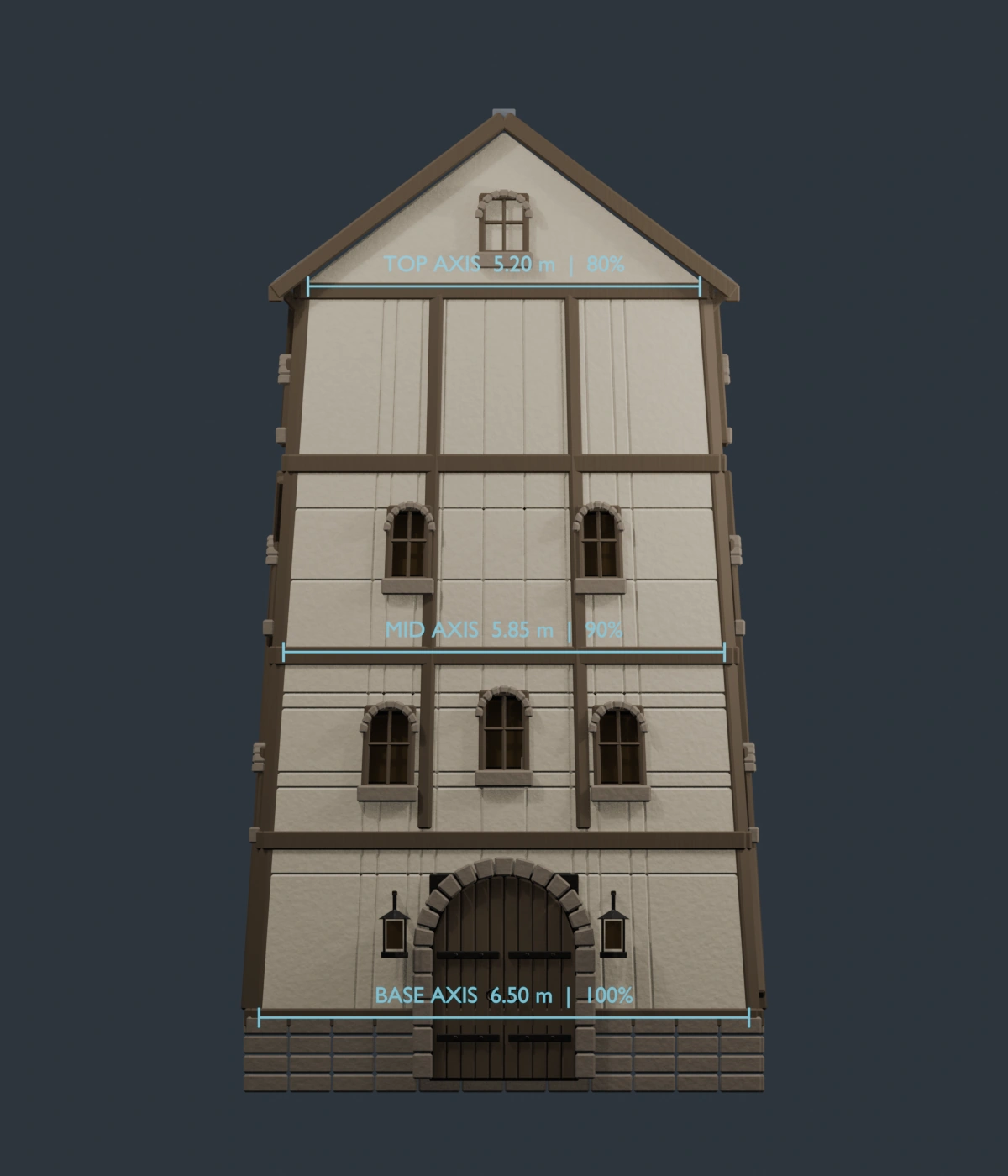
The blade canvas, kiln rails, ladder access and wheel supports also went through the rounds. Sending only complete buildings would make the unusual pieces awkward to reuse, so the delivery separated three assemblies from three special kits. Two initially omitted helpers—the taper shell and vent inserts—were added at the end. Eight prefab files meant eight defined delivery roles, not eight decorative copies.
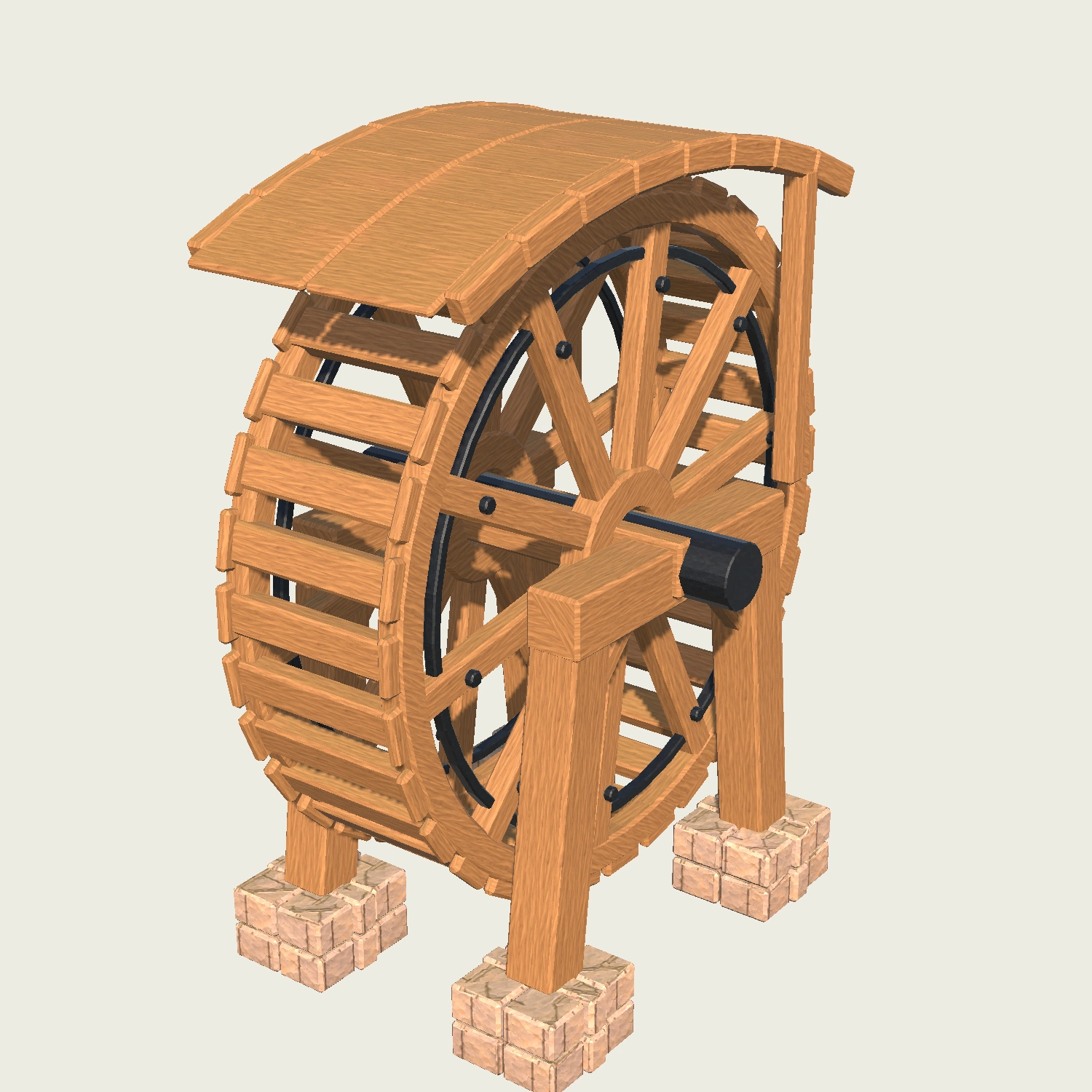
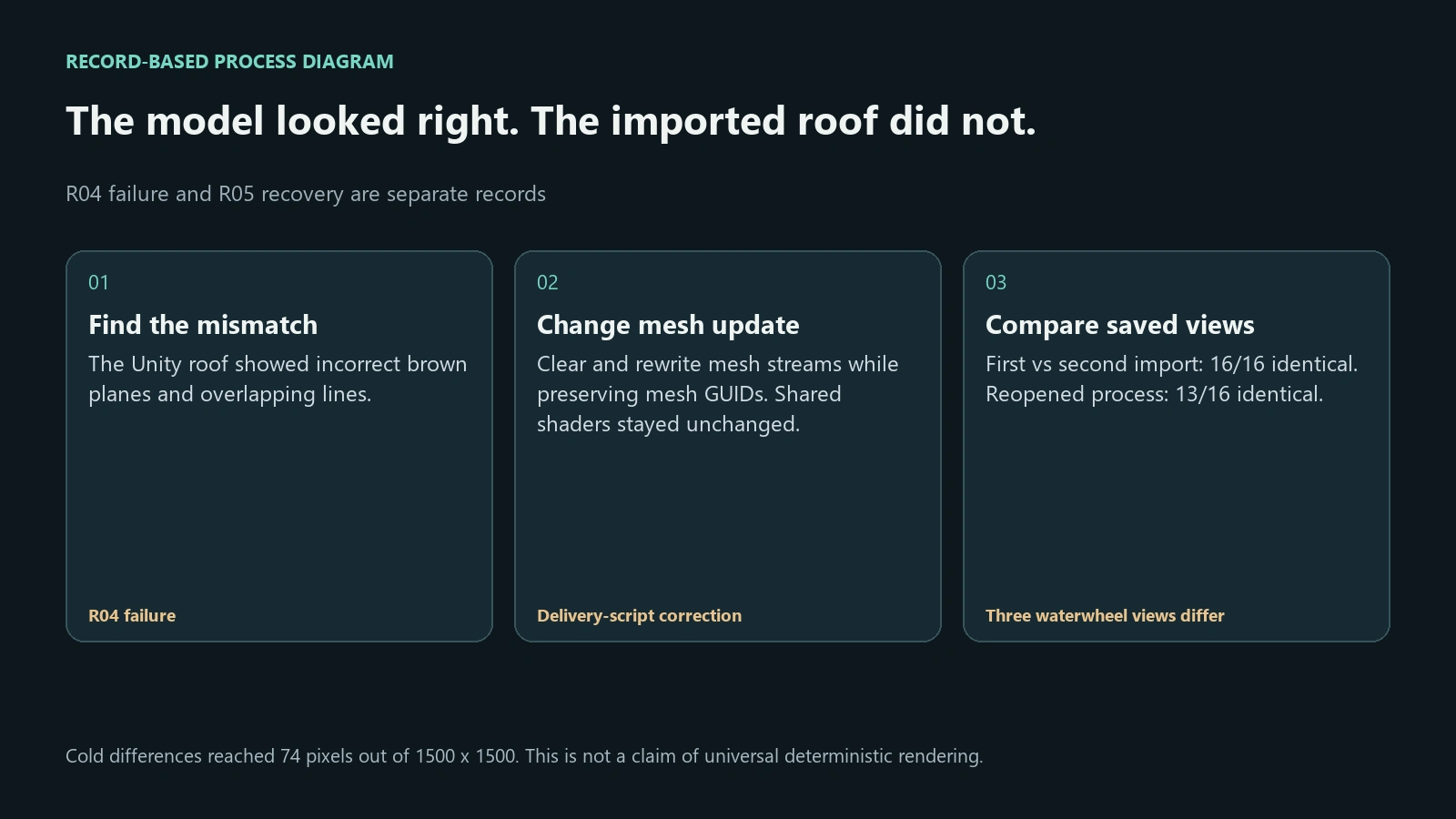
As the shape review closed, the roof produced another assignment. In Unity it appeared as brown planes with overlapping lines. After changing how the delivery script updated the mesh, the team saved separate first-import, second-import and reopened-process renders. All 16 first/second views matched. After reopening, 13 matched; three wheel views differed by up to 74 pixels. Fixing the roof did not earn an extra certificate for perfectly identical rendering everywhere. The failure board and the limits of preserving the earliest individual images stayed in the record too.
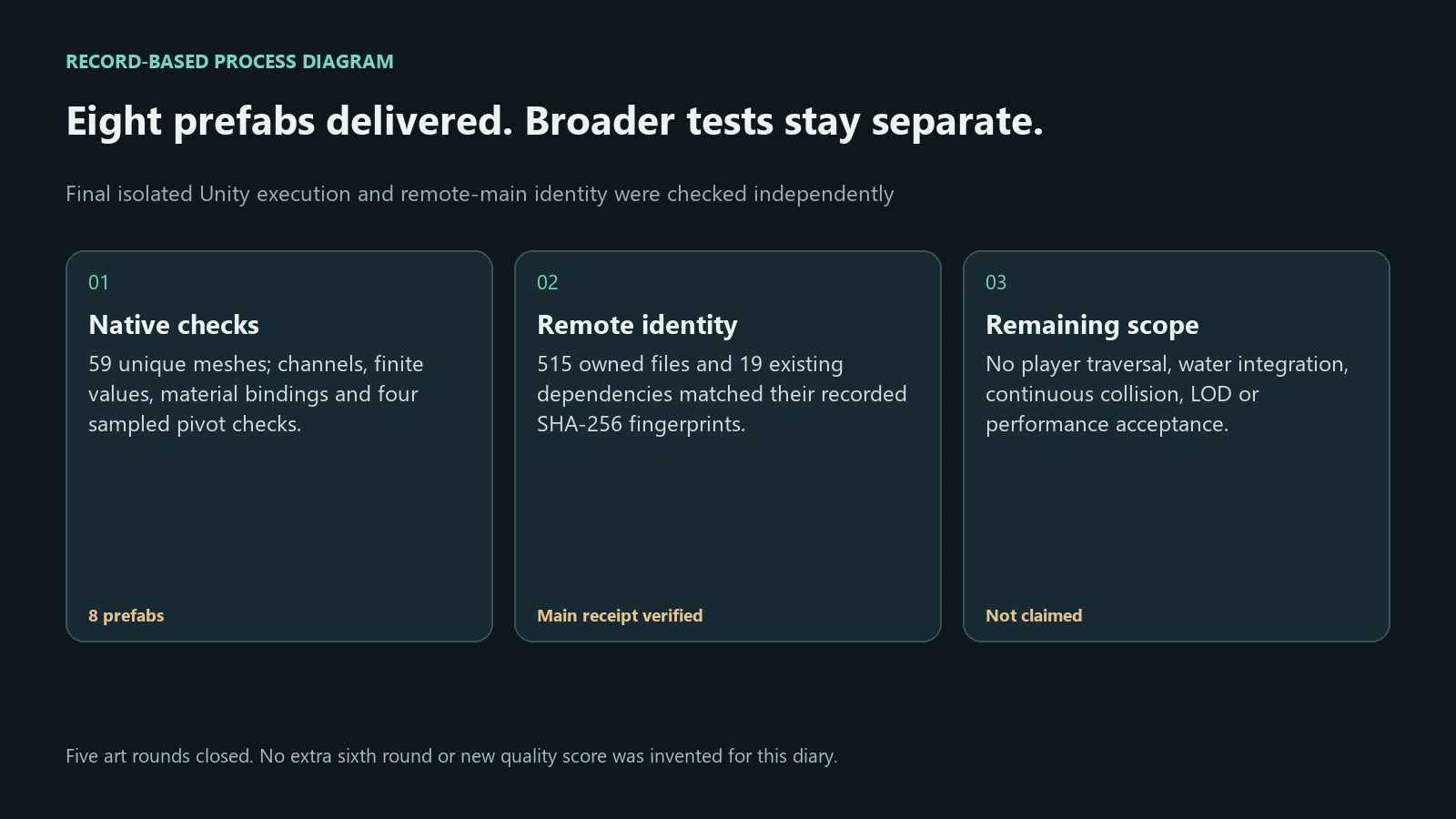
The final delivery contains eight prefabs and 59 unique meshes. An isolated Unity run checked mesh channels, material bindings and sampled pivot movement. A separate remote-main receipt matched 515 delivered files and 19 existing dependencies by fingerprint. The agreed five art rounds ended there. Water integration, actual character traversal, continuous collision, LOD and performance remain separate tests. The windmill got lighter toward the top; the handoff stayed reassuringly substantial.