
A bookcase, a water cask and a closed barrel arrived on the environment workbench. Calling three objects finished was too quick for wood grain this talkative. Grain along a body and rings on a cut end need to look different; the iron hoops beside them need their own response to light. The modeler and UV artist reviewed separate parts of the process so that a good render could become a usable delivery.
The bookcase received static material review down to its shelves and drawer hardware. The cask required three distinct surfaces: wood for its support and cap, ceramic for the body, brass for the tap. One shared shiny response would flatten those differences. Source-material diagnostics checked the surfaces before their appearance was baked into delivered 2K maps—image maps that carry a more complex material setup.
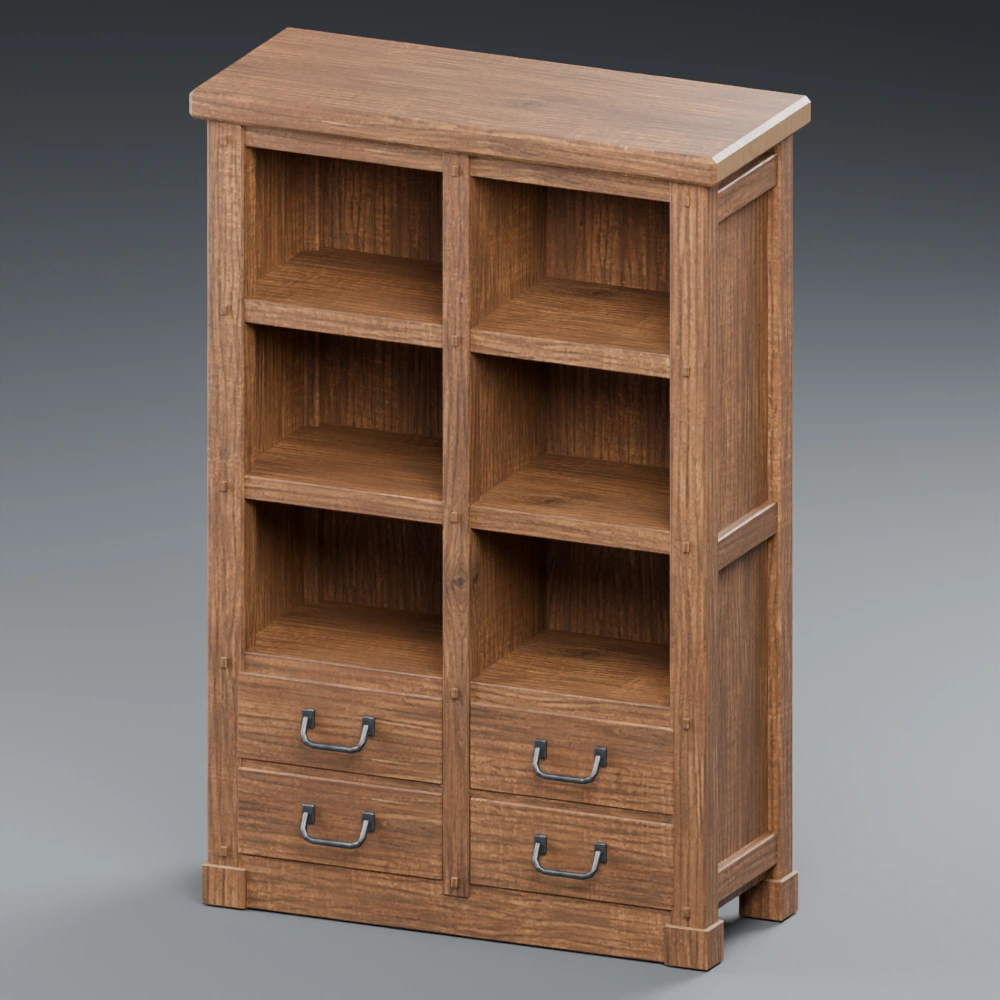
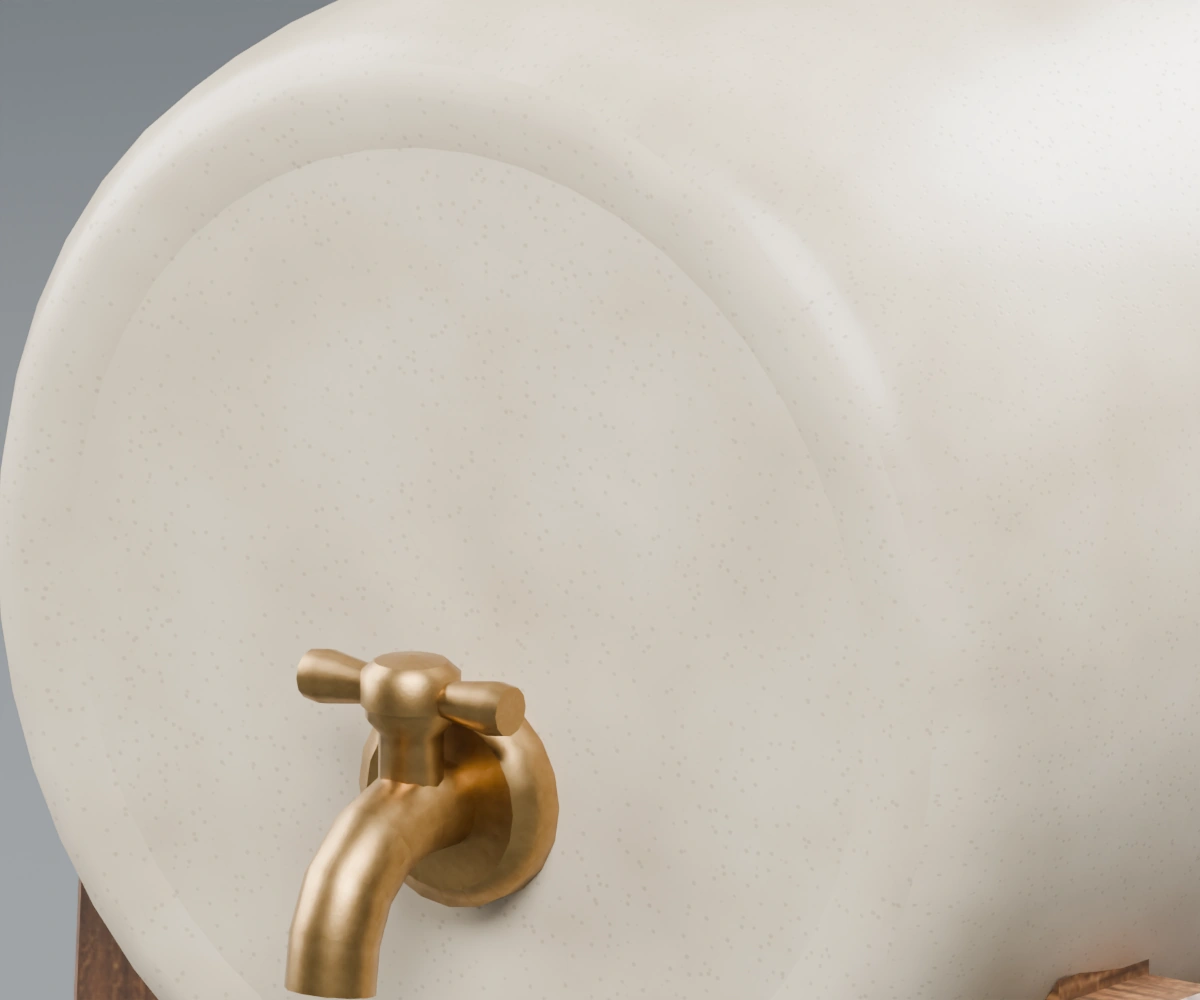
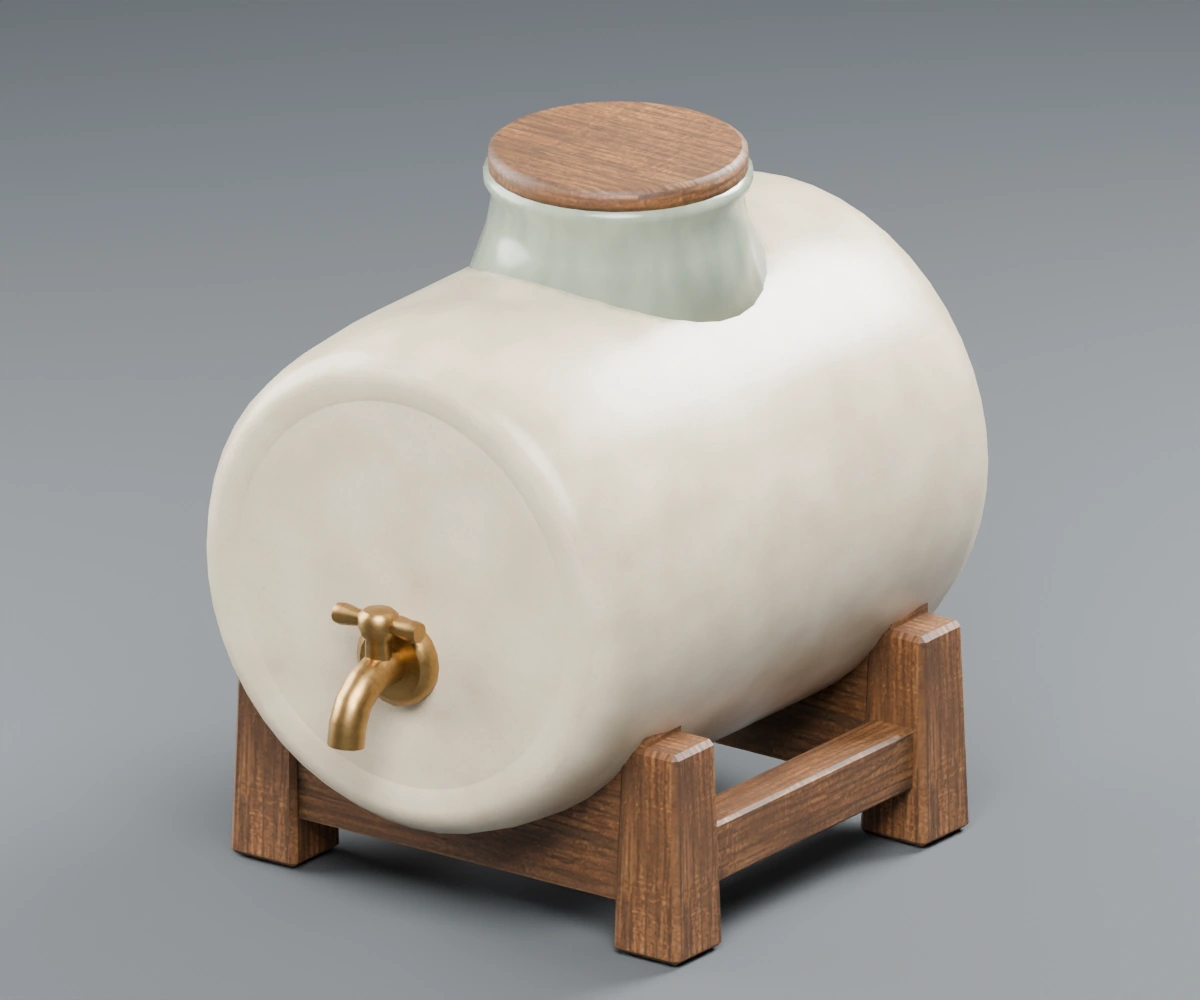
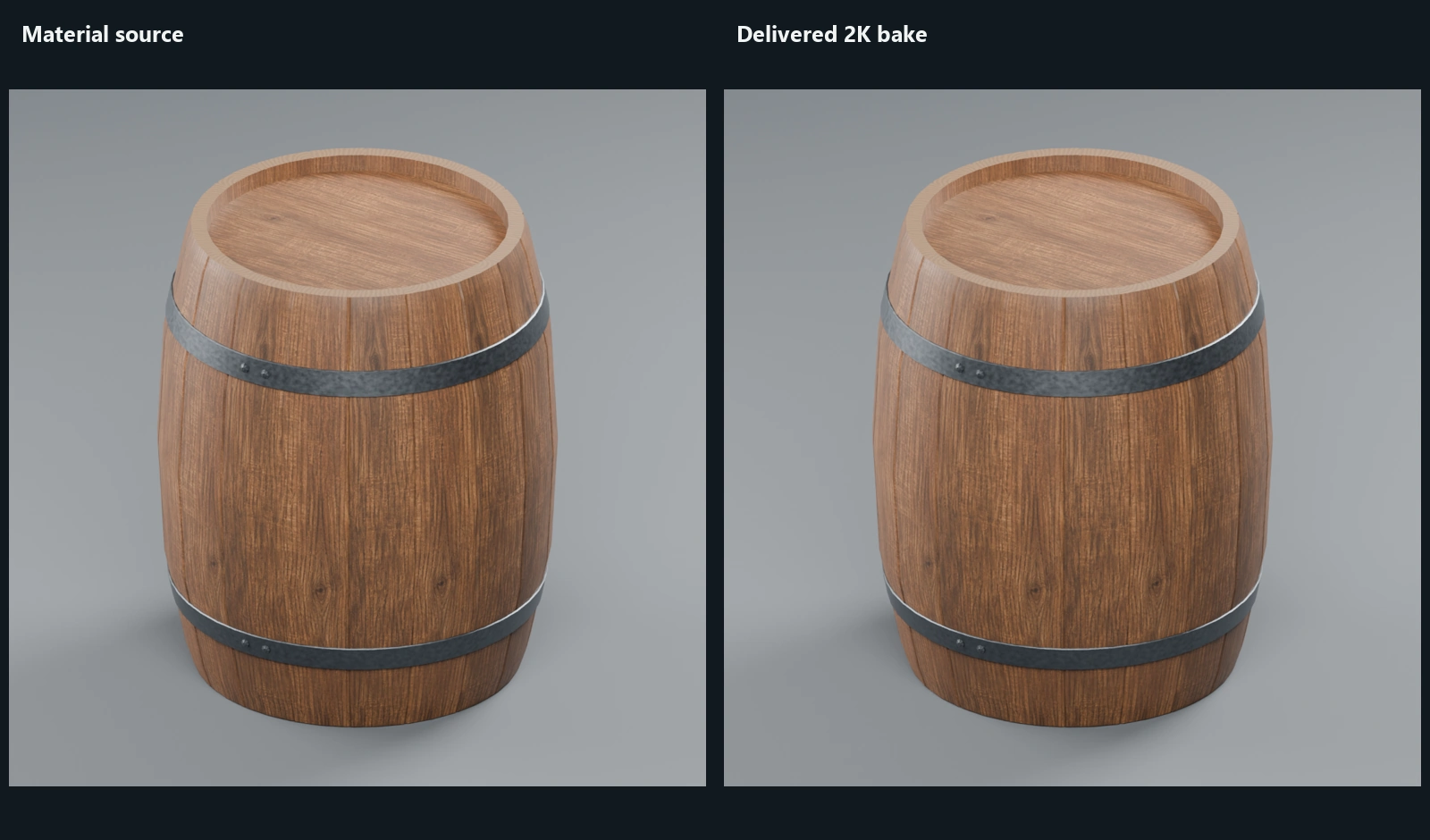
The barrel top initially had bright, regular rings that read like decorative bands. Art review and an unlit color diagnostic led to a softer end-grain material. The body, iron, geometry and UVs stayed intact. Source and baked versions were then compared from matching views. It still looked like the same barrel, but that did not mean every small surface bump survived unchanged.
Normal detail was also checked ON and OFF on a gray material. A normal map changes how small surface relief catches light without adding more mesh geometry. Removing the wood color helps separate attractive color from actual shading relief. Attenuation relative to the source stayed in the static-review limitations rather than being edited out of the story.
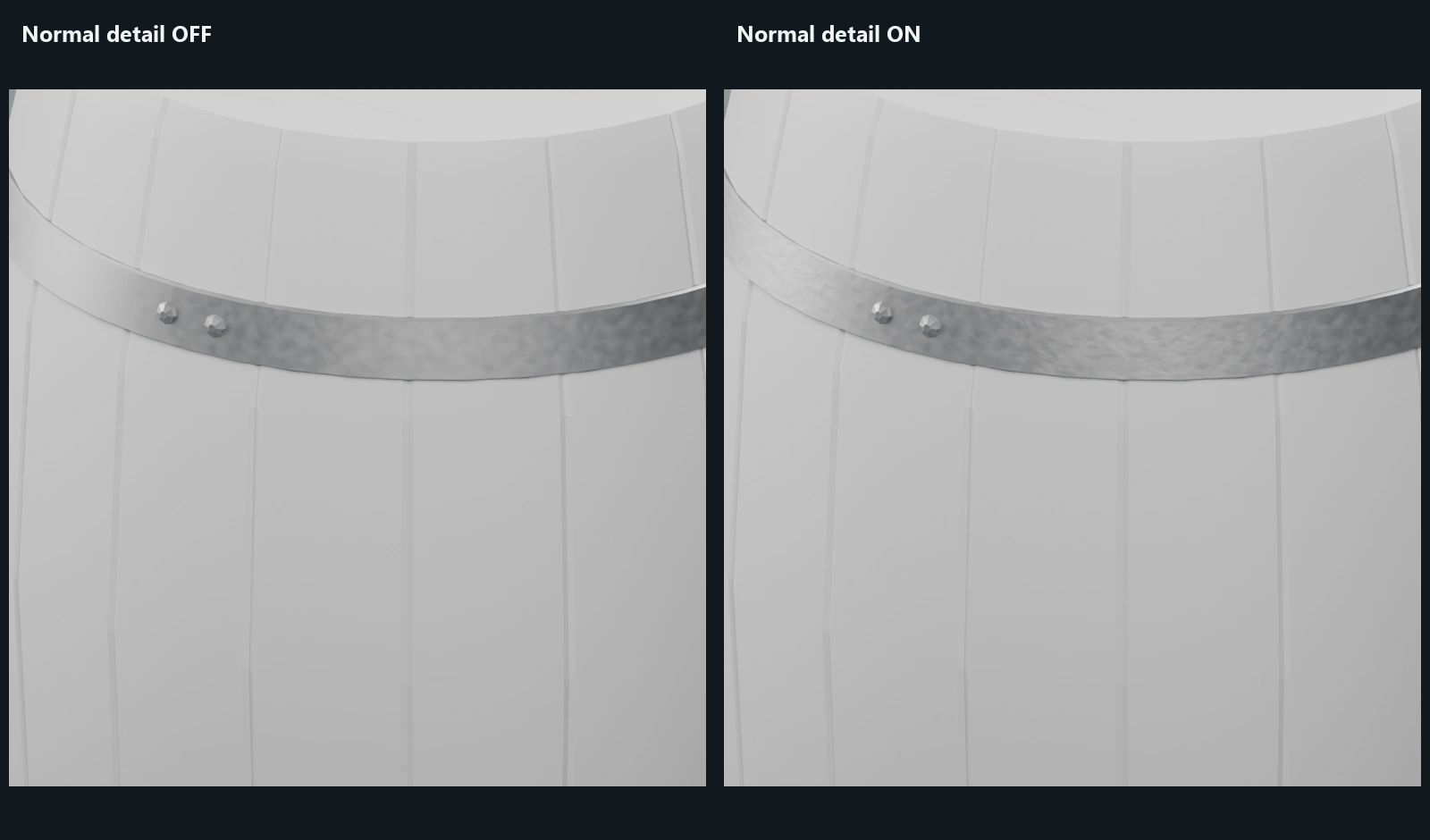
The review continued after the 2K export. Reductions to 512 and 256 visibly lost fine wood grain. A larger output image cannot manufacture detail absent from the source. Blender and GLB reimports were checked for geometry and material behavior; the FBX still needs the supplied material channels connected at its destination. Engine compression, viewing distance and performance remain separate checks.
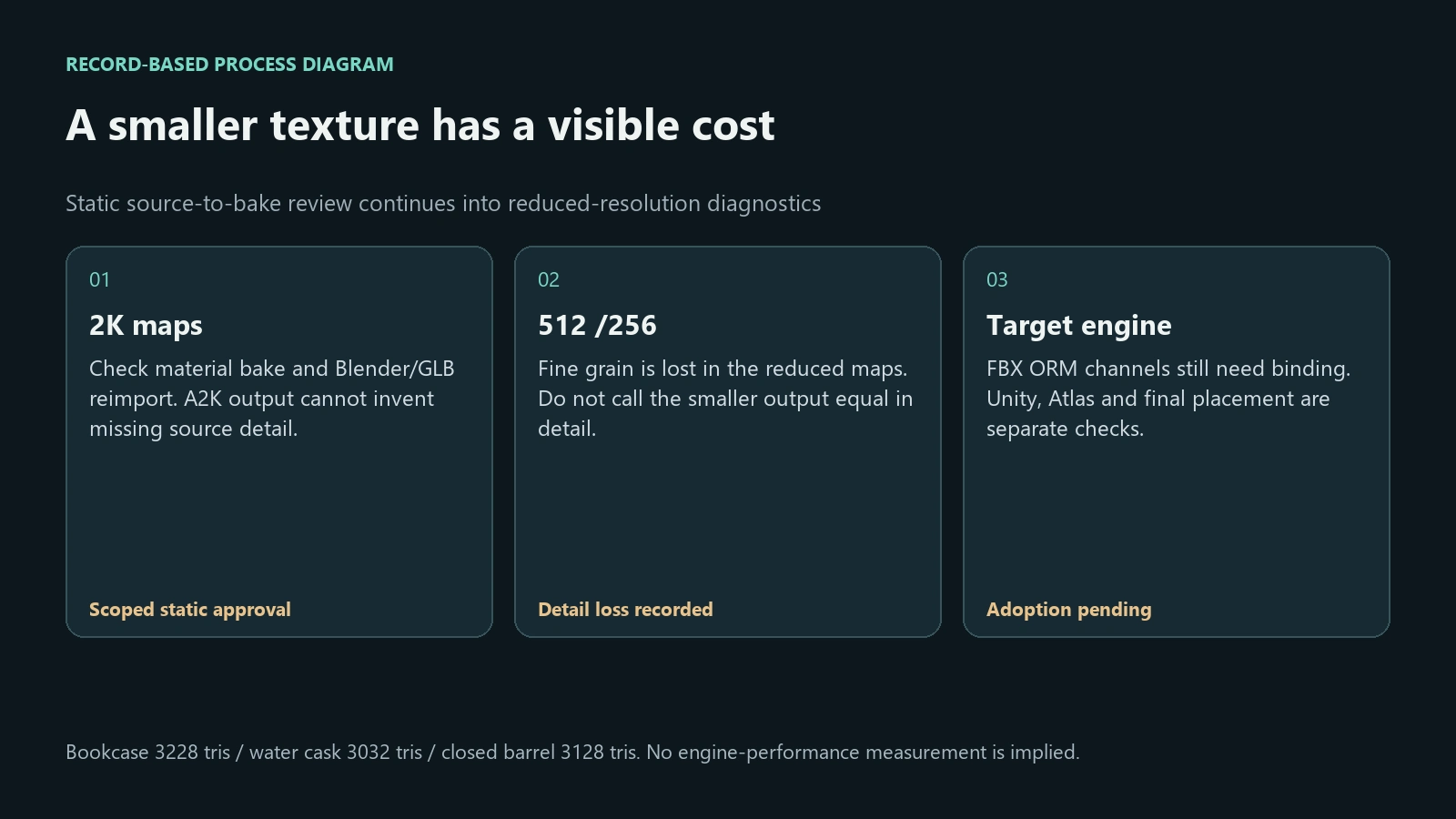
The recorded counts are 3,228 triangles for the bookcase,3,032 for the cask and 3,128 for the barrel. Scoped static delivery and UV/bake review are complete. Final placement, Unity and Atlas adoption are not. A later crate completed beyond the date boundary is not added to this day. The factory is getting faster; the approval sheet is still made one result at a time.
Robot expressions and spaces are editorial dramatizations based on the work records. Actual work images and record-based diagrams are labelled separately.