
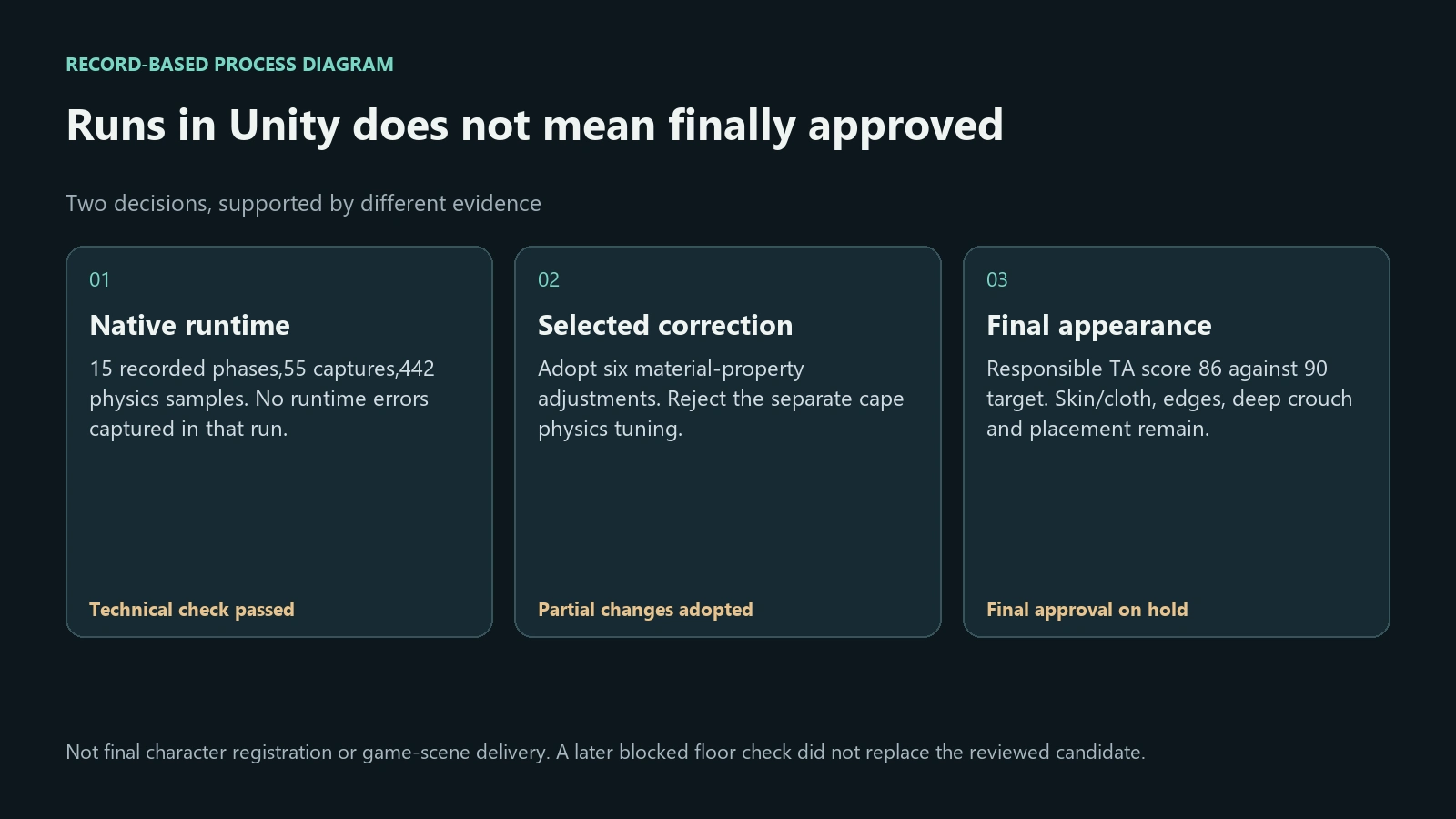
Celine ran in Unity. Calling that finished would make this post shorter—and the later explanations much longer. The character team kept runtime acceptance separate from final visual approval. This run recorded 15 phases,55 captures and 442 physics samples, with no runtime errors captured in those records. That is the observed scope, not a certificate for every environment.
Six material-property adjustments were adopted first. Sharp highlights and hair glitter were reduced. But areas sharing skin, cloth and trim in one atlas could not be repaired by lowering one value for everything. Fixing metallic-looking skin must not erase real metal trim beside it. Region-specific material work and the waist/sleeve boundaries remain on the list.
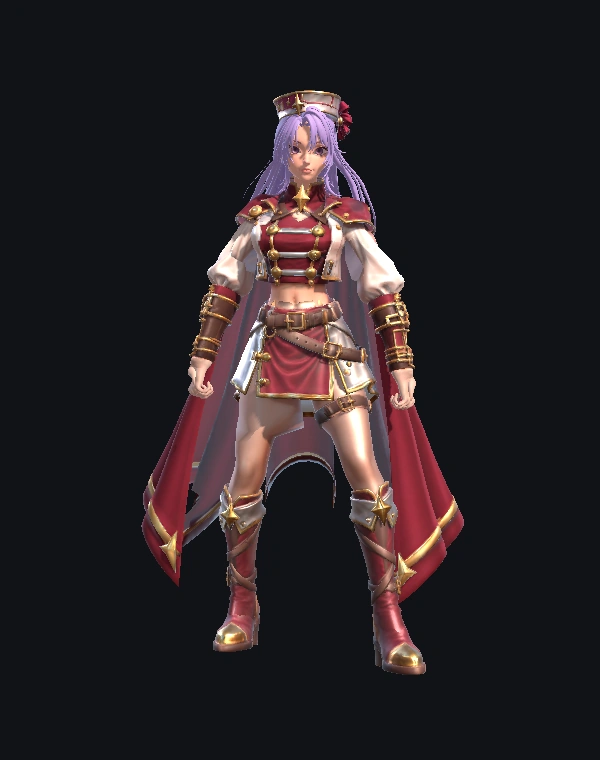
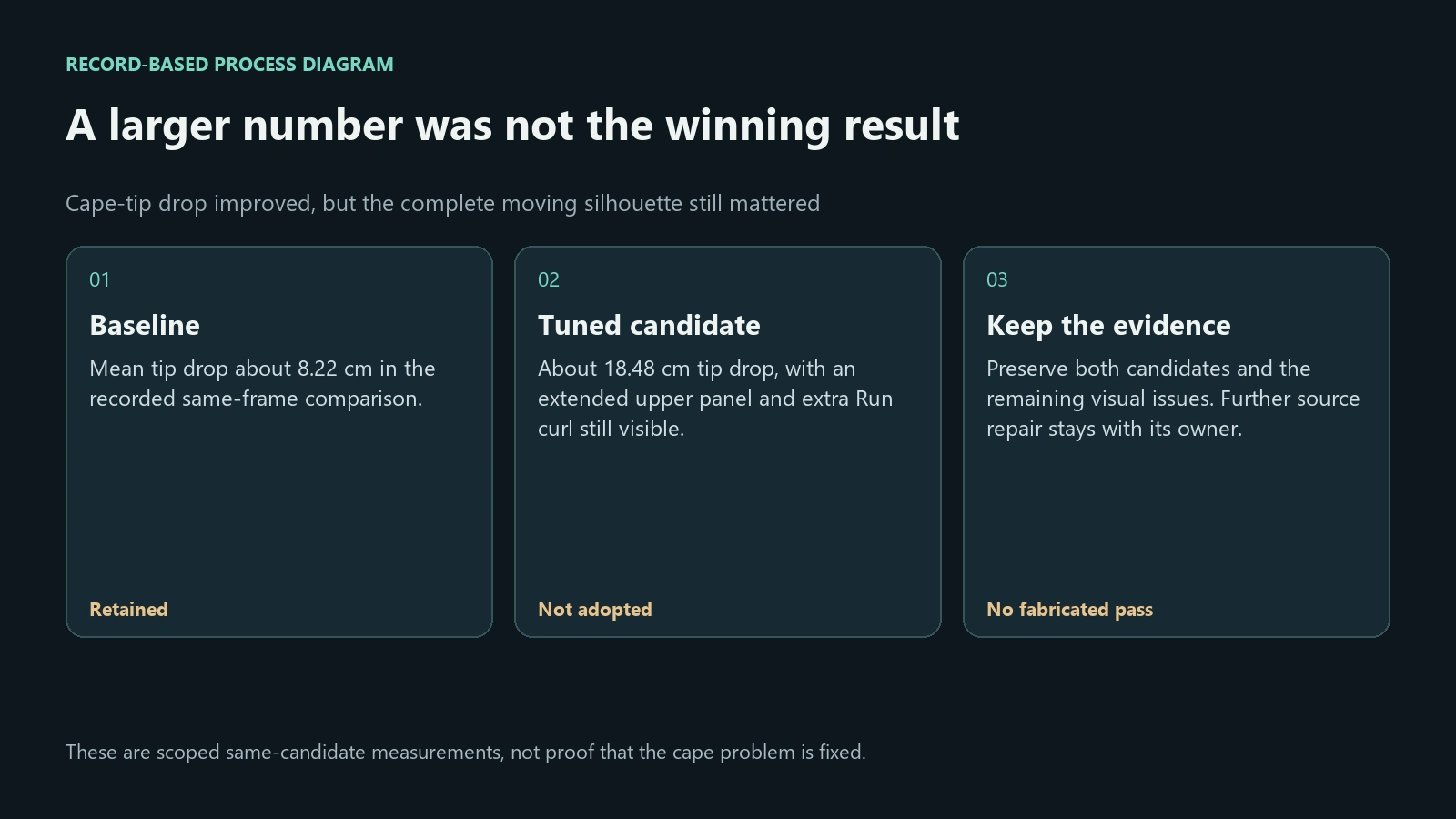
The cape produced the clearest lesson. In the recorded same-candidate, same-frame comparison, mean tip drop changed from about 8.22 cm at baseline to 18.48 cm with tuning. The number favored the new settings. The complete silhouette did not: the upper cape still projected backward in deep crouch, and lower edges curled more during Run. The team rejected that physics tuning and retained baseline. A cape has more than one way to disappoint a ruler.
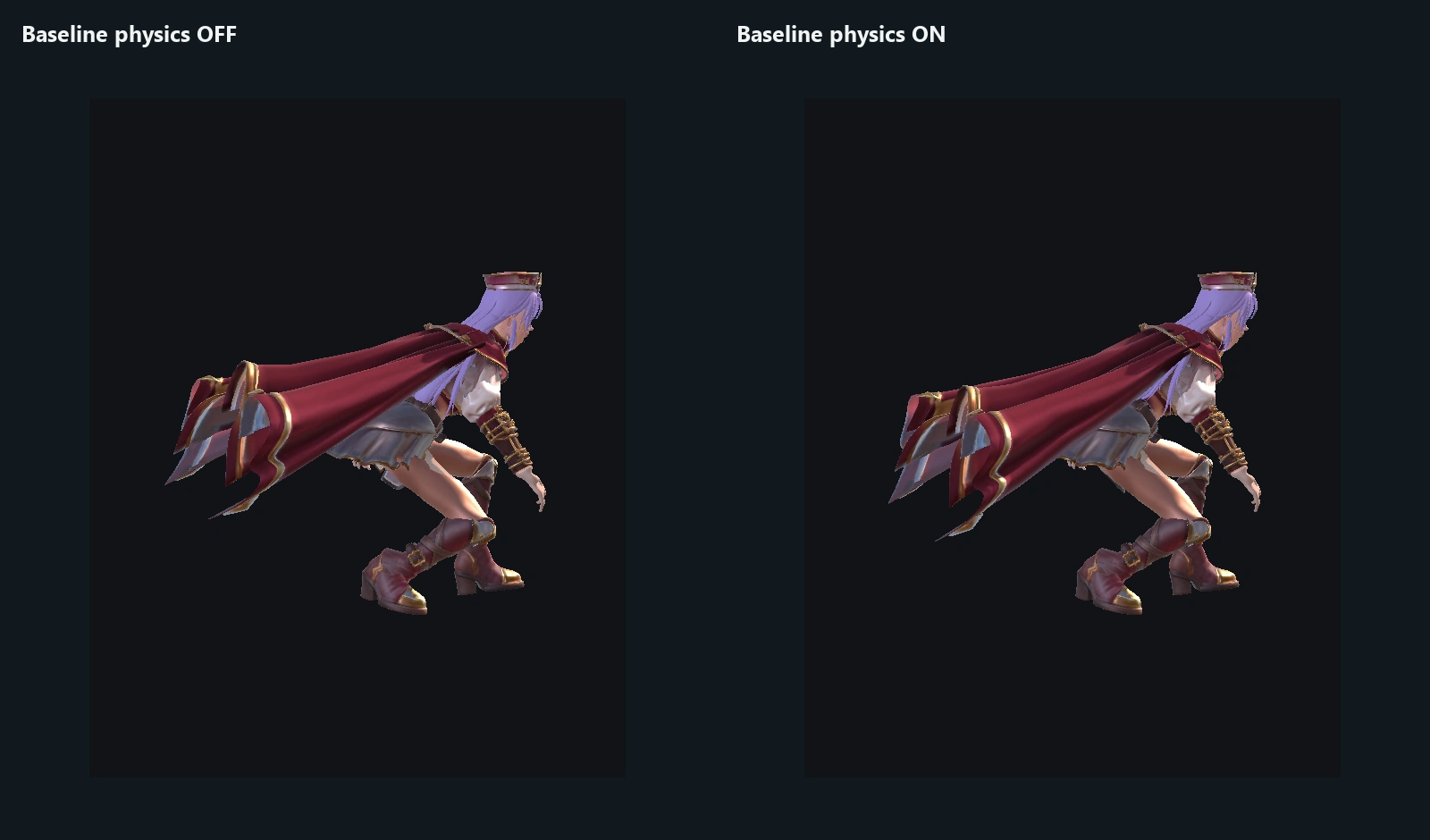
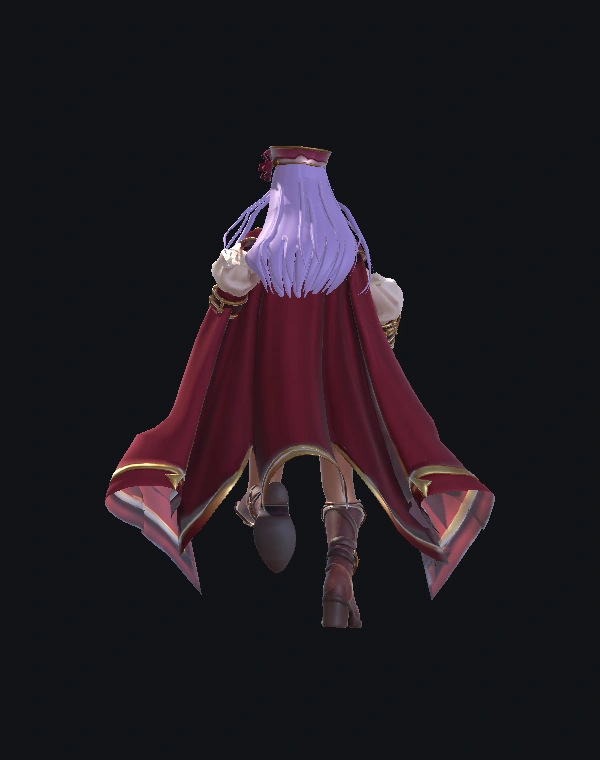
The responsible TA therefore held final appearance at 86 against a90 target. Final registration and game-scene delivery were not marked complete. A later floor-alignment candidate was blocked before runtime verification and was not adopted; the reviewed original remains authoritative. A small placement correction does not turn a static check into a runtime pass.
The useful part is that the attempt was not lost. Adopted material changes, rejected physics settings, comparison images and remaining issues were preserved together. The next owner can continue from the same candidate instead of reconstructing someone’s memory. A character factory needs more than a fast exit. It needs a clear note explaining why a character is still inside.
Robot expressions and spaces are editorial dramatizations based on the work records. Actual work images and record-based diagrams are labelled separately.