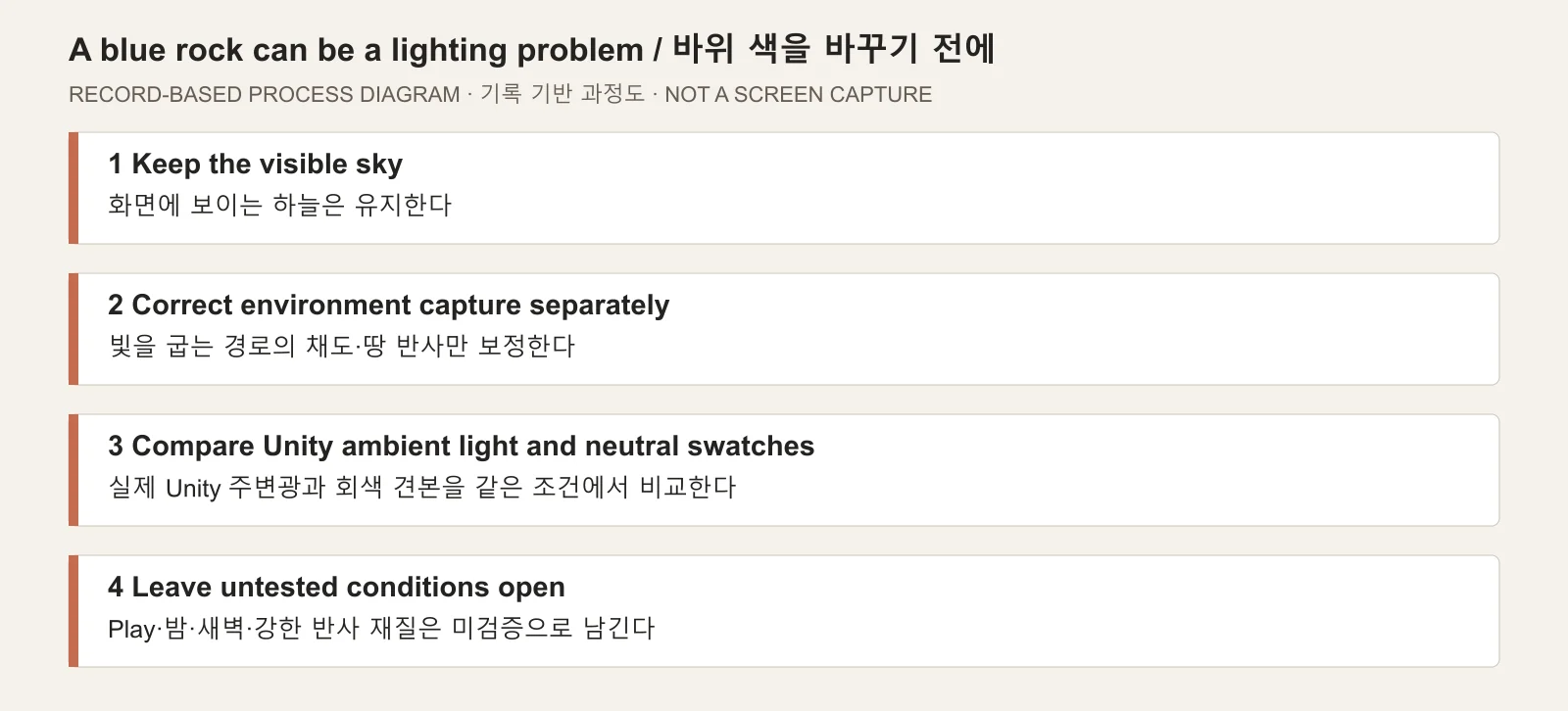

The rock was made brown, yet appeared blue in the scene. Leaves drifted toward turquoise too. Reaching for the colour swatches would have been understandable. The Consultant Team instead followed an earlier clue: the same materials looked right under different lighting.
The lighting specialist placed neutral and coloured test spheres in the scene and compared the same views from morning through sunset. A sky painted for the camera was also being baked into the light on objects. Below the horizon, more blue stood in for light reflected from the ground.
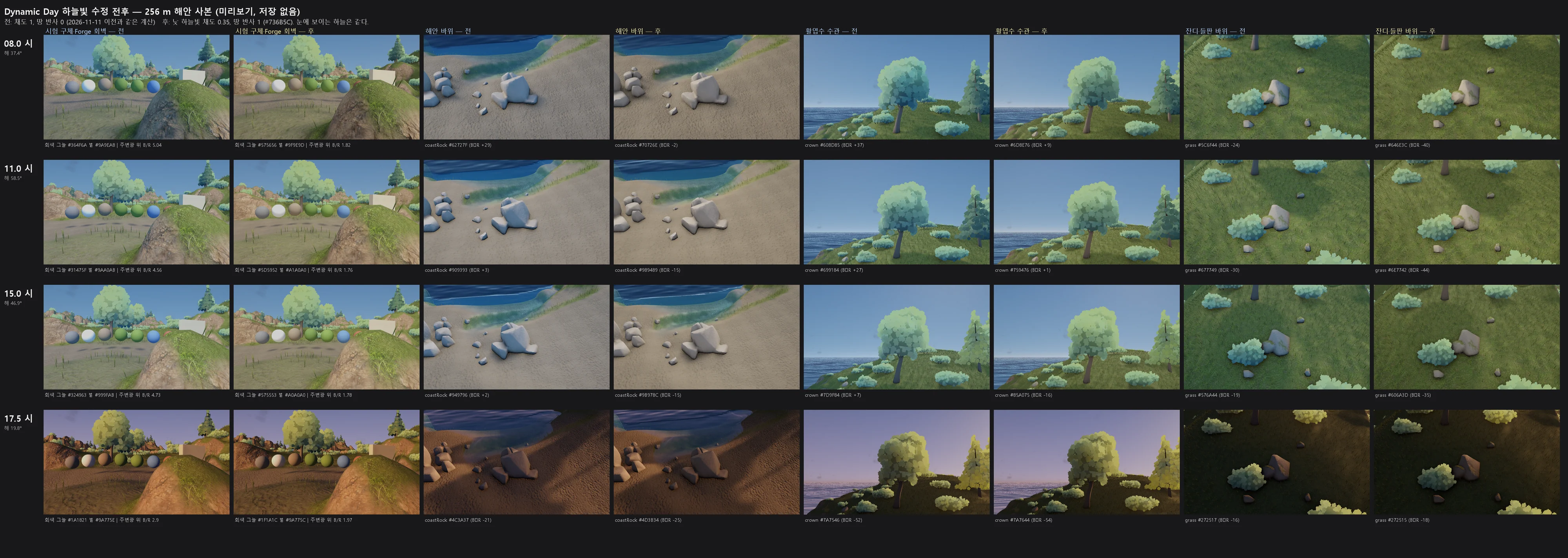
Rather than desaturating the sky everyone sees, the team separated the capture used for lighting. They reduced saturation there and added ground reflection. Side-by-side trials changed saturation, ground contribution and brightness independently. Making a shadow darker is not the same as removing its blue cast.
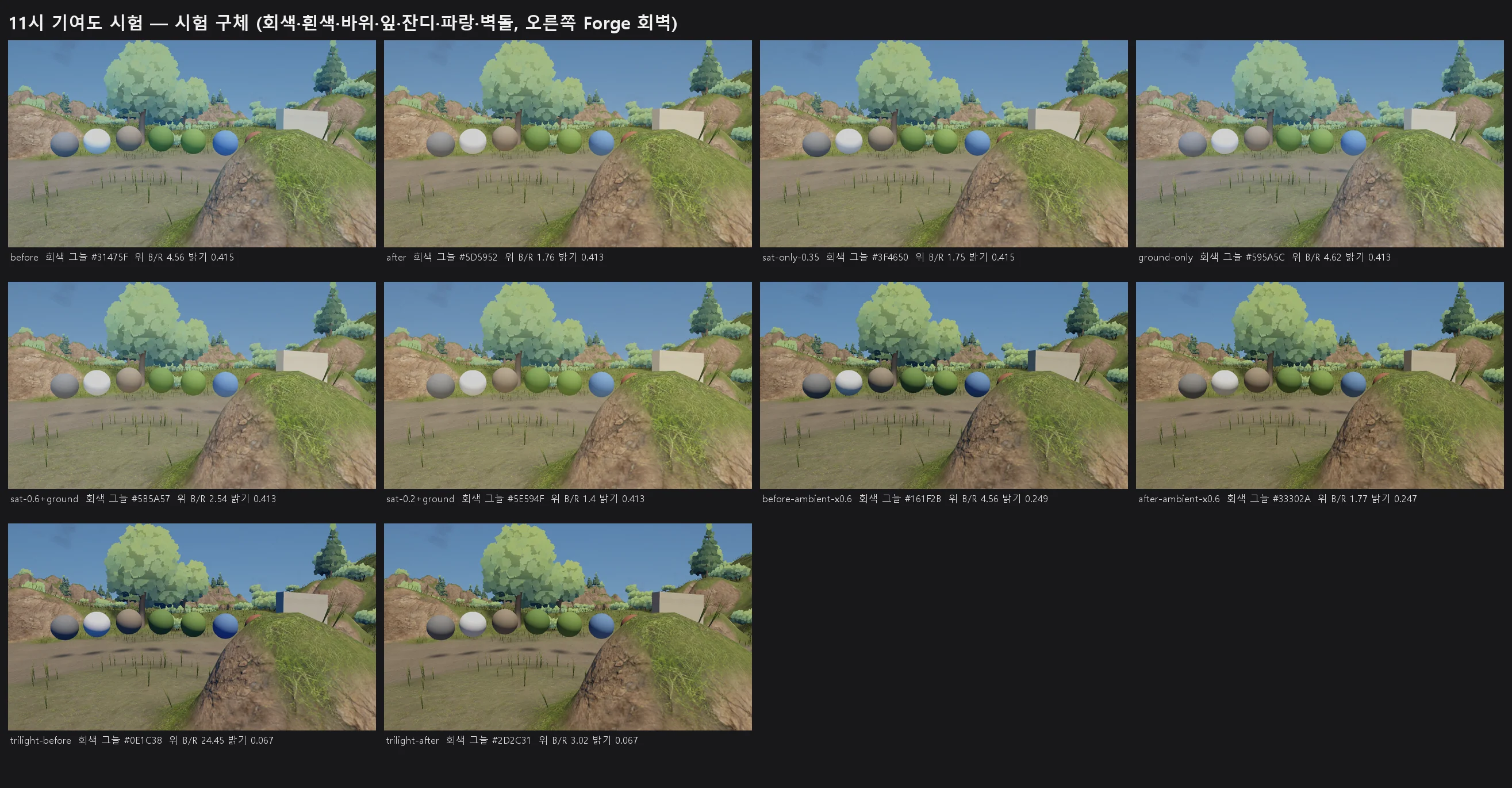
At the tested 11 a.m. setting, the grey shadow returned from cold blue to a warmer neutral, while the foliage’s blue-red difference narrowed. The rock’s base colour stayed intact. Checking the lighting first avoided revising another specialist’s material for the wrong reason.
These are Editor comparisons in a copied scene. Play mode, night, dawn and strongly reflective materials remain untested. Brightness in the low-cost lighting path and discrepancies in Forge’s capture tool also remain open, and the changes are not checked in. The rock has a much better alibi; the investigation still has work to do.