
Before chasing 90, we had to lower the camera. Both reviewers of the terrain effects and presets pointed out the same issue: the view looked down from too high, and the terrain block had no visible sides. We were trying to judge depth with a test image that obscured it.
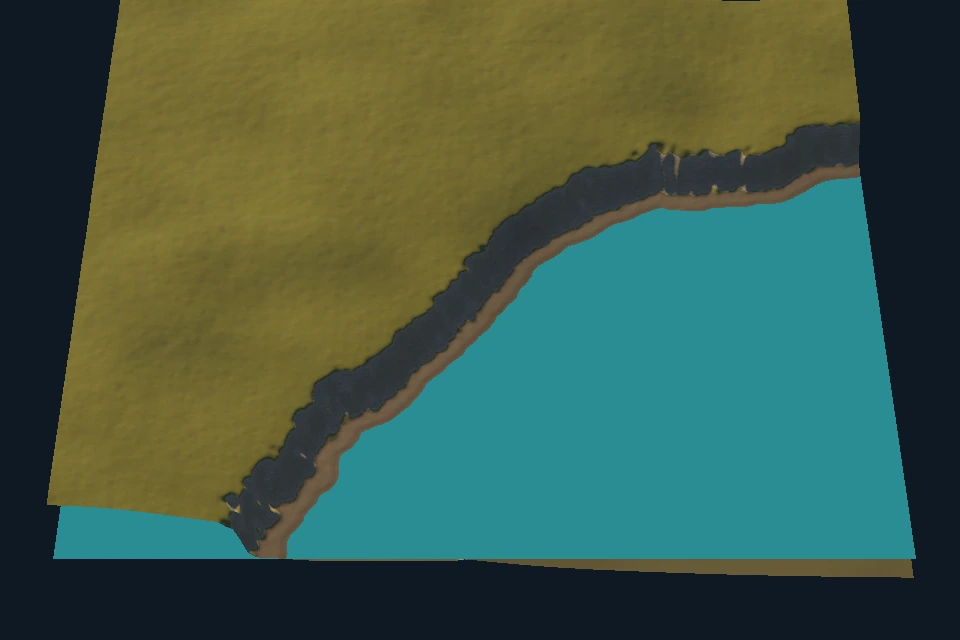
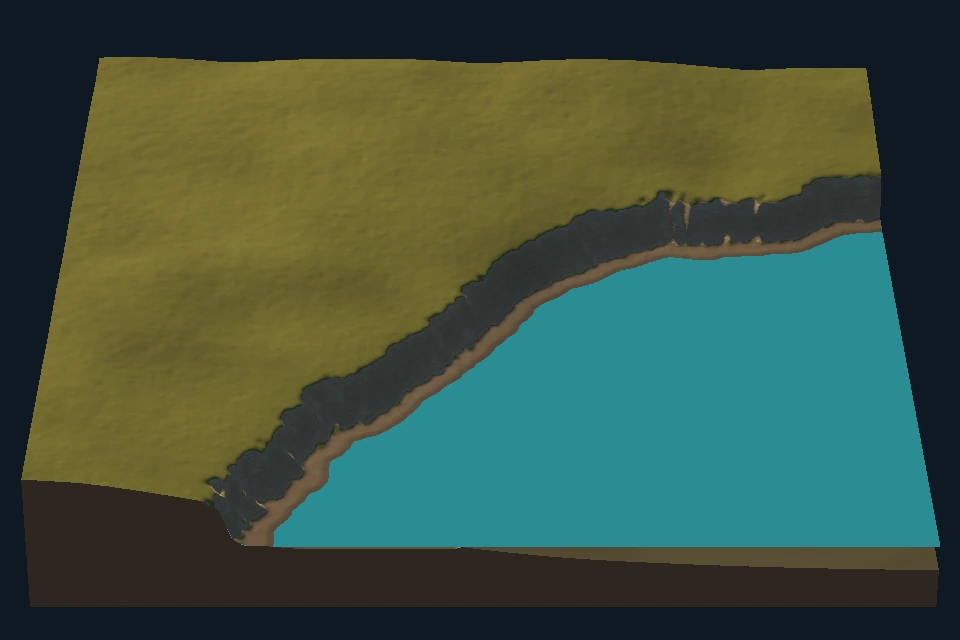
The first image below is the coastal-cliff preset retained from R5. R6 adjusted the comparison framing and added block sides. The records also describe clamping the anti-alias result after out-of-range heights caused a real Terrain export to fail. The review needed to ask whether the result could actually be exported, as well as whether it looked convincing.
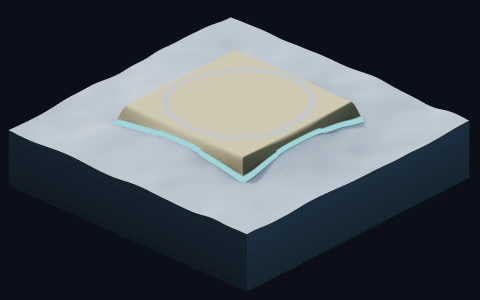
The overlays needed work too. Feedback recorded a missing line in Terrace Levels, an extra line inside the flat region in Flatten, and wave-like lines on a steep Seabed slope. Overlay corrections continued, but the saved Flatten image below is not an independent pass for every contour rule. A capture can show the work. Acceptance still needs its own check.
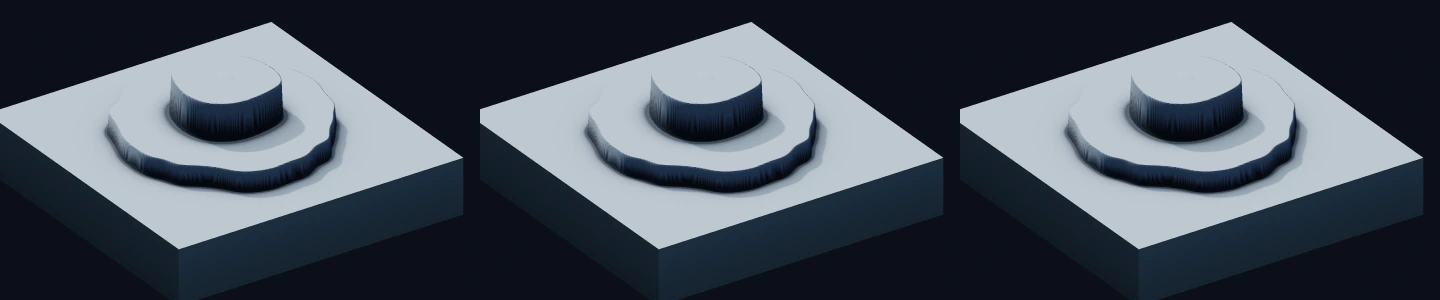
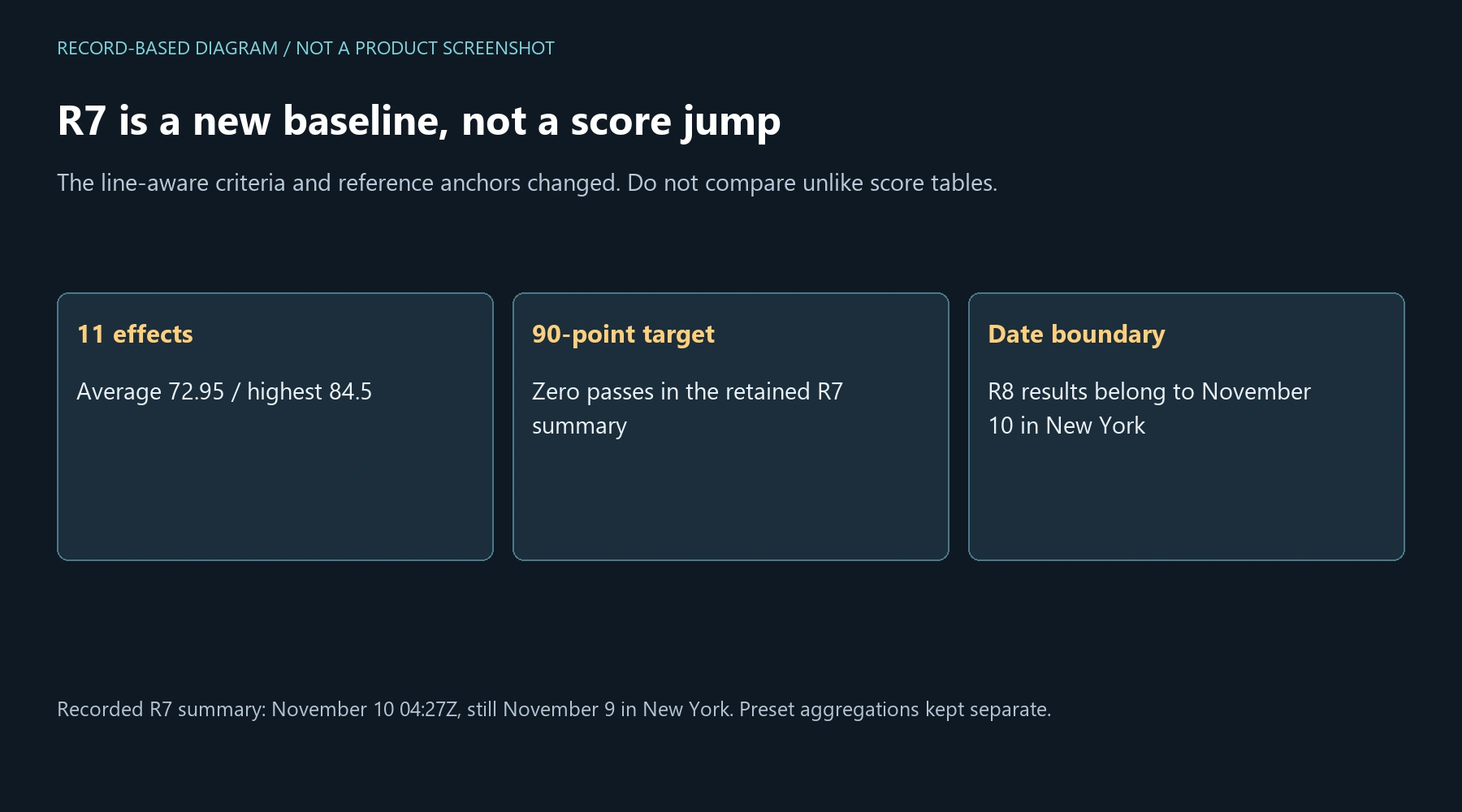
R7 changed the line-aware G4 criterion and evaluation items such as edge and lookmap. We therefore did not turn the new score into a rise or fall against the previous round. A changed marking scheme is a changed test. The R7 Terrace Levels parameter sweep is retained too, including panels that look similar. Producing a sweep image does not prove that the parameter response is clear.
In the R7 summary recorded before the end of November 9 in New York, the 11 effects averaged 72.95, the highest reached 84.5, and none passed 90. Those are results under the new baseline. We did not combine them with differently aggregated preset scores. The later R8 results belong to November 10 in New York, so they stay out of today’s achievements.
Today improved the comparison board more than the scoreboard. Better framing, overlays and export conditions are progress; reaching the desired art quality remains work. That is why the red pen is still on the Consultant Team’s desk. It can be capped when the result truly matches the target.