
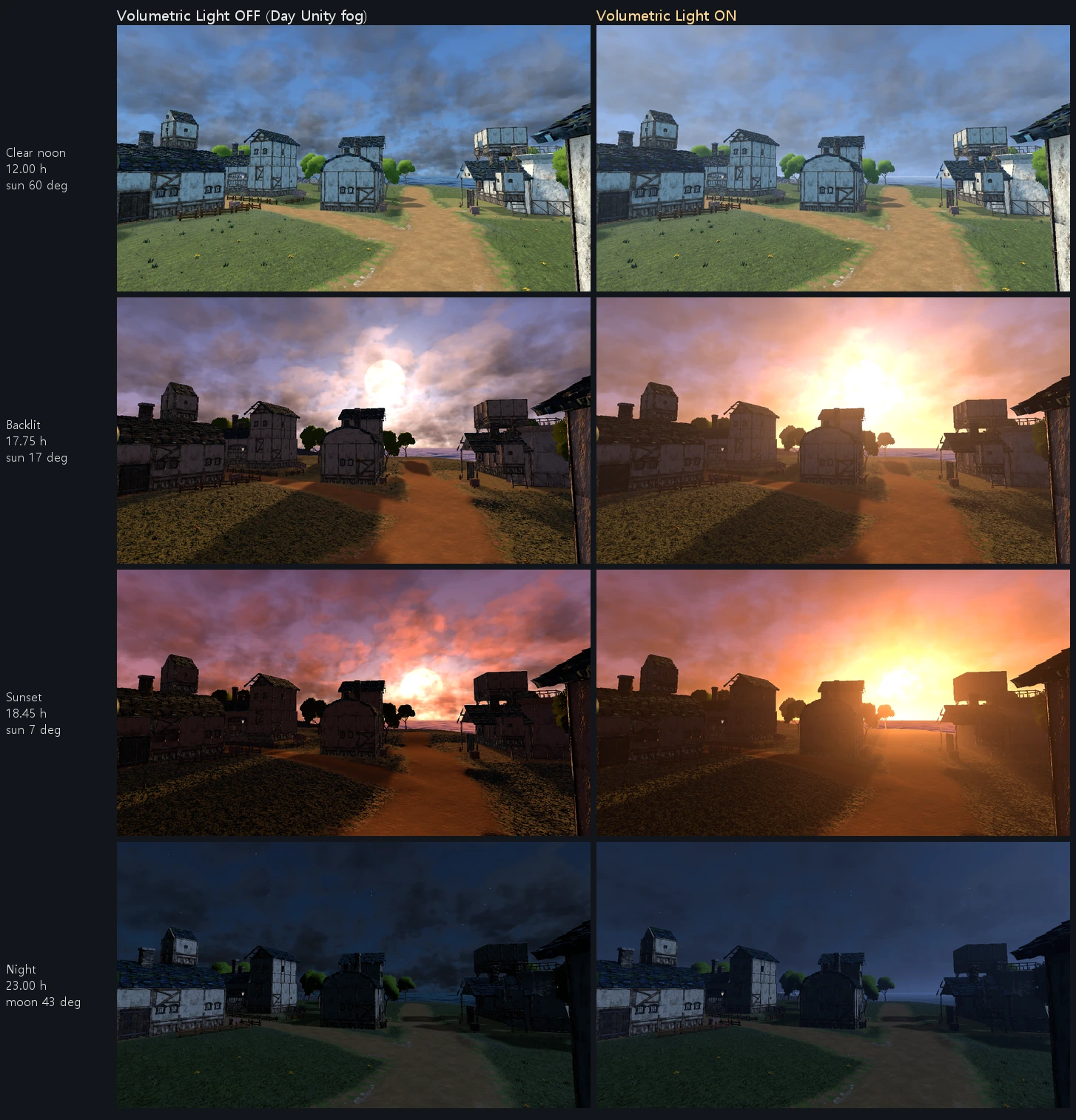
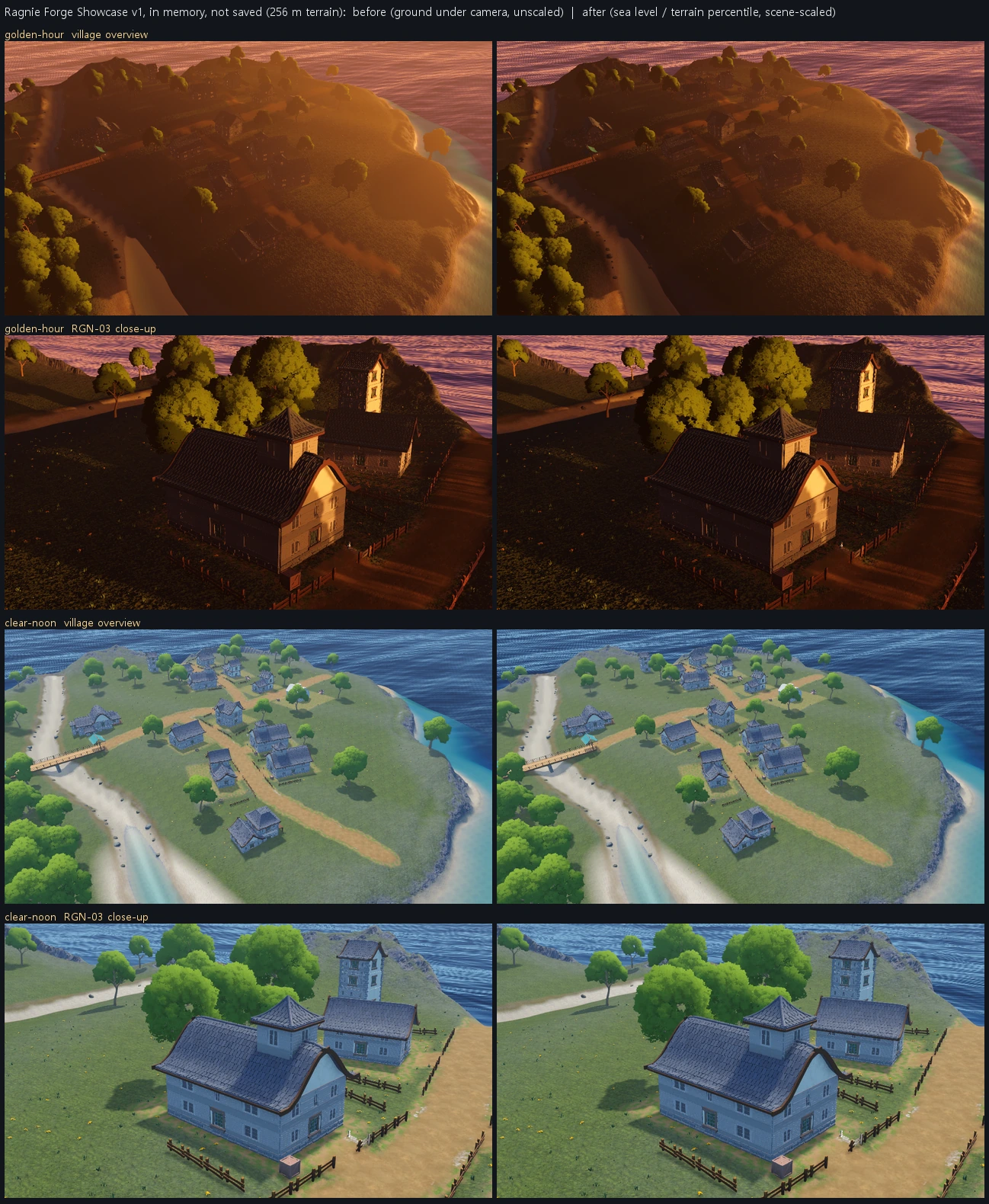
Yesterday we wrote down how fog and lighting should be judged. Today the Consultant Team brought OFF/ON views of the same village. A document cannot stand in for sunlight forever. Four times of day went side by side so we could see how sky color and light changed.
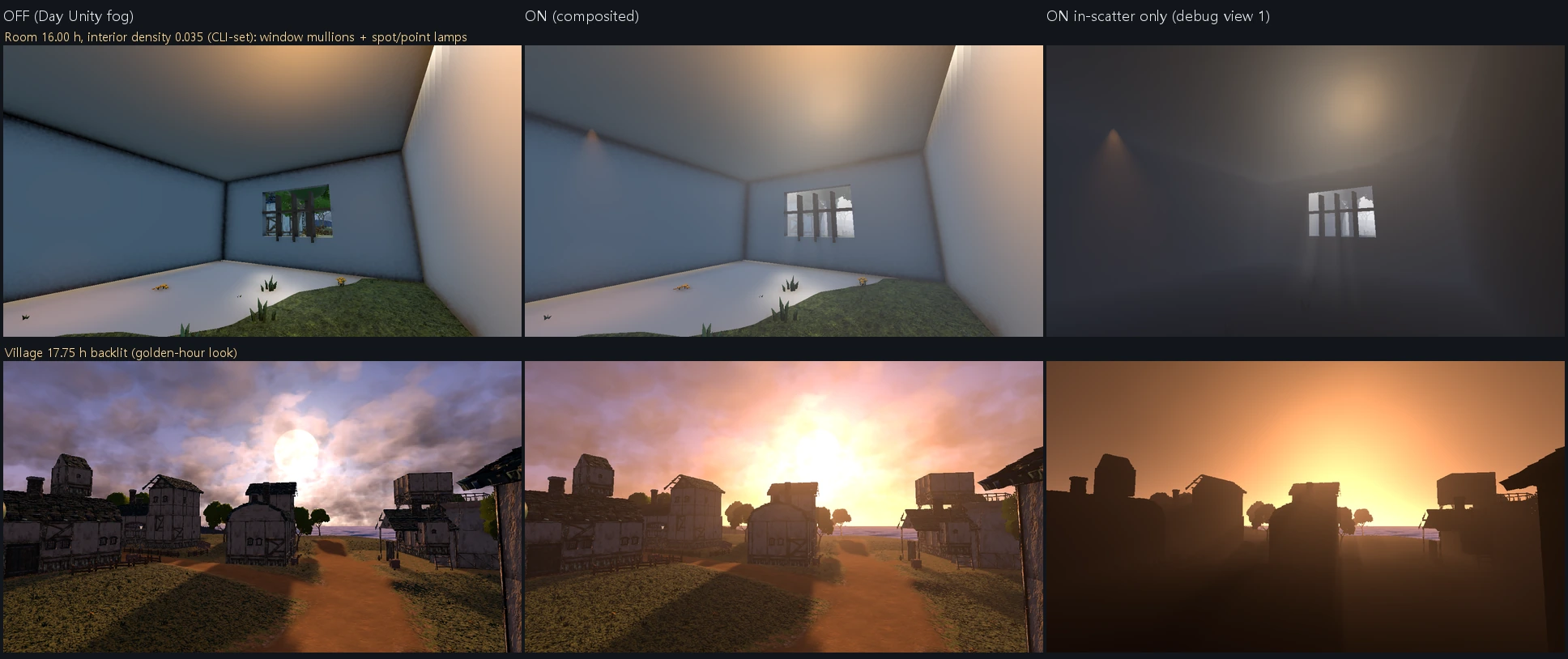
After asking whether the light looked good, we asked whether it stopped where it should. The occlusion and lighting comparison below separates building and scene conditions. Light coming through everything would suggest the walls had gone on strike. One attractive bright shot was not enough to finish the review.
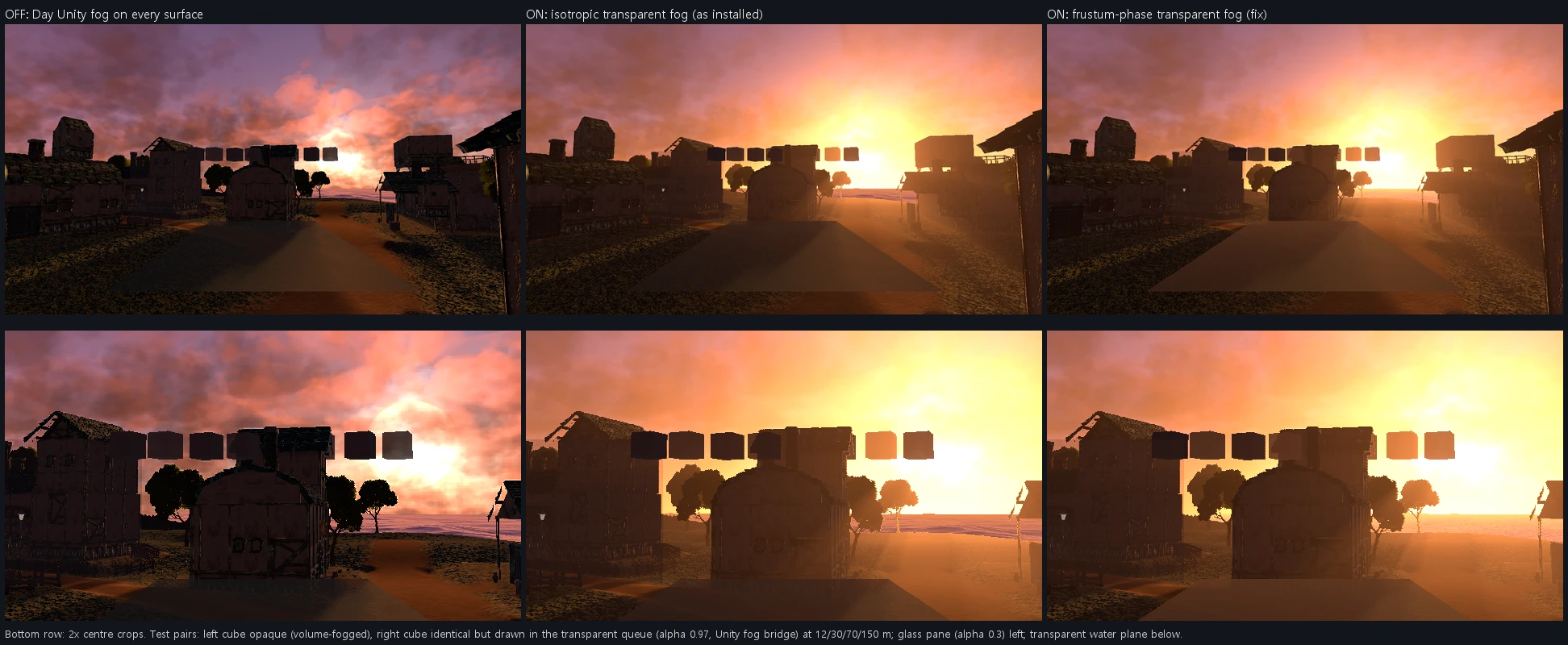
Transparent objects received a separate comparison. Their depth relationships and interaction with fog can differ from opaque surfaces. The team retained transparency OFF/ON views alongside the cloud and sunlight material changes. Checks in this scene are not stretched into approval for every material or project.
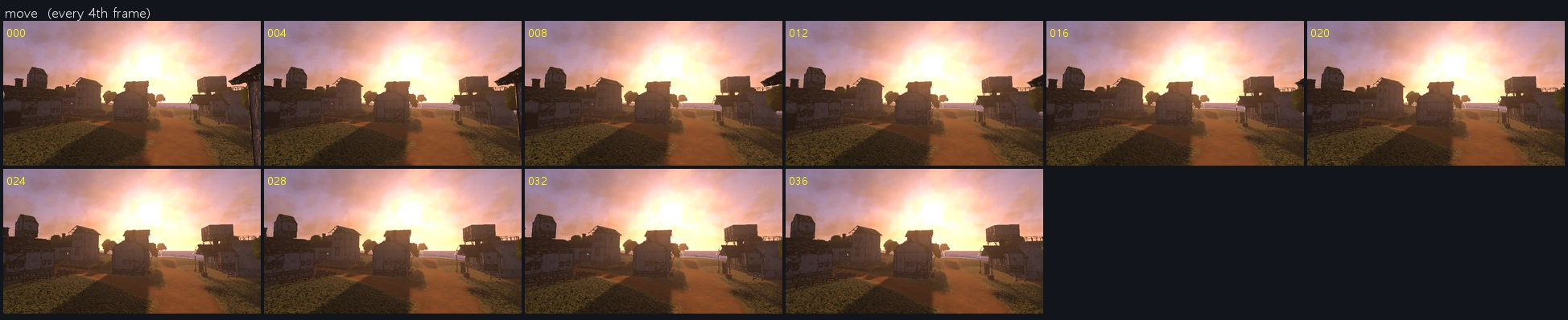
The camera moved too. A still frame may look fine while movement reveals instability. A moving-camera contact sheet and a scale comparison preserve those separate checks. Today the process gets more space than a single beauty shot, so readers can follow what was actually examined.
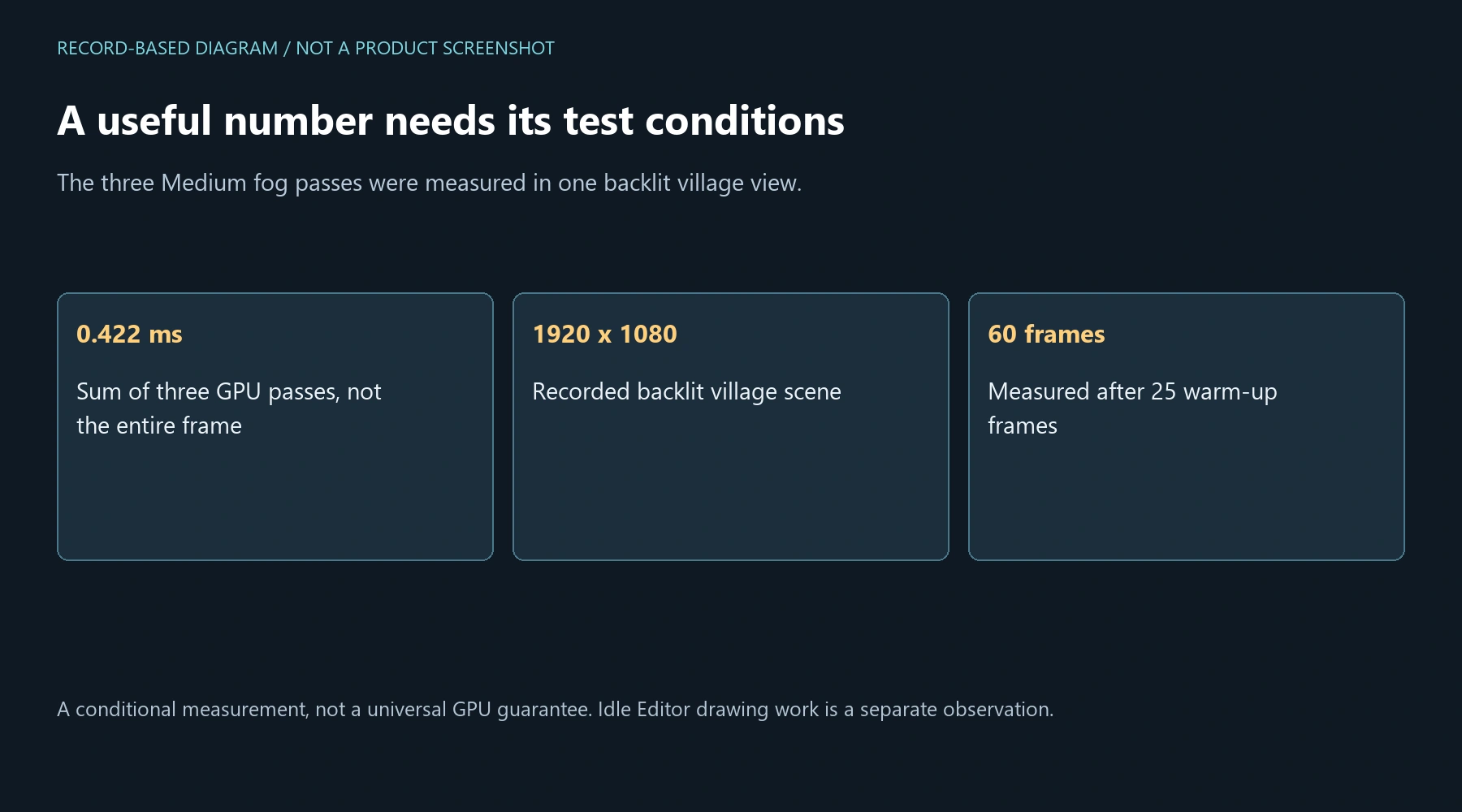
The cost record gives 0.422ms for the three Medium passes combined. Its conditions are a 1920×1080 backlit village view, 60 measured frames after 25 warm-up frames. This is neither the cost of an entire game frame nor a promise for every GPU. The team also addressed repeated drawing while the Editor was idle, without turning that conditional observation into a game-FPS claim.
The fog plan now has real comparisons and a measurement record. Final materials and art approval across all environments still lie ahead. The dated report also leaves commits and Gluon integration outstanding. Good sunlight with the test conditions pinned beside it is enough to be pleased about today.