
A score of 92 is reassuring—until you ask what was being graded. Here it was the Inspector, the settings interface. It did not mean the grass itself had earned 92 for visual quality. On November 8, the art director worked on giving those numbers and pictures precise labels. Even a report card needs its subject headings.
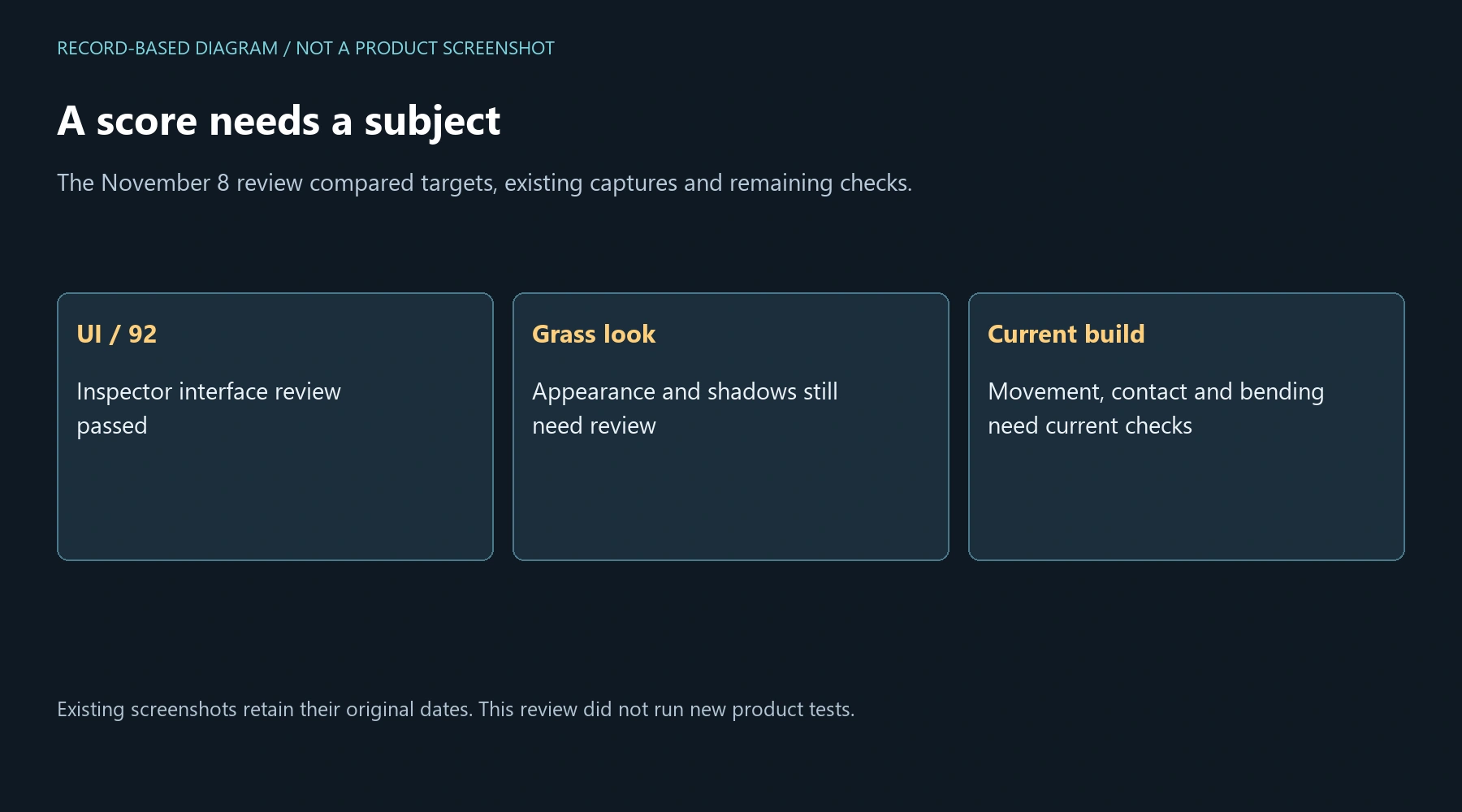
Using the environment and Season owners' existing evidence, the art team compared target images with current captures. There was implementation evidence for rendering nearby and distant grass differently. Appearance, shadows and the current in-game build still needed separate checks. The latest work capture used in the comparison was from the evening of November 7. Reviewing a meadow today does not make it a meadow built today.
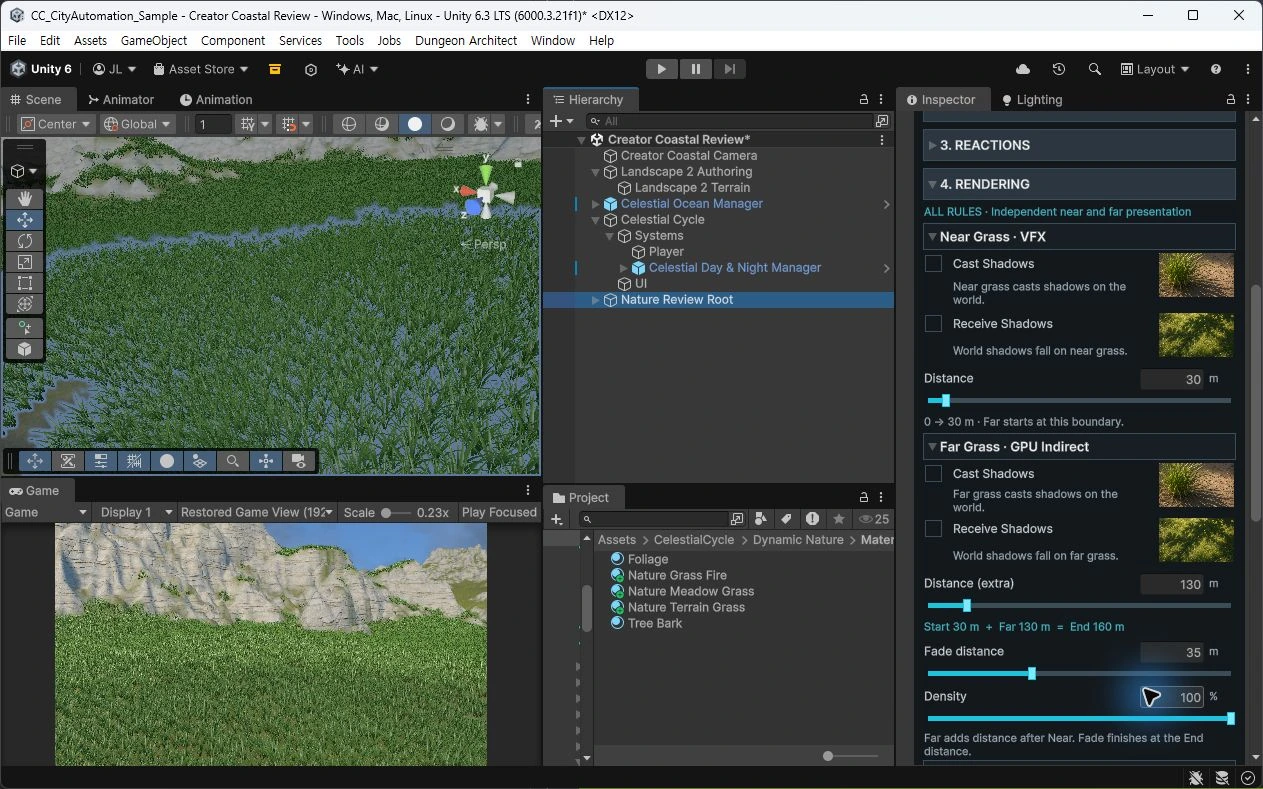
Nor did the review award visual parity by comparing a shadow-disabled capture with a target under different lighting. An earlier fire test and verified contact or bending in the current grass version are different claims too. Keep the useful evidence; leave the unverified boxes open. An empty box can be annoying, but it is a much more honest way to find the work still waiting.
The same distinction applied to Spline path editing. There was evidence that the tool connected to the same document and terrain. Whether selecting and dragging points, changing widths and adjusting heights felt good was another question. The interaction concept and the actual connection screen were labelled separately, with dragging, cancellation and single-gesture Undo left on the next-review list.
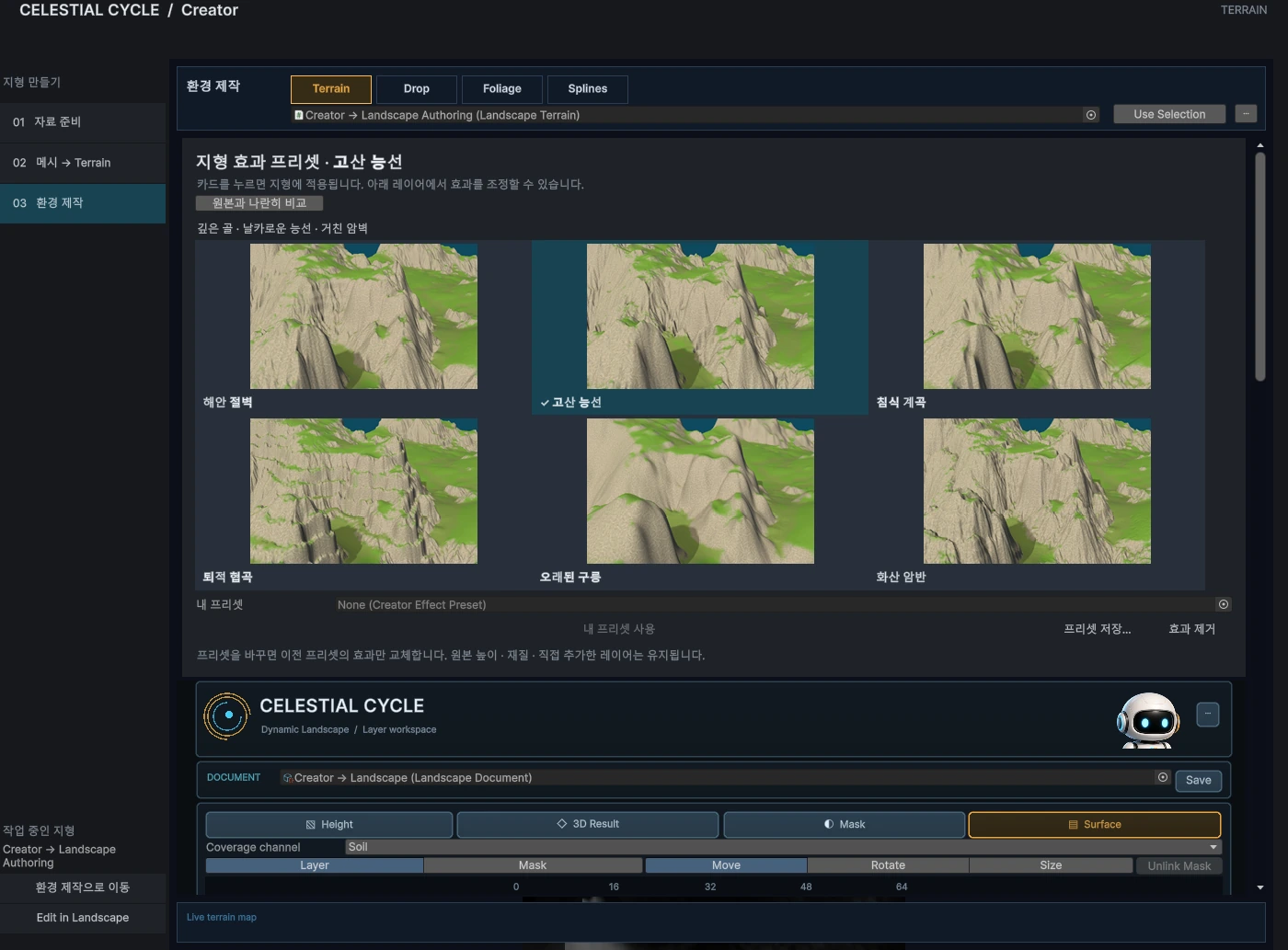
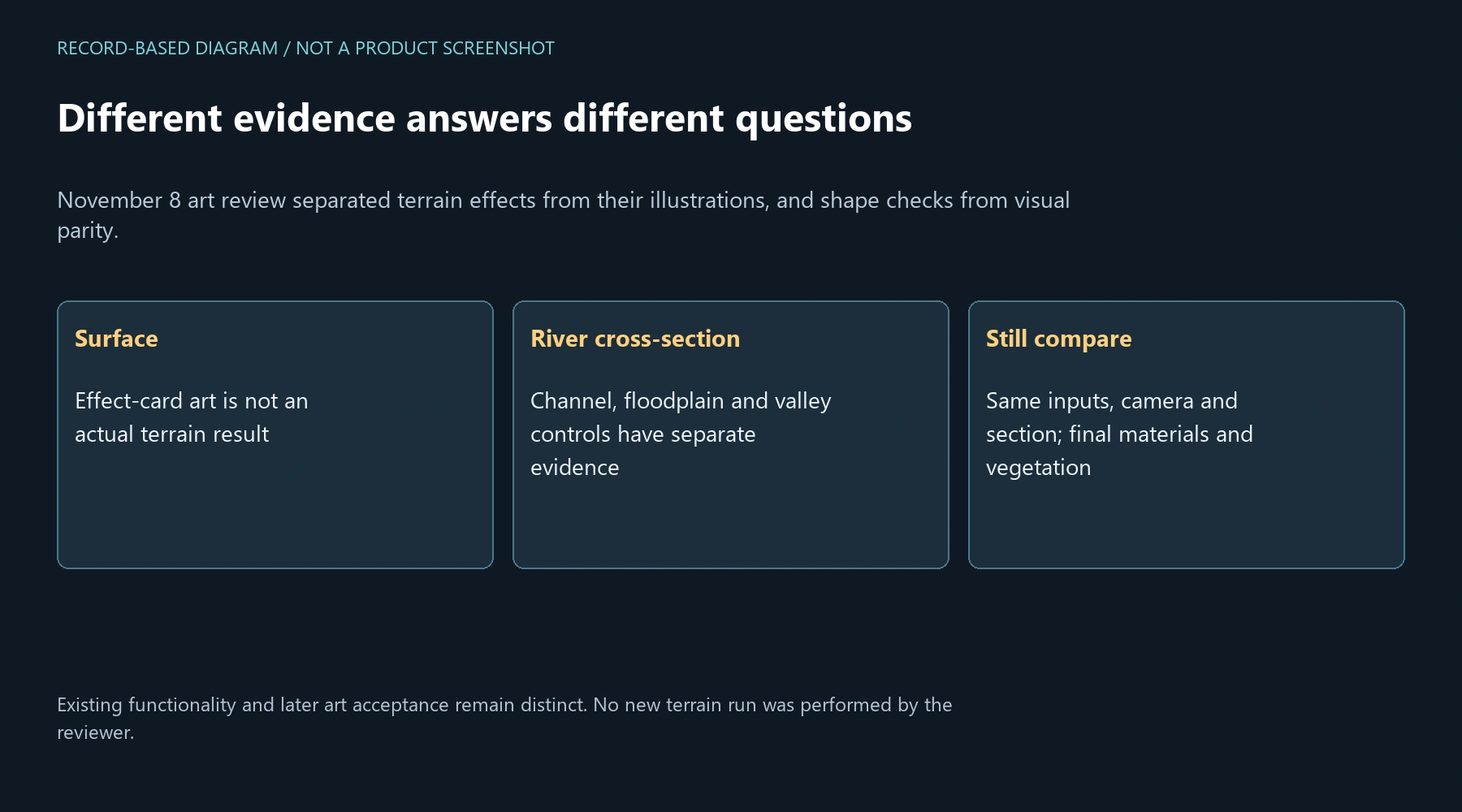
Terrain effects and river cross-sections received specific feedback too. An illustration on an effect card is not the terrain it produces. Evidence for controlling the channel, floodplain and outer valley is separate from a verdict that the finished landscape looks as natural as the target. The review calls for matching inputs, camera and cross-section before comparing widths, bends and transitions. Each claim that a function exists now points to the screen still needed to judge it.
Five comparison sheets were added, covering terrain surfaces, rivers and valleys, path editing and grass. The archive also connected 33 existing reviews and target sheets. The useful change was not simply more paperwork. Each sheet put the desired result, verified present state and remaining checks together, so the next owner would not mistake an ambition for a finished feature.
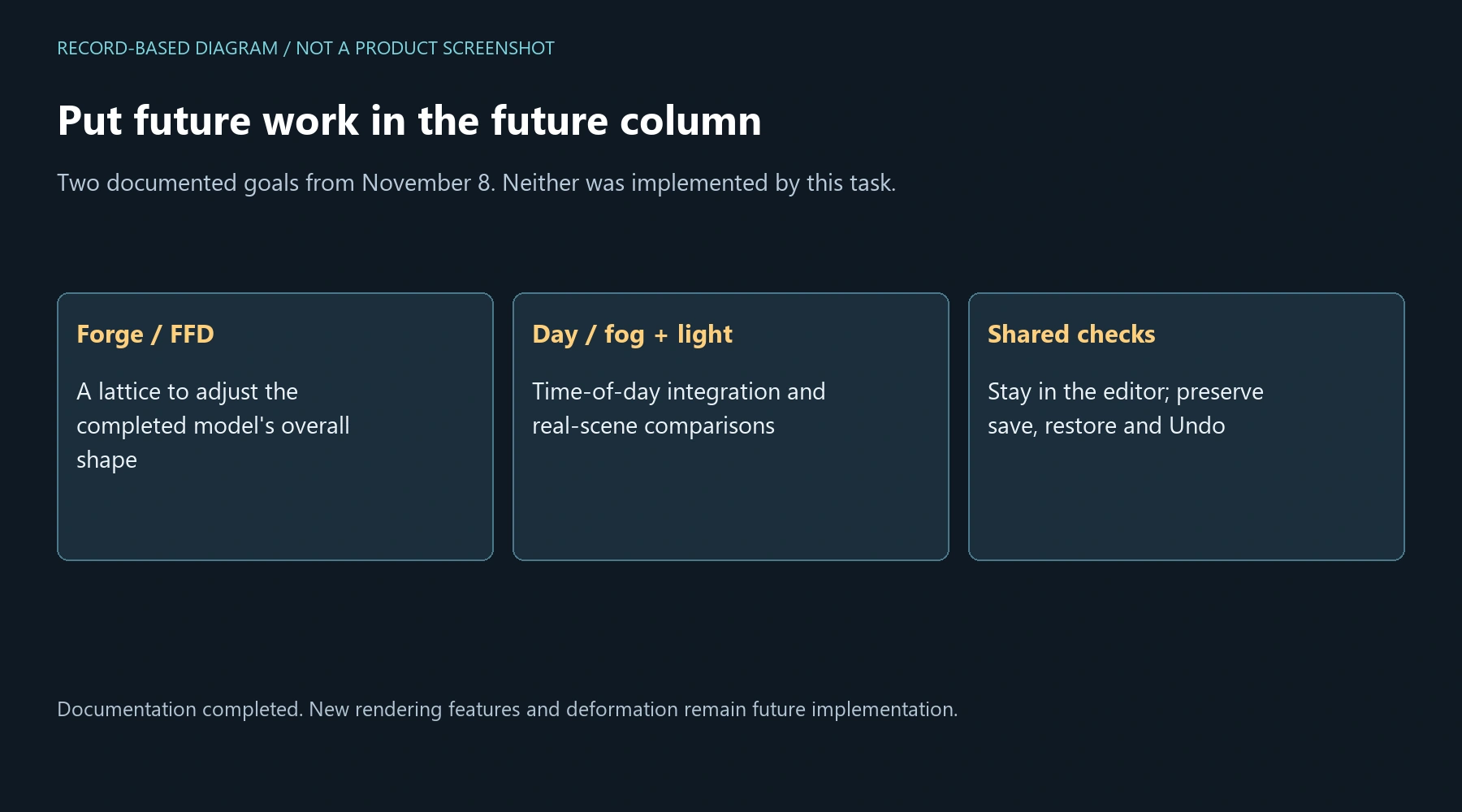
Future work received labels as well. The team documented FFD—an enclosing control lattice for adjusting a finished model's overall proportions and curves—and fog and light scattering connected to Day's time of day. Neither was implemented by this documentation task. The goals call for staying inside the existing editor flow, preserving save, restore and Undo, and judging real comparisons in the same scene.
This was not the day the forest suddenly became lusher or new sunbeams poured through the fog. It was the day the team made the next screen and the next comparison easier to identify. A growing company acquires paperwork. It might as well be paperwork that keeps the next person out of the same hole.