
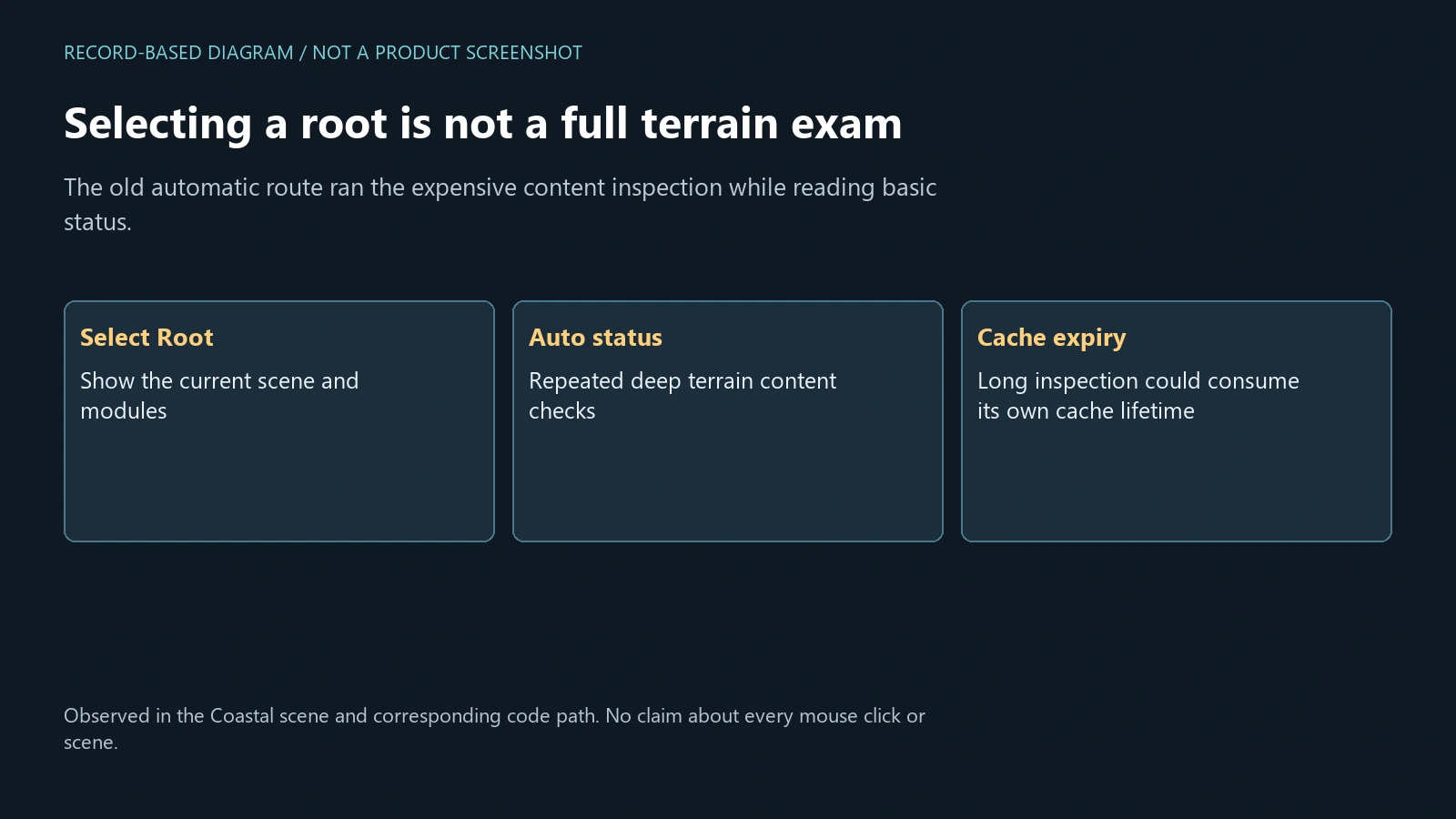
I selected an object to look at its settings. Behind the panel, the terrain was receiving a full examination. Once, that is a thorough tool. Repeated while drawing the interface, it becomes a different service altogether. A simple status read was making us wait for far more than the status.
There were two contributing paths. Landscape's automatic check inspected the full terrain content, while the Day-side cache could already have expired by the time a long check finished. Use up the shelf life while making the result, then request another result. Even diligence needs the right order.
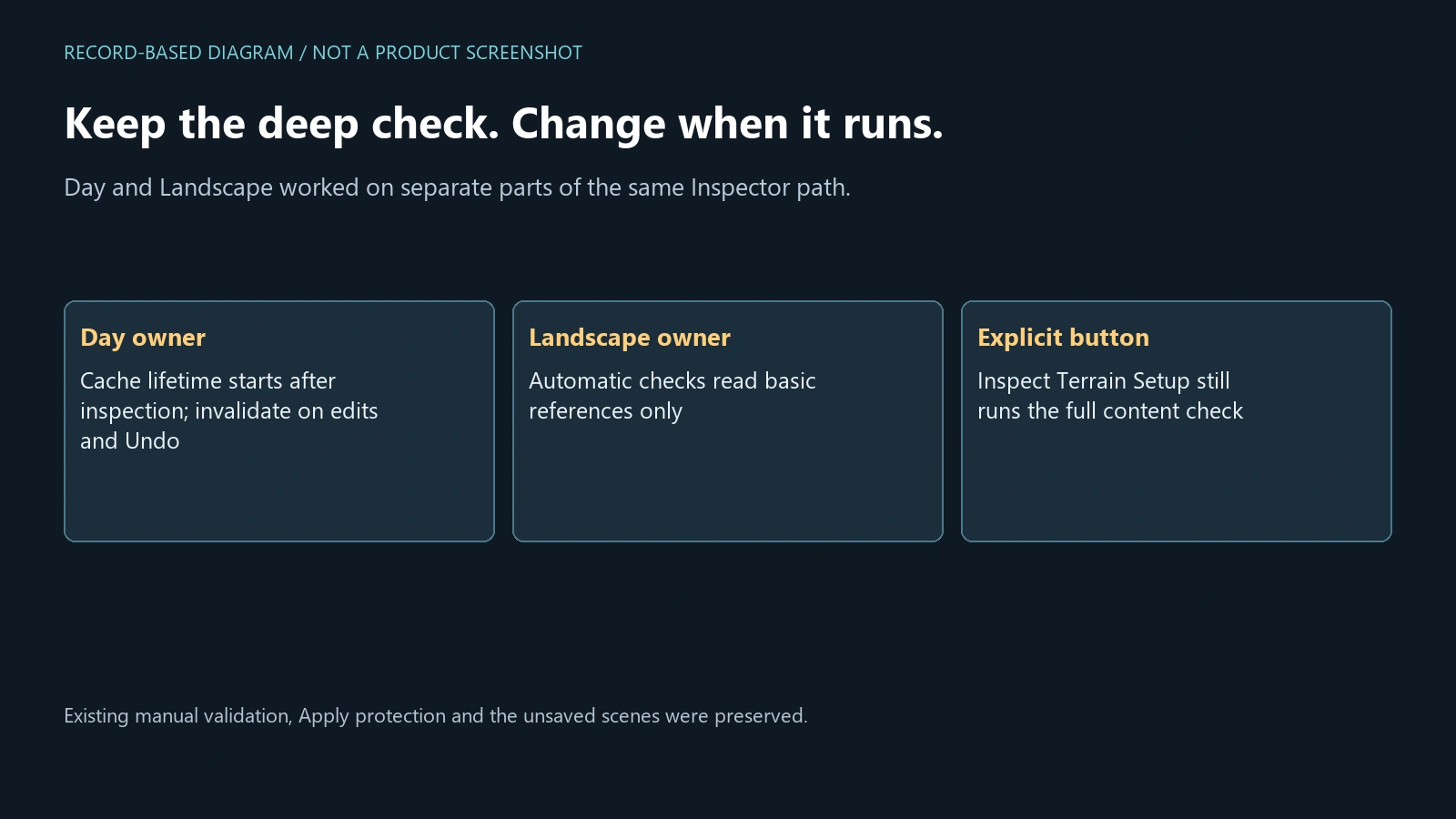
The Day owner moved the cache lifetime to start after inspection completed. The Landscape owner reduced automatic checks to basic references. The existing Inspect Terrain Setup button retained the full content inspection. Validation was kept; lightweight status and deliberate deep inspection were given separate jobs.
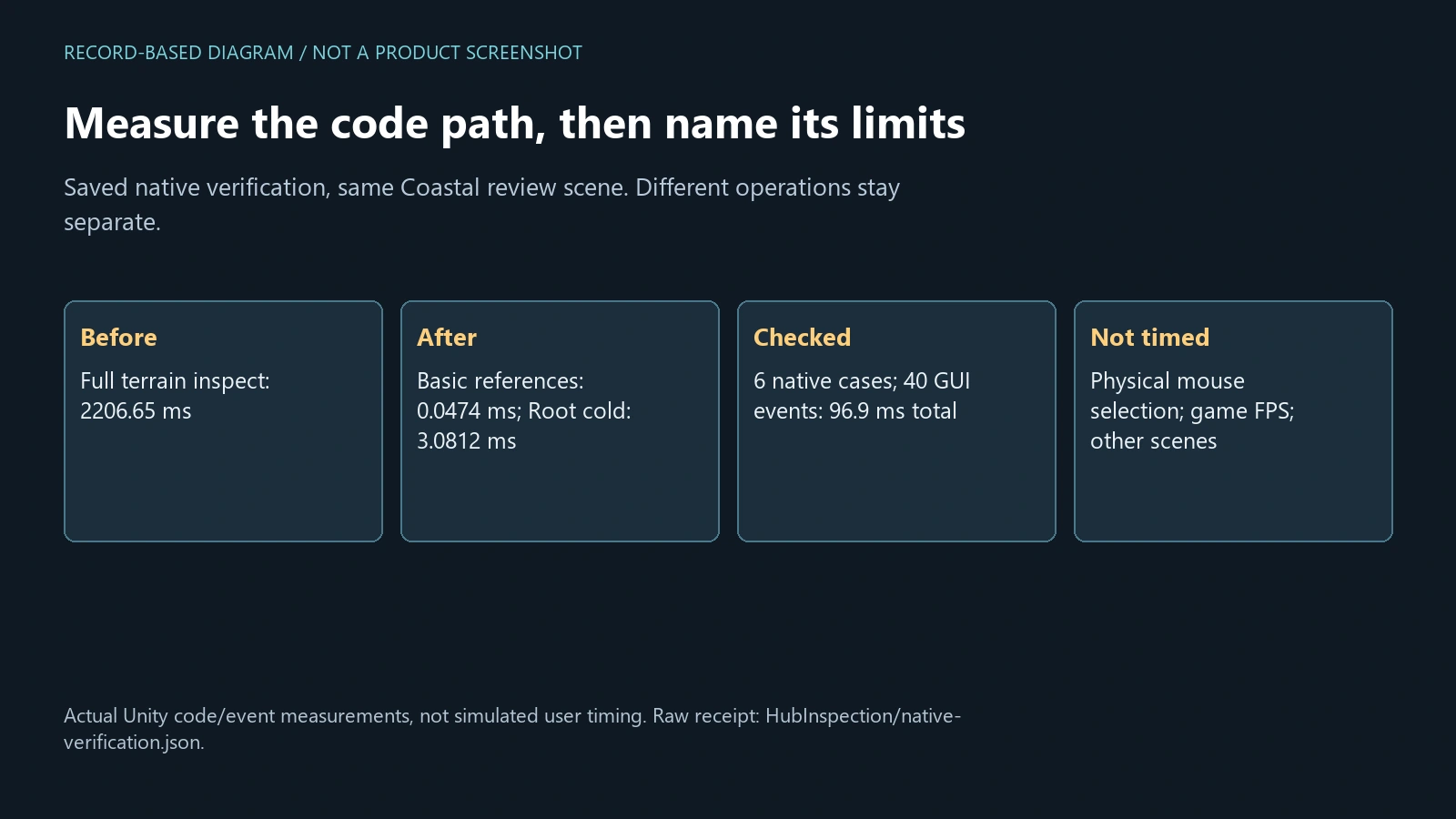
In the same Coastal scene's code path, the old full inspection took roughly 2.2 seconds. The revised basic-reference check took less than a millisecond. The initial Root snapshot and GUI-event costs were recorded separately too. A security prompt prevented timing physical mouse selection, so these figures are not game FPS or a promise about every scene's response.
Manual deep inspection, Undo handling and reference-error checks remained in place, and the relevant changes reached main. Unsaved scenes were preserved. Today's agreement is simple: opening the settings should not book a complete medical examination. Keep that examination available when someone actually asks for it.