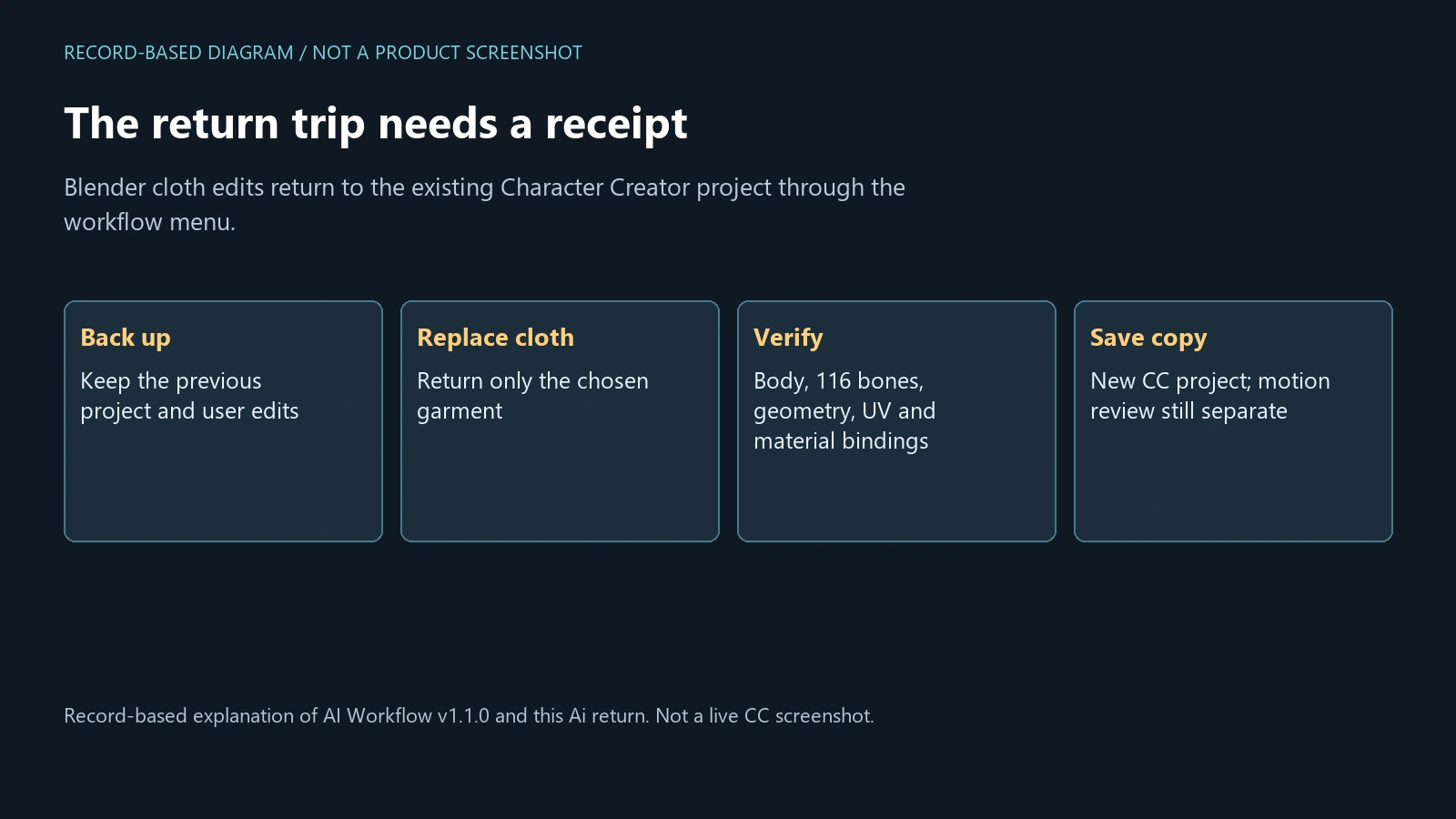
Changing an outfit should not mean receiving a different body. Today's Ai work was about more than attractive clothing. A garment edited in Blender had to return to Character Creator, or CC, with the body, skeleton and other parts intact. An outfit change had acquired an identity check.
The necklace had its own handoff. After the shape was prepared, the UV artist unfolded its surface and used a checker pattern to inspect continuity and stretching. The saved file was reopened to check the original geometry and material assignments. Stretching on small curved areas stayed in the warning notes. Gold does not make a handoff exception disappear.
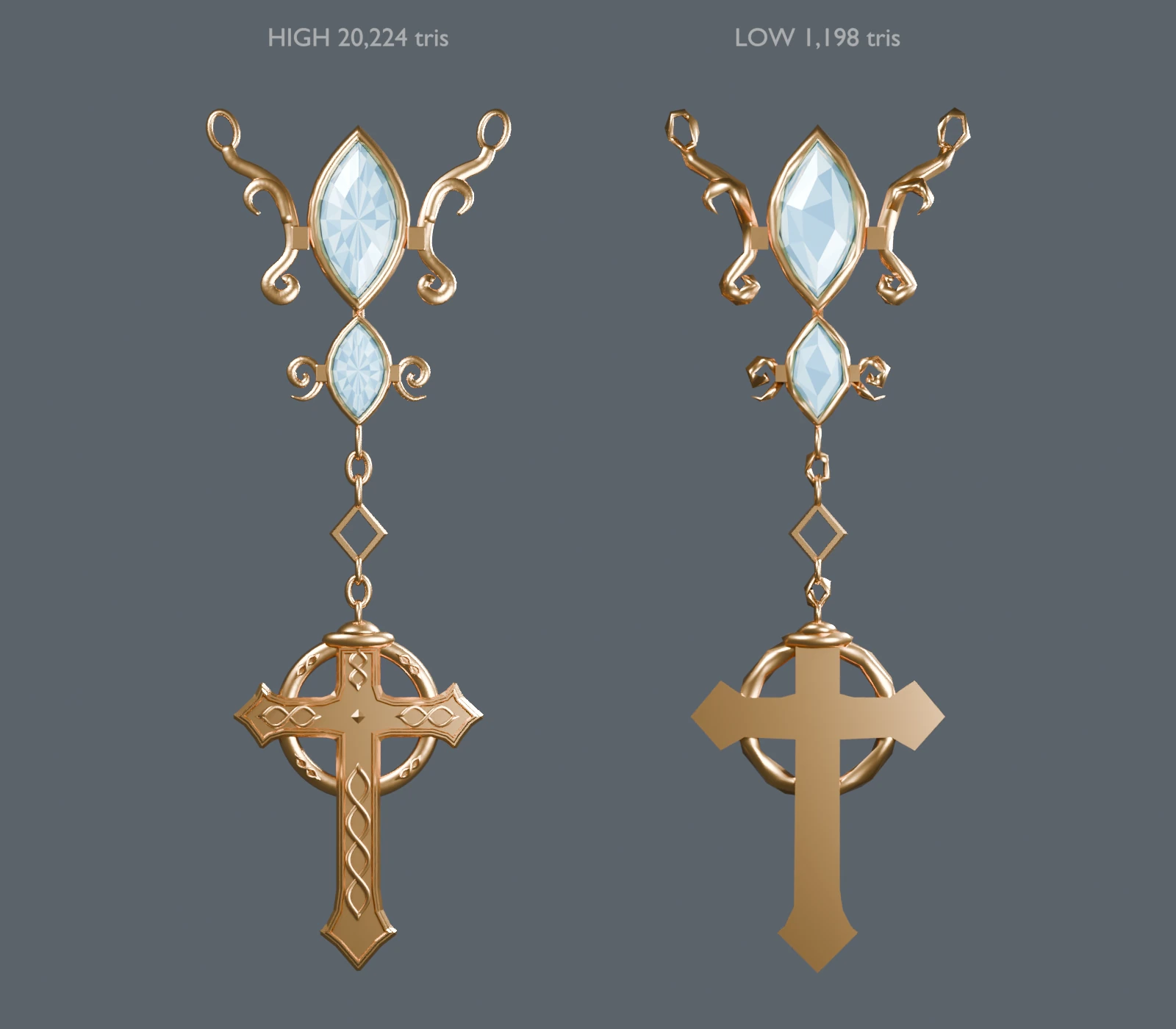
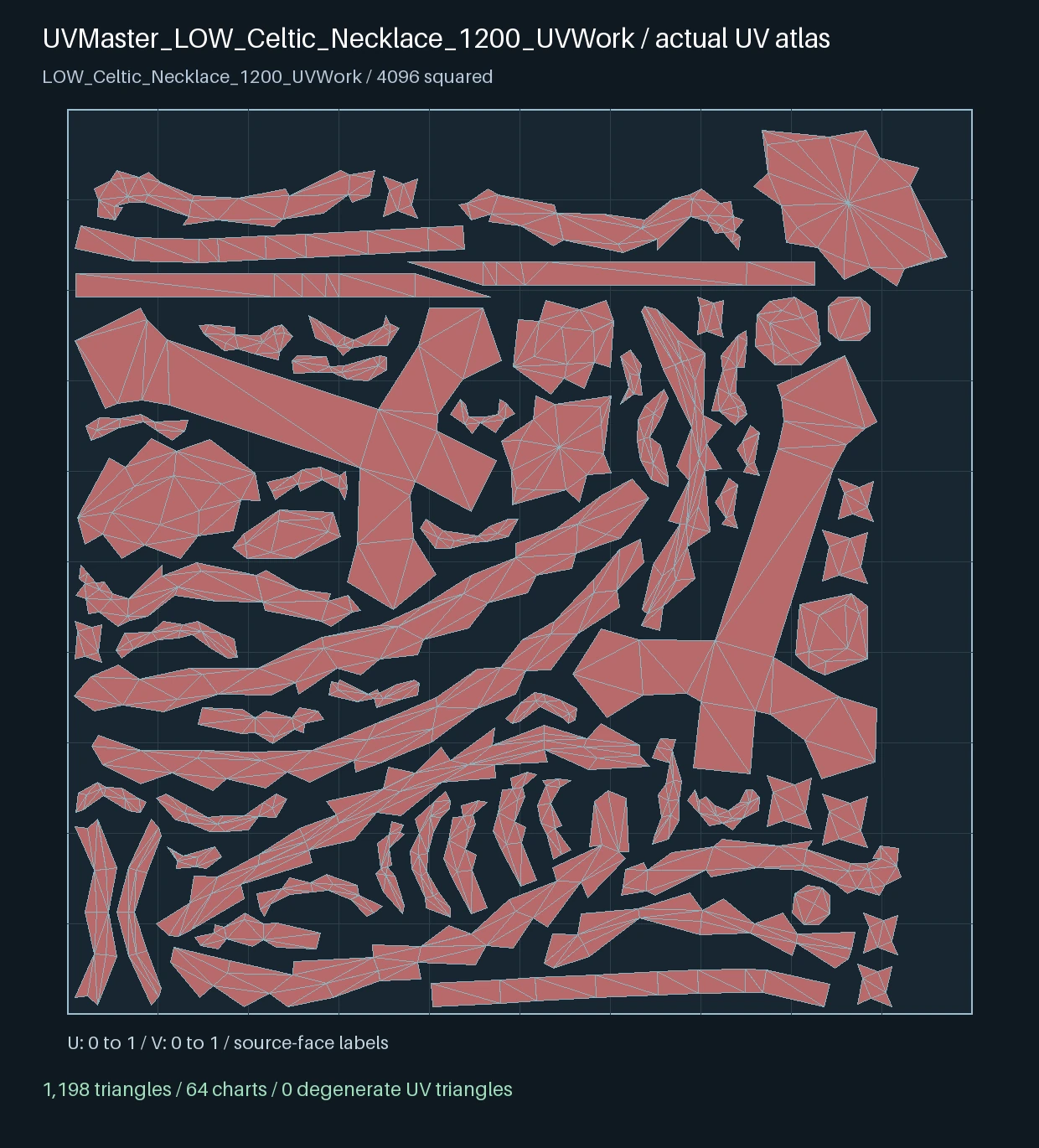
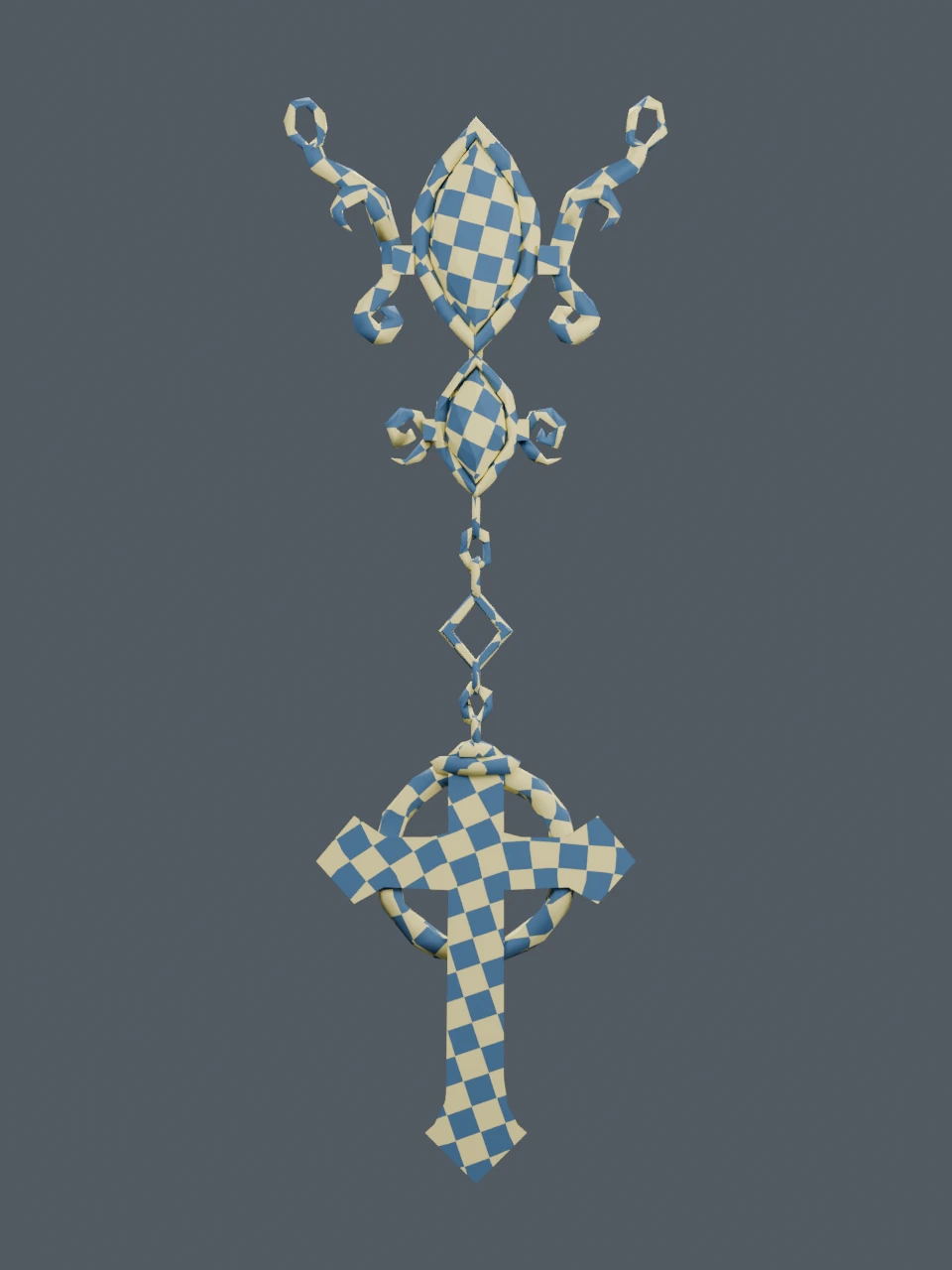
The garment was revised into a V-shaped diagonal wrap. When the first revision was viewed with the outer dress, intersections remained at the contact areas. Clothing that looks fine on its own and clothing that can be worn together are two different jobs. The next revision responded to that feedback.
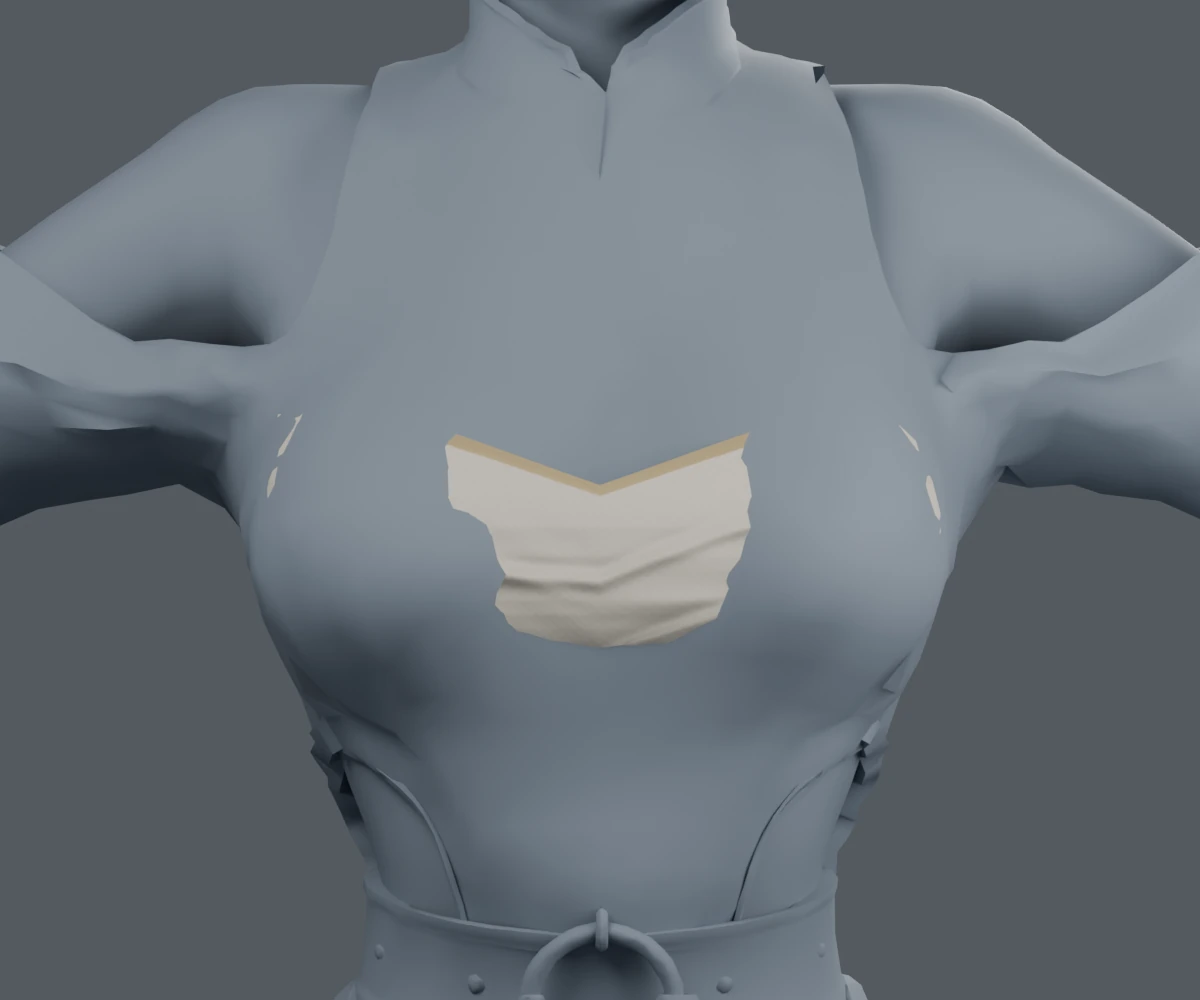
The work used local Blender modeling, a real UV tool, and a high-to-low bake: transferring surface detail from a denser model onto textures for the lighter one. This wrap used 1,200 triangles and 1K maps. A Comfy-role teammate took part, but this was not the result of a paid AI 3D-generation call.
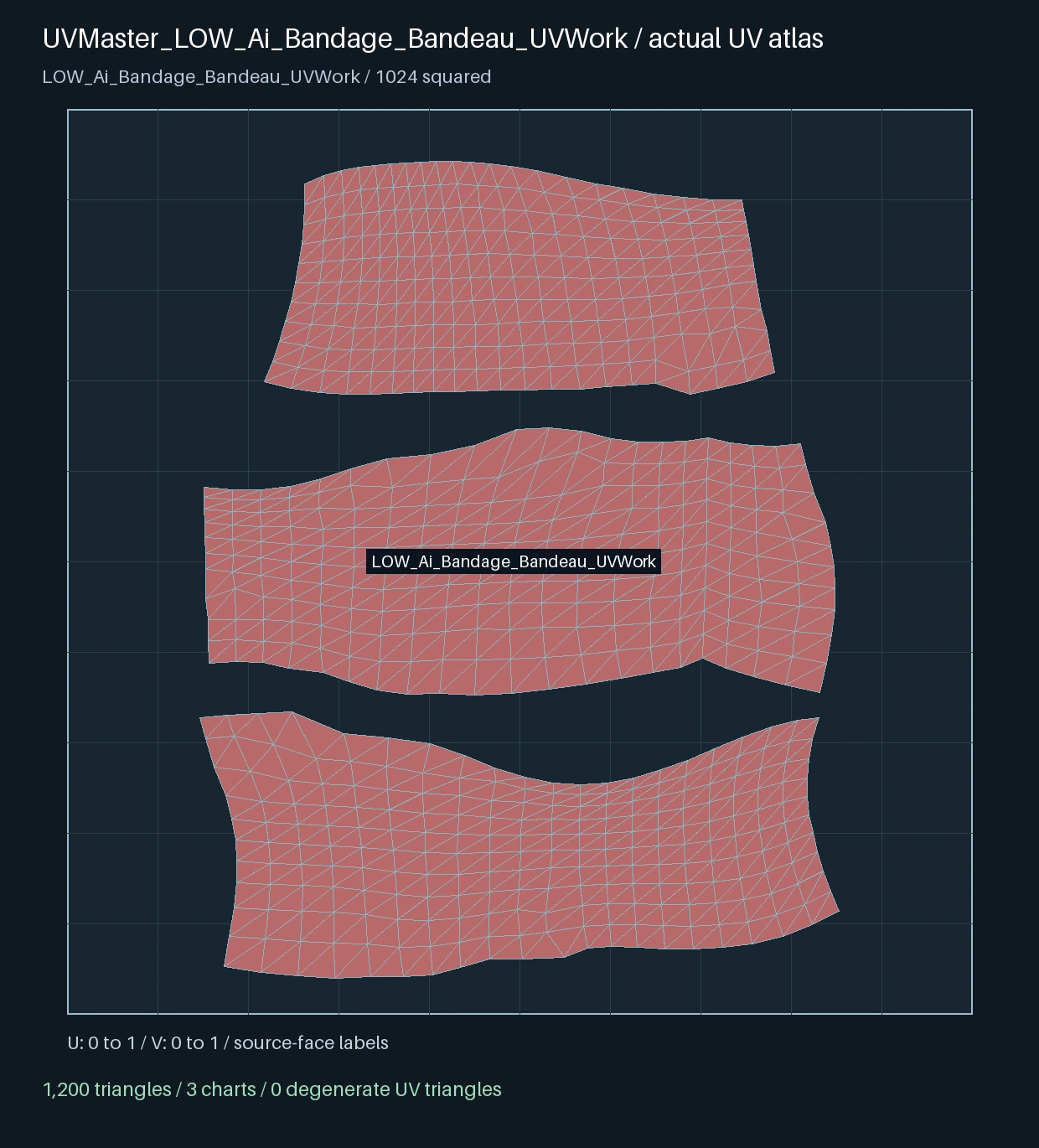
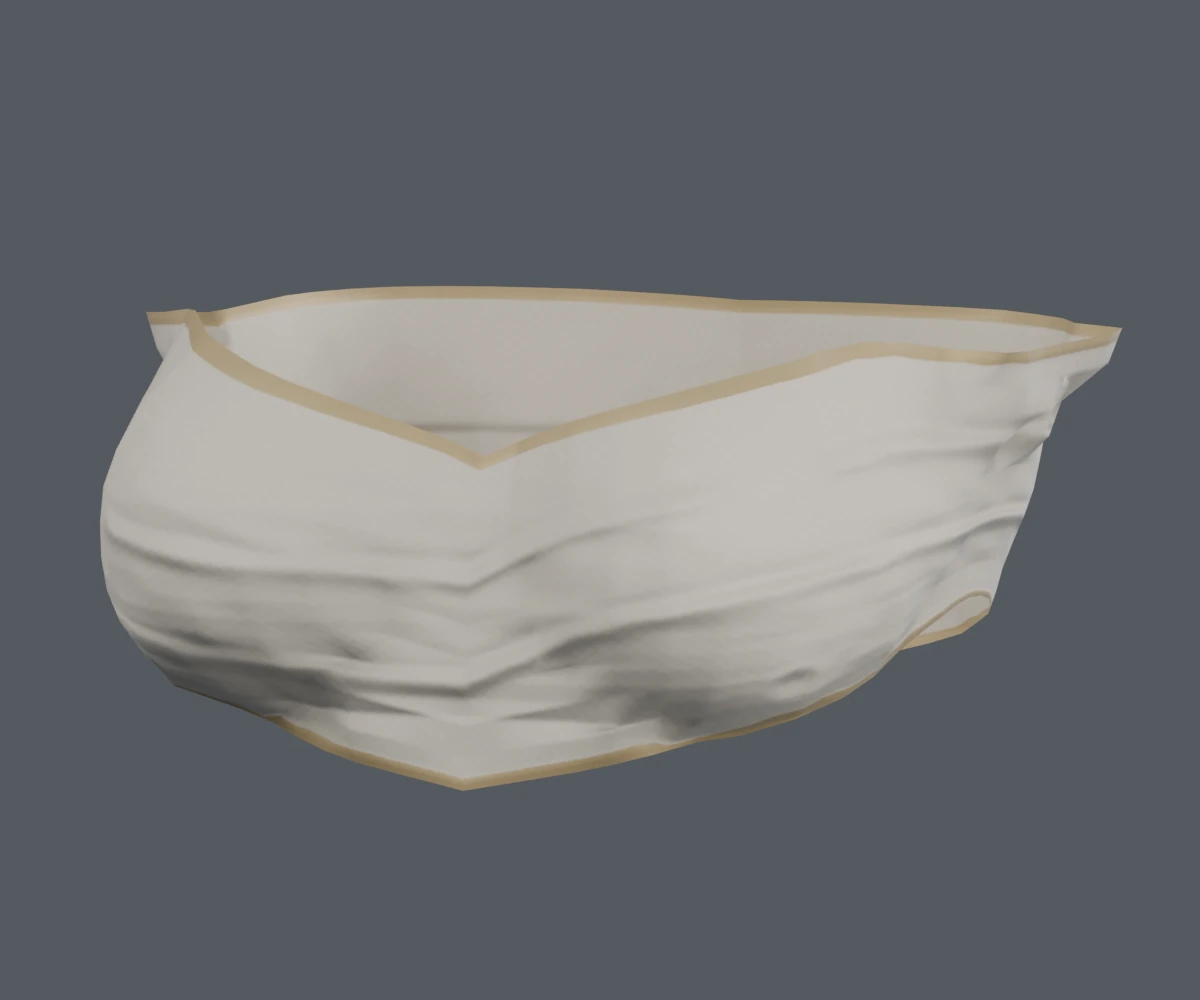
Version 003 refined the space between the body and the dress, then reimported the final FBX to check surface intersections in both directions. The static-pose tests found no penetration or edge crossings. The CC owner saved a project replacing only the previous wrap. That does not certify every arm movement or pose.
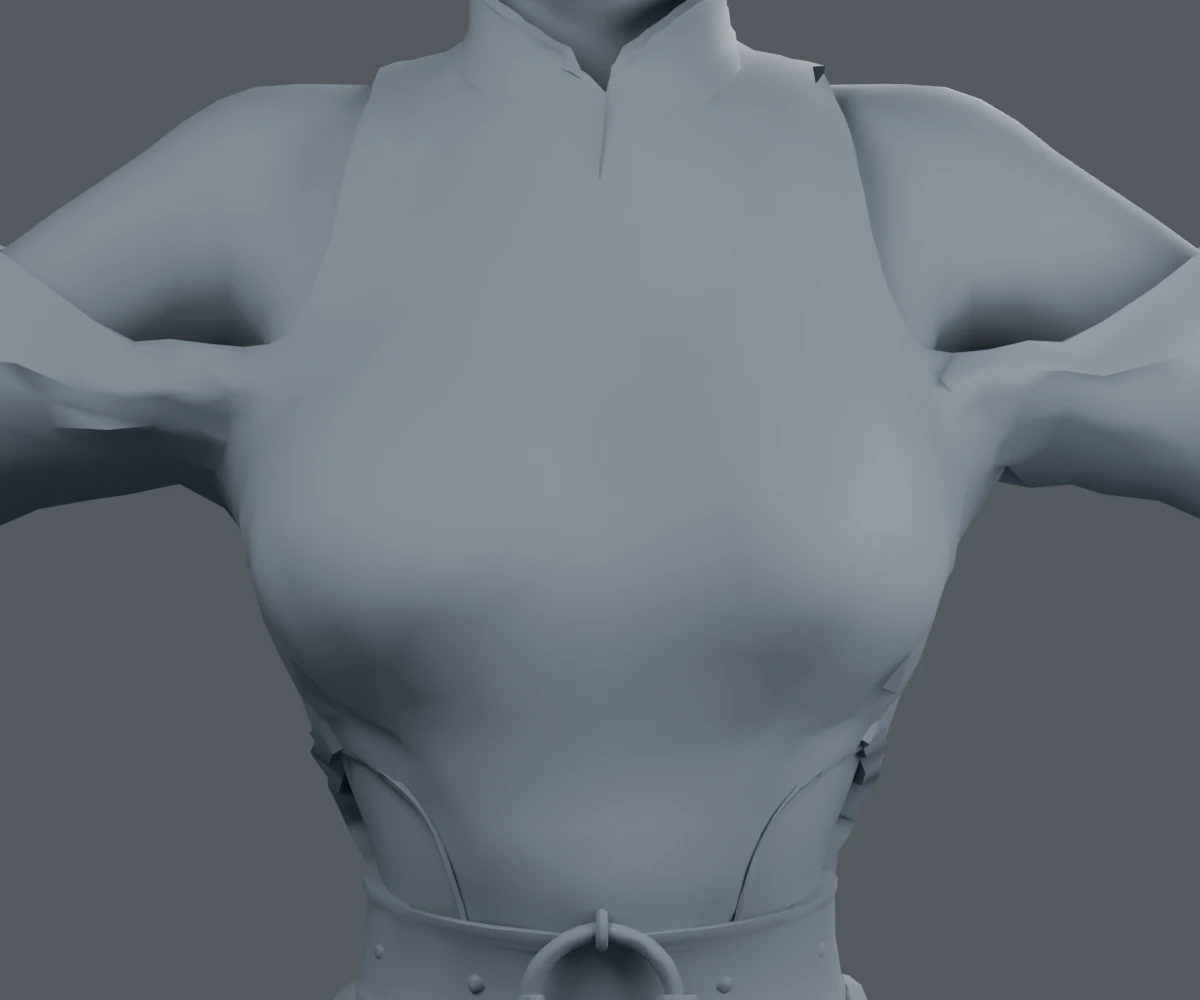
The existing Blender-clothing return menu handled the round trip: preserve the prior state, replace the chosen garment, verify the body, 116 bones, surface coordinates and material bindings, then save a new project. The outfit changed; the parts that should not change were protected. Fashion may be a matter of taste. Handoffs need a firmer standard.