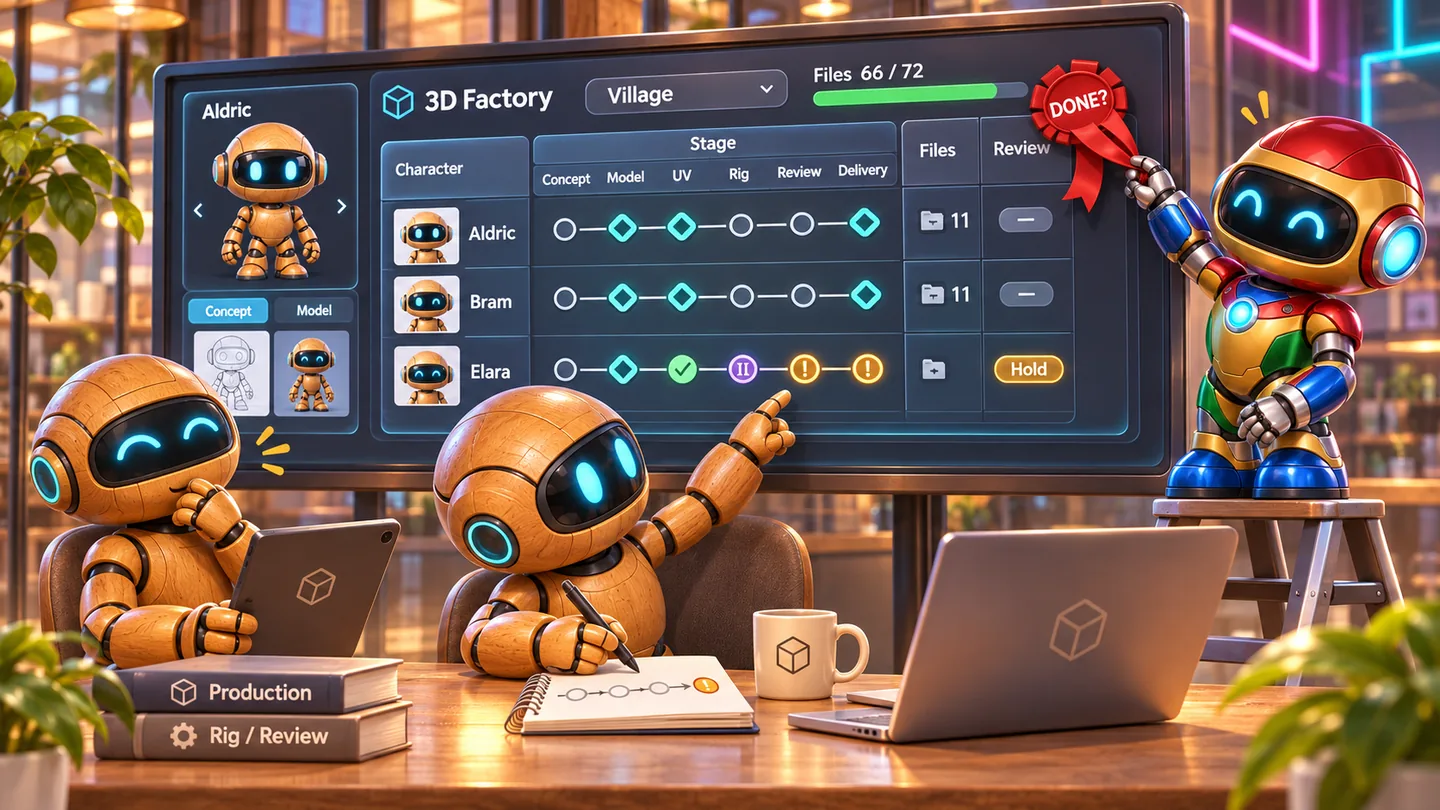
More characters require a progress board. If everyone must ask where the concept is and whether review happened, the production head makes more explanations than models. Today those answers moved onto the screen instead of recruiting another explainer.
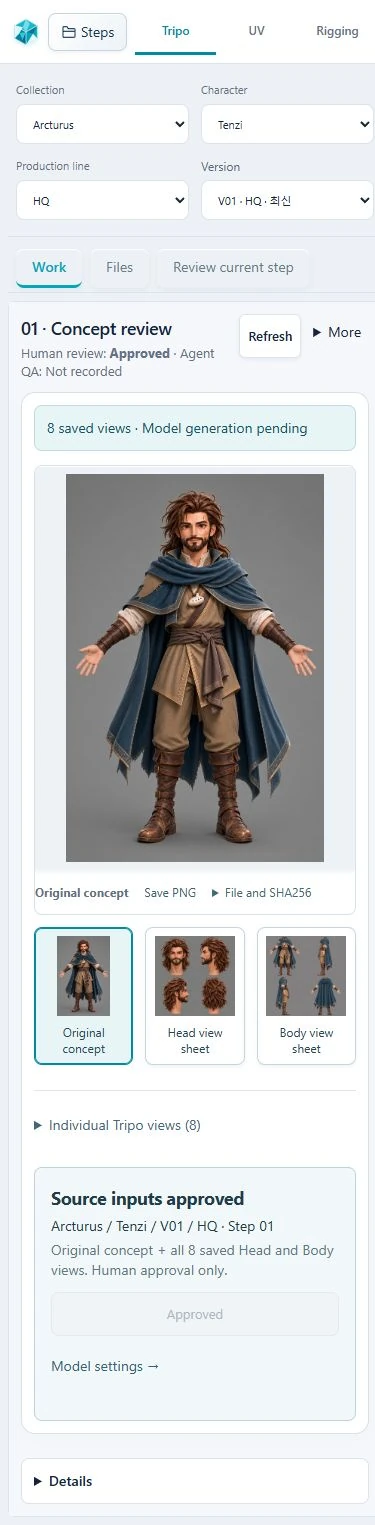
The web director's rule was to show the actual current-stage result first. Saved concepts and models stay in the main view, technical information in expandable details, and mobile scrolling less fragmented. This exposes existing output, not new concept production. Retrieval and production counts use different ledgers.
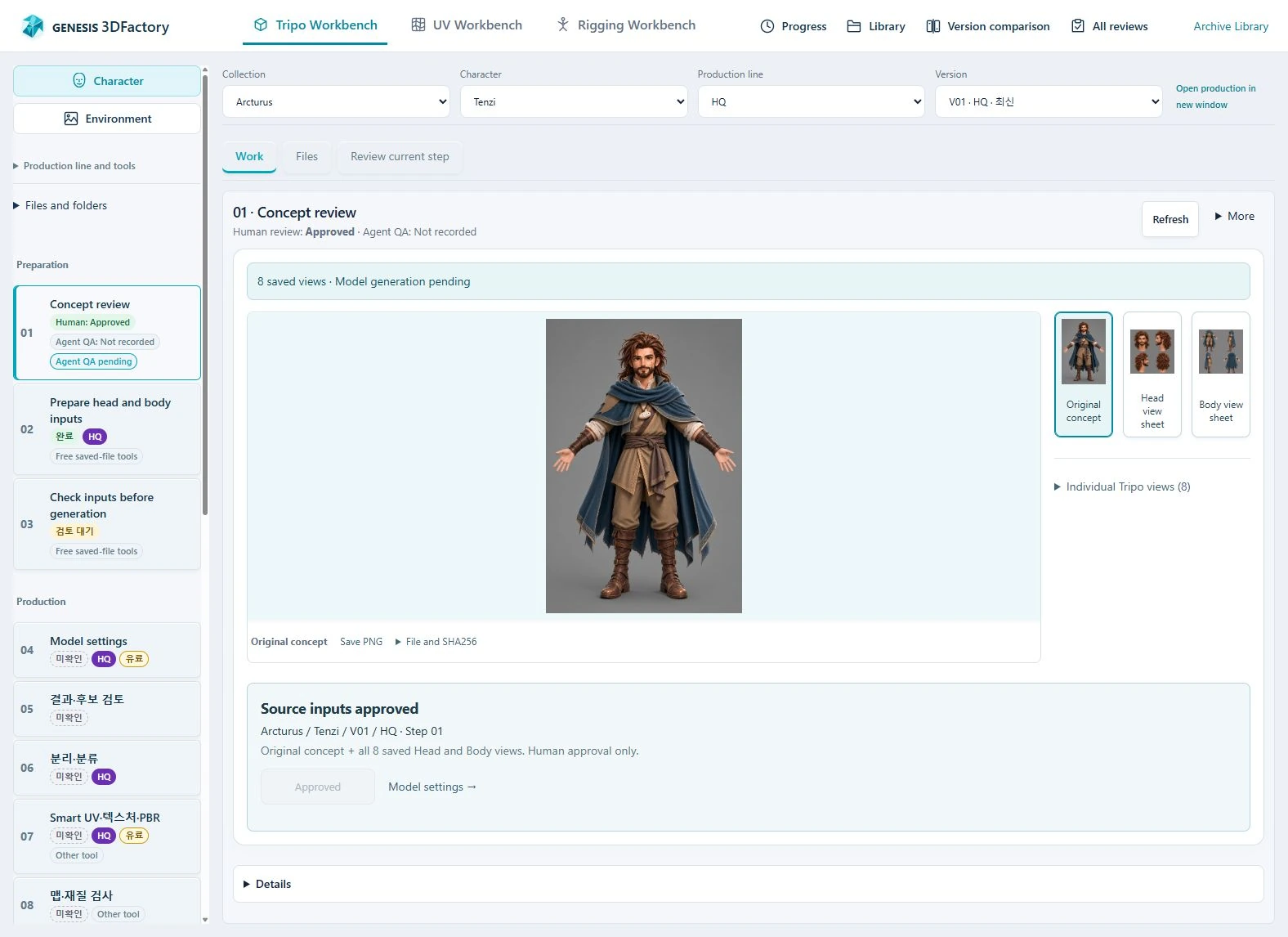
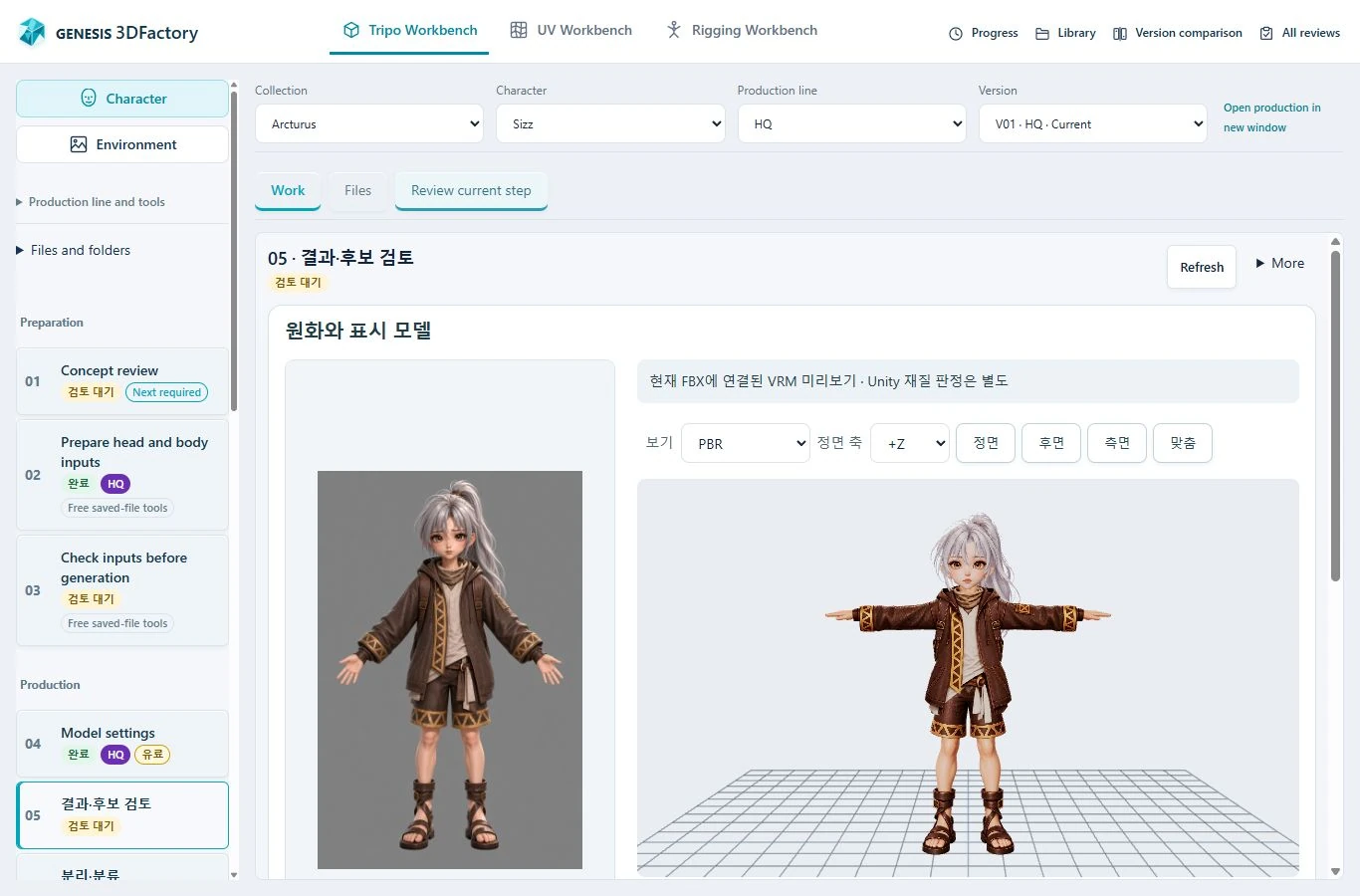
Choose a collection to see concept, model, material, rigging, review and delivery in aligned rows. The next step after a file can begin with the table. Sizz's stage places the existing display model beside its concept and allows rotation. Pending review stayed pending. A better-looking screen did not quietly clear the queue.
The snapshot counted sixty-six delivered-file entries in seventy-two rows. It does not mean sixty-six new characters today or sixty-six final passes. These are accumulated records. Empty rigging or review cells stay empty even with files delivered. Green is busy enough without borrowing an approval stamp.
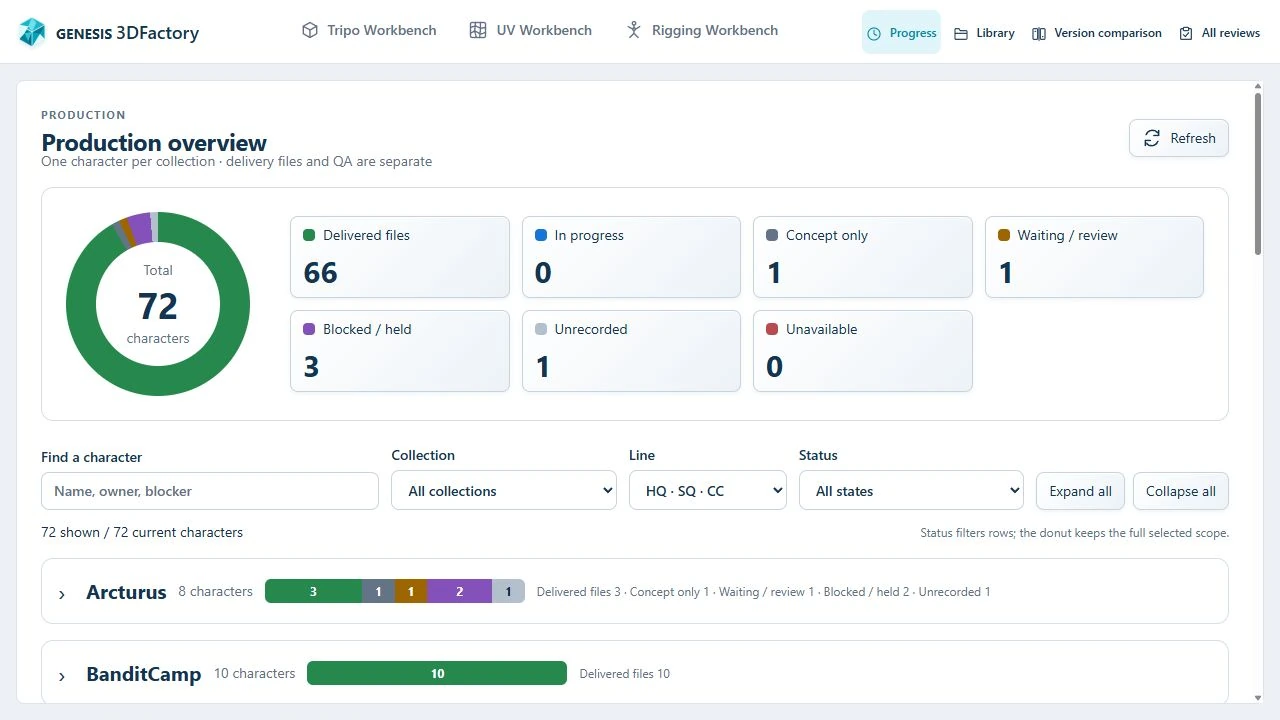
Village records and holds remain too. UI work does not replace production reporting or lift a hold. Production makes, review checks, and the display distinguishes them. Responsibilities come before colour schemes.
At 390 pixels on the public page, we checked twelve Village characters and horizontal overflow. Closing inline editing also needed to return keyboard focus to the Update button used. The image below records that actual view. A factory should remain navigable beyond a large monitor.
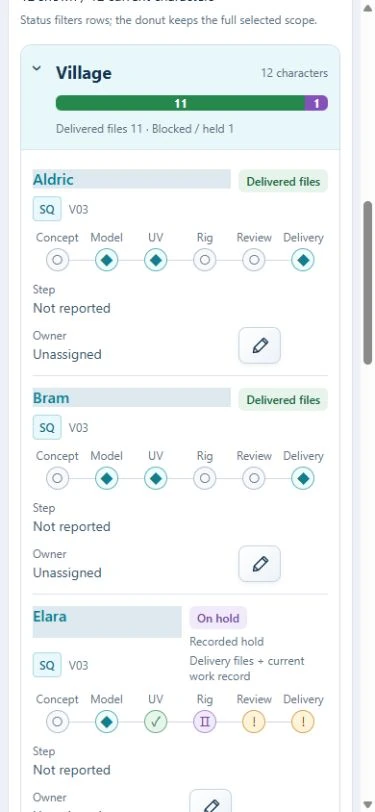
Today's completed output is the screen for reading stages, not every character stage. Unfinished checks remain visible. A clearer board can reduce the question about how far along things are. Knowing where to resume tomorrow is more useful than inflating today's count.