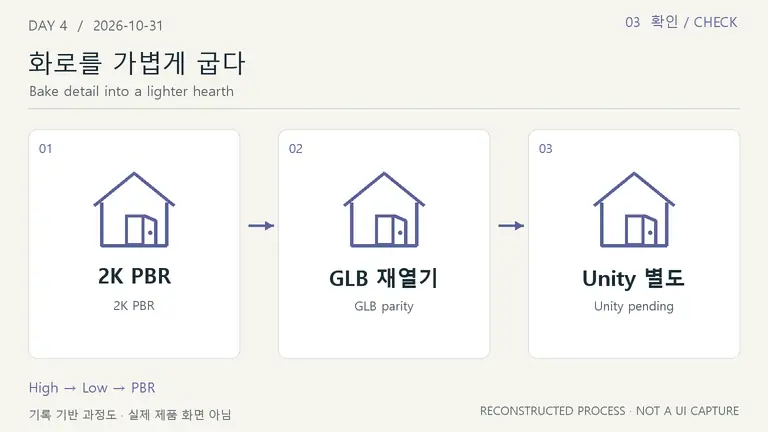
Raise a weighty hearth from one concept image. That was the environment team's objective. Hearth A came through a Comfy-based 3D process, aiming to retain stone-and-metal heft in a lighter game model. No actual heating installation was ordered. Today's battlefield was the surface.
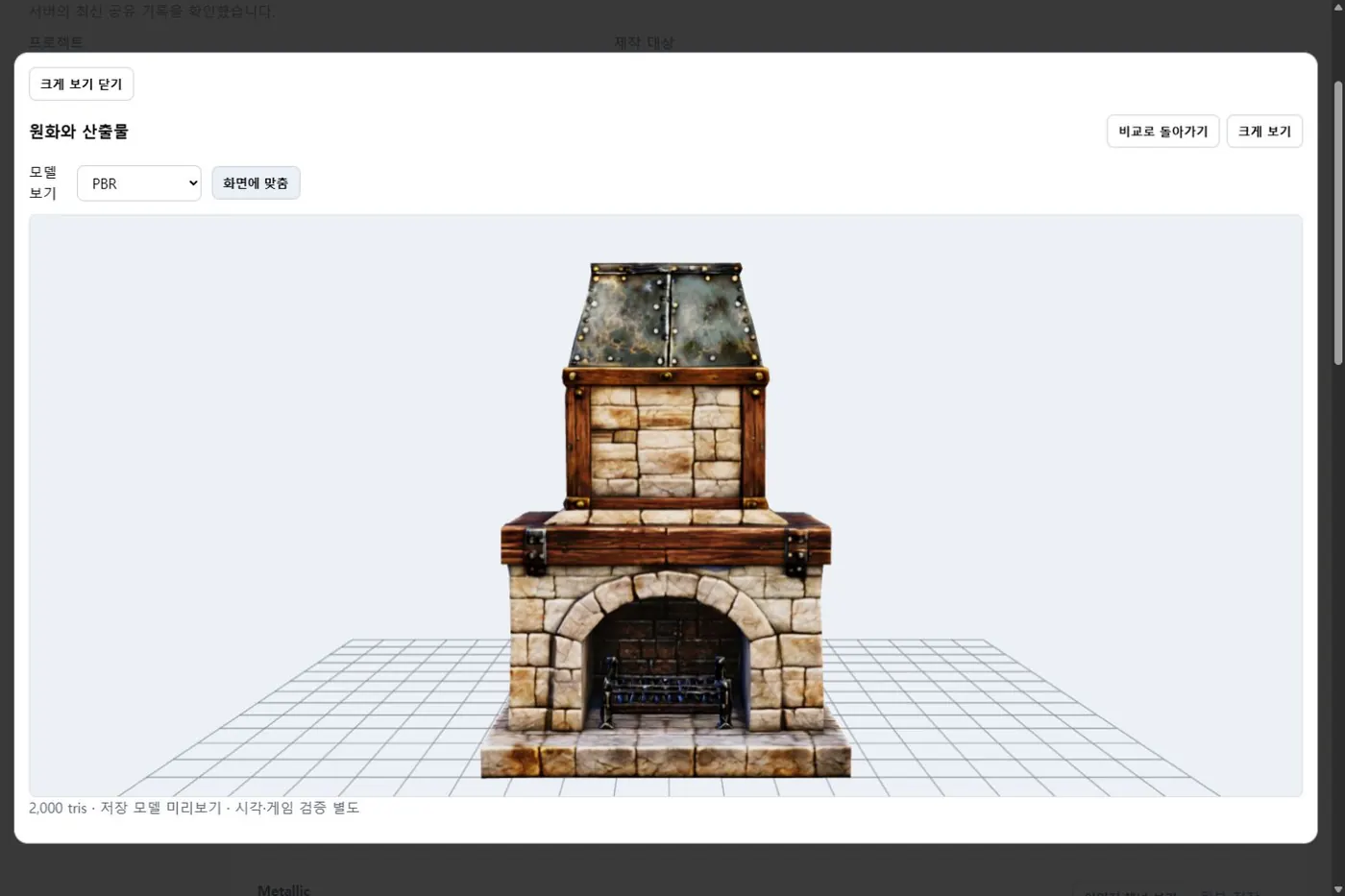
The first shape had 718,024 triangles. The lighter version had 2,000. Mortar lines and rivets lost in reduction were carried into a normal map, an image baked from the original relief. Fewer faces did not have to mean surrendering every detail.
Early projection left marks inside the firebox, and seventeen overlapping surface pairs were found. We compared projection conditions, repaired the layout and baked again. Final 2K materials, relief maps, Blender saves and GLB shape-and-texture consistency were checked. The angular grille silhouette remains: a surface map cannot rebuild its outline.
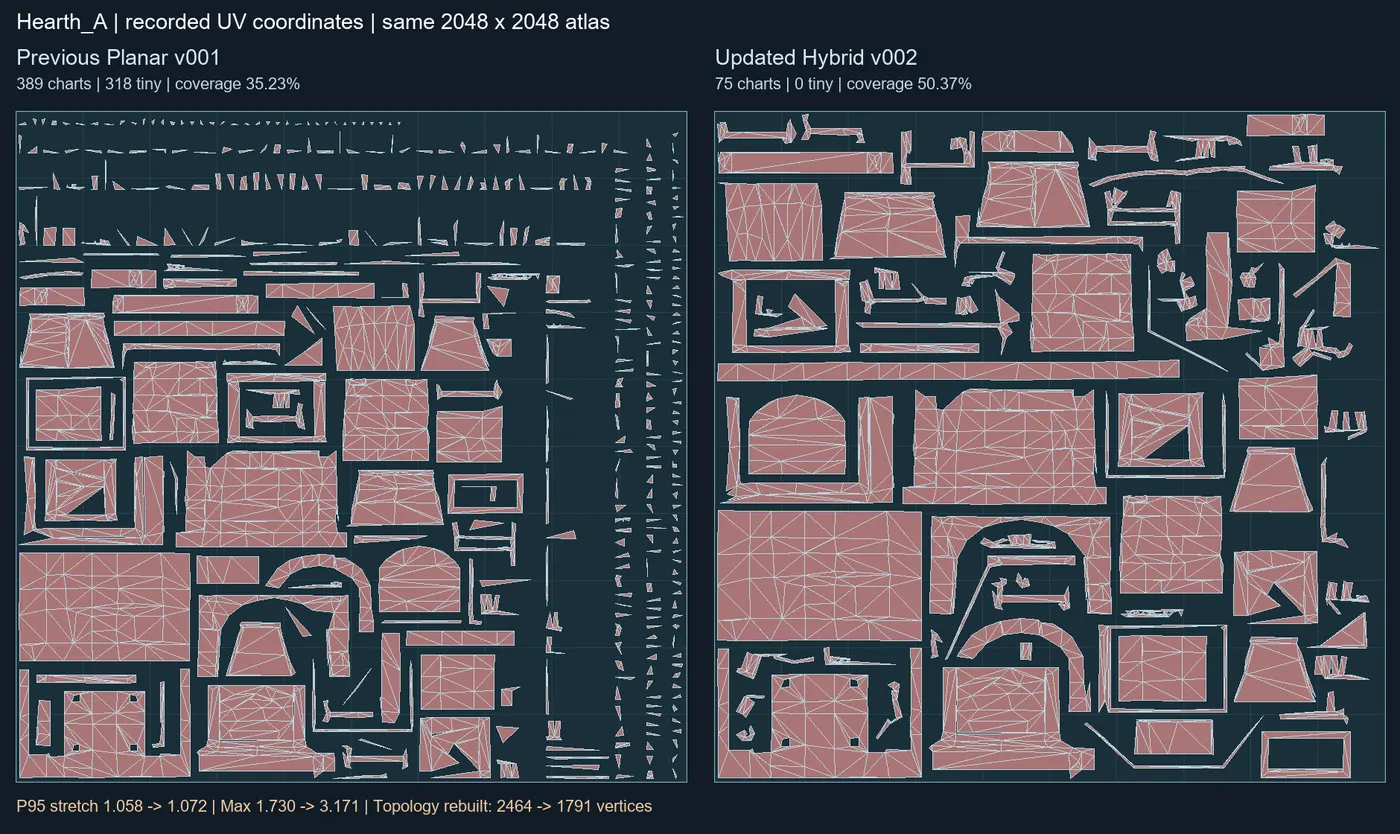
The character UV artist tested the same hearth. Unfolded pieces fell from 389 to 75 and space use improved, but some local distortion increased. Vertex connections also changed. We did not declare a universal character feature complete. One smaller number does not win the whole campaign.
Concept, transparent image, high-detail shape, low-detail shape and materials were linked in a five-stage workbench. Twenty-five files plus settings and history were registered by reusing existing output, without rerunning GPU generation. That demonstrates reuse, not free generation across the process.
Today's verified ground is local material production, saving, reopening and web connection. Unity use, real-world scale and final art selection are separate. The hearth can move onward. The victory report names only the ground actually secured.