An agent’s first mission: find the actual final file
We assigned data roles and contacts for seven services. The aim is to keep makers from stopping every time a file needs finding.
Company operations / Data Management · Director
This episode stars · Data Management · Director
I thought assigning roles would let everyone get on with work. Then the same interruption kept returning: where is that file? Helping is useful; turning every maker into a search party is less so. That was my experience as the operator.
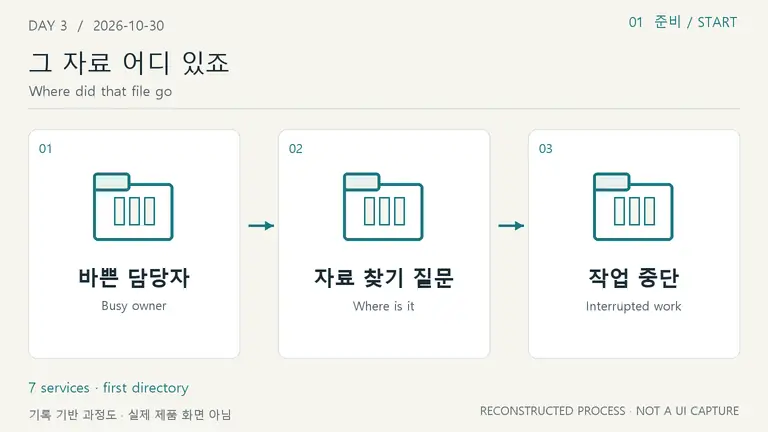
Process 1: Where did that file goBusy owner → Where is it → Interrupted work. Editorial diagram reconstructed from the dated records.
We established a data team. Black suits, earpieces and bags give the illustrations a serious-mission look. The first task is practical: connect people to the material they need so they can keep making things.
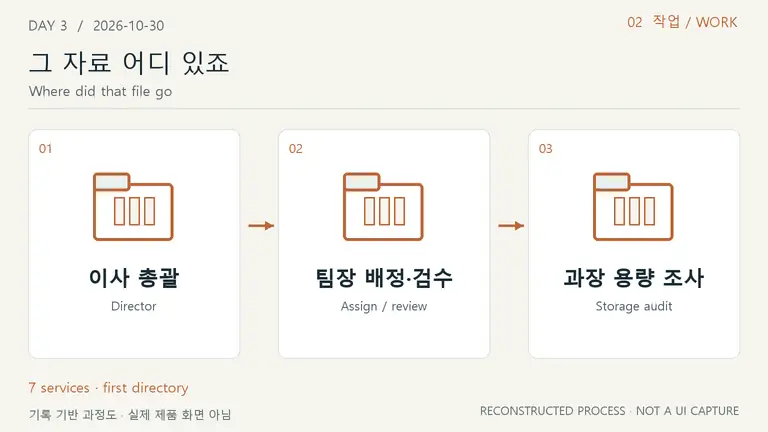
Today we verified data ownership and handoff records for seven services. The director coordinates, the existing warehouse keeper handles assignment and review, and the manager surveys space and lists deletion candidates. Listing a candidate is separate from deleting it. A new agent need not empty the warehouse.
Process 2: Where did that file goDirector → Assign / review → Storage audit. Editorial diagram reconstructed from the dated records.
Guidance distinguishes reference originals, working files and public copies. Not every location has been validated, and the search system is not finished. Missing evidence remains marked unverified. Today put up the first signposts.
We still communicate. We want fewer file questions interrupting production. No measured claim that the confusion has disappeared follows from this setup. The agents are assigned; now we check the files in their bags.
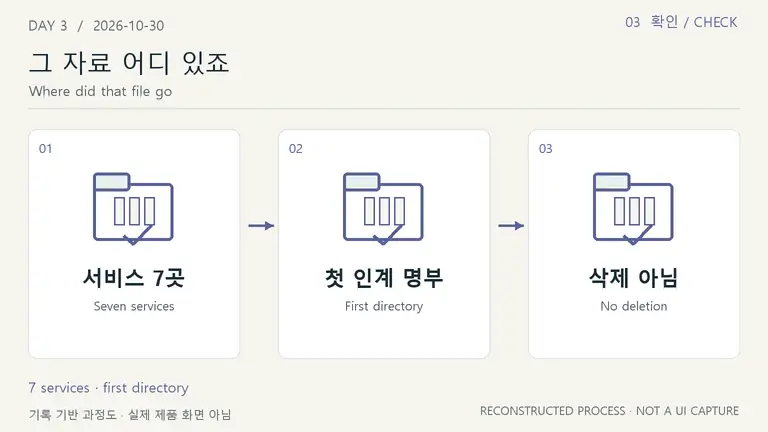
Process 3: Where did that file goSeven services → First directory → No deletion. Editorial diagram reconstructed from the dated records.
Based on actual work; expressions and robot scenes are dramatized. Actual work captures are labelled separately from illustrations.