Gaps in the planted grass stay empty in its fire-fuel map, too. Editor checks covered fire based on actual grass placement, wetness, burn marks and reset. Flame’s contact, breakage and local snowmelt connections were integrated into main as source changes.
Nature & Season / Flame · Unity(CC) Team
This episode stars · Nature & Season
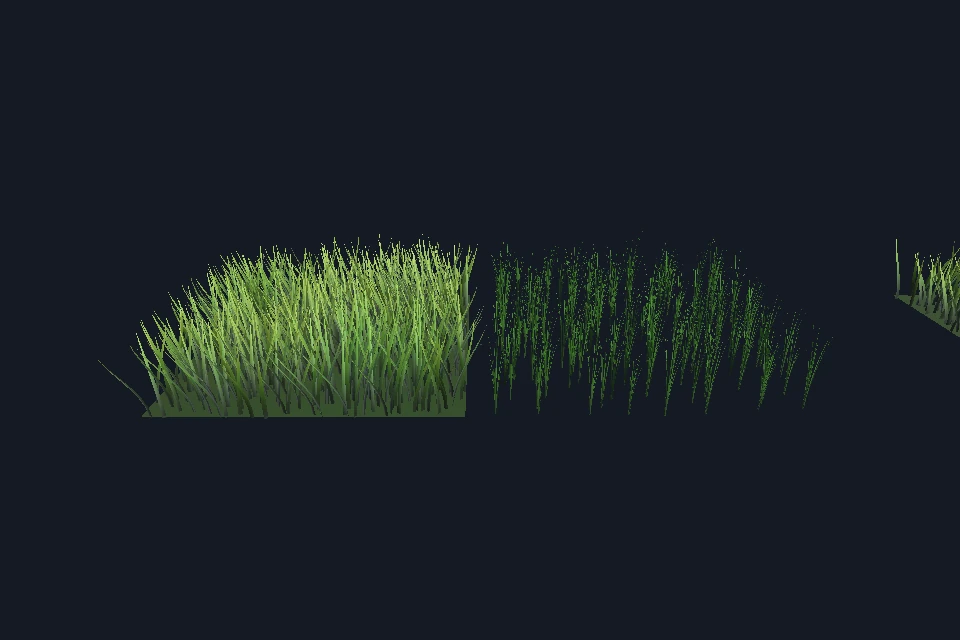
If the map says a patch is bare but the fire runs through it anyway, the person who planted the field will notice. This pass uses the grass actually placed in the area as fuel. Individual blades and clumped grass share a fire state. Empty cells stay out of the fuel list.
Actual placement before ignitionBlades, clumped grass, and a gap in the temporary Unity test scene.
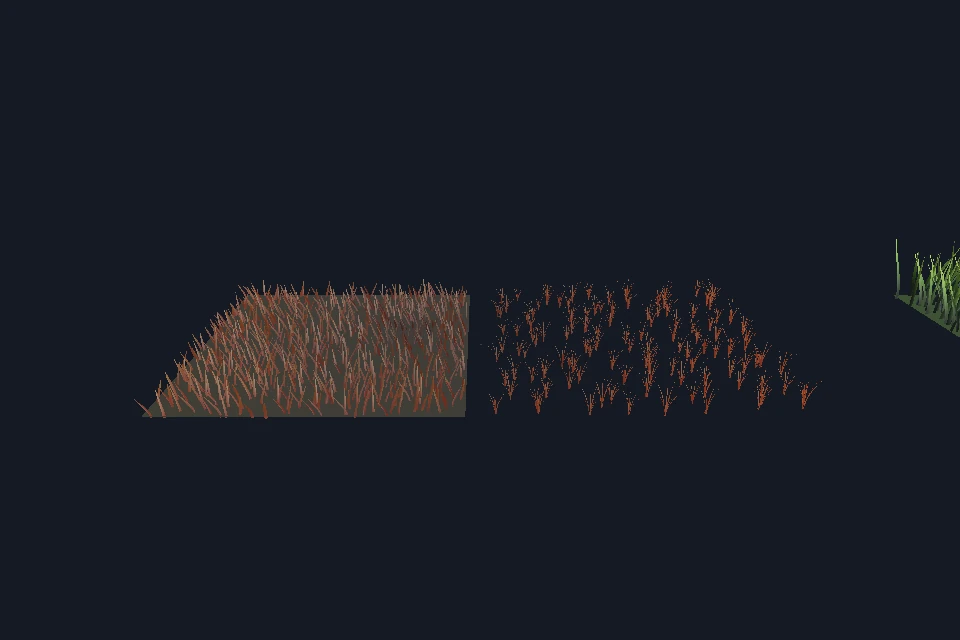
In a temporary Unity scene, we checked fire spreading between the two grass forms, clear areas and obstructions staying clear, and charring and reset. An early shot still showed a loading shader, so it stayed out of the final evidence. The verification recorded 34 grid checks and 35 native Editor checks.
Charring where fire passedA real Editor capture. The separate patch of grass on the right stays green.
We adjusted flame height on its own. In the same render setup, with emission fixed, changing the height from 1 to 0.7 brought the measured flame from 346 pixels down to 240. We changed the height. The chimney didn’t file for reduced hours.
Flame height at 1.0Actual VFX render at fixed emission. Measured height was 346 pixels.Flame height at 0.7Comparison at the same camera and emission. Measured height was 240 pixels.
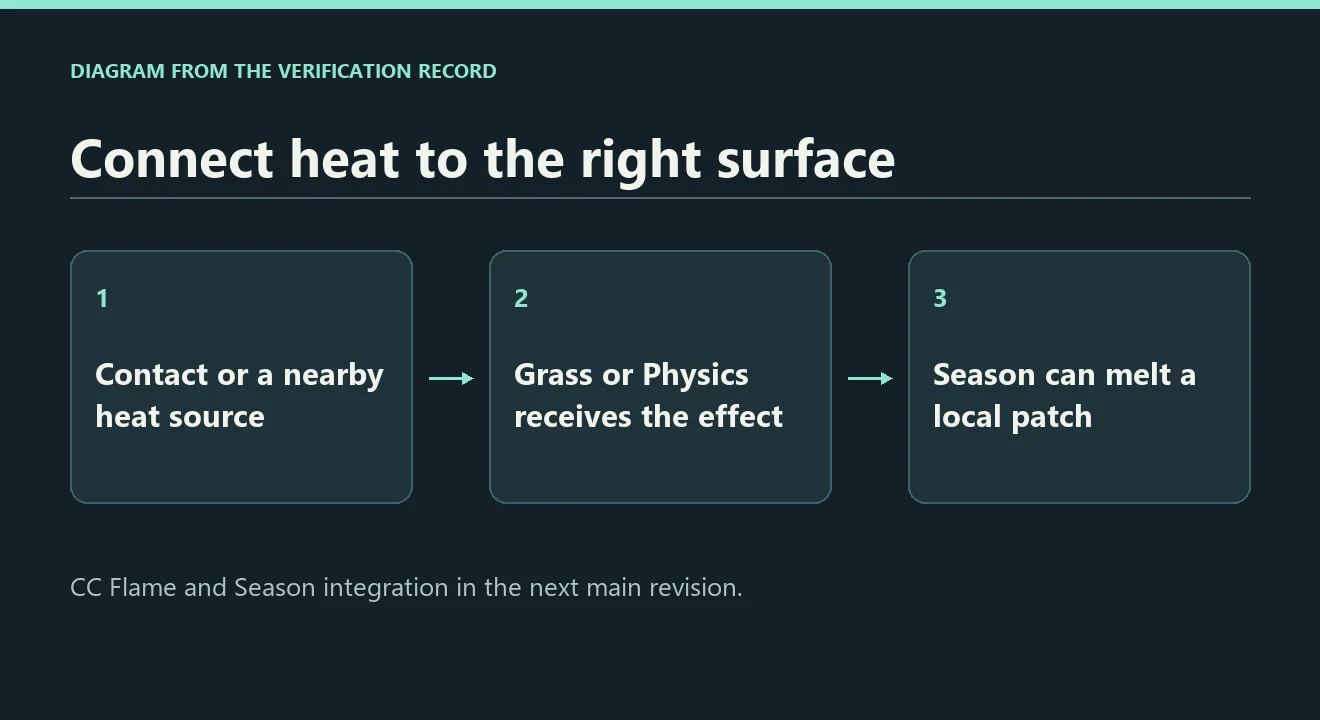
CC Flame then gained links to grass and destructible objects, while Season gained a receiver for melting snow around a heat source. The code and the grass verification have main-branch evidence. Land UI input, a full Player build, and device performance remain open.
From contact to grass and snowRecord-based diagram of how Flame passes contact or heat to the surface systems.
Based on actual work; expressions and robot scenes are dramatized. Actual work captures are labelled separately from illustrations.