One reader for building drafts, with the same results as before.
We moved building-draft parsing and validation into a shared reader. Comparisons preserved success, partial holds and fatal errors, as well as the results of reapplication dry runs. This was a structural change; a new conversion algorithm and GUI saving were outside the checks.
Dynamic Forge / Unity(CC) Team
This episode stars · Dynamic Forge
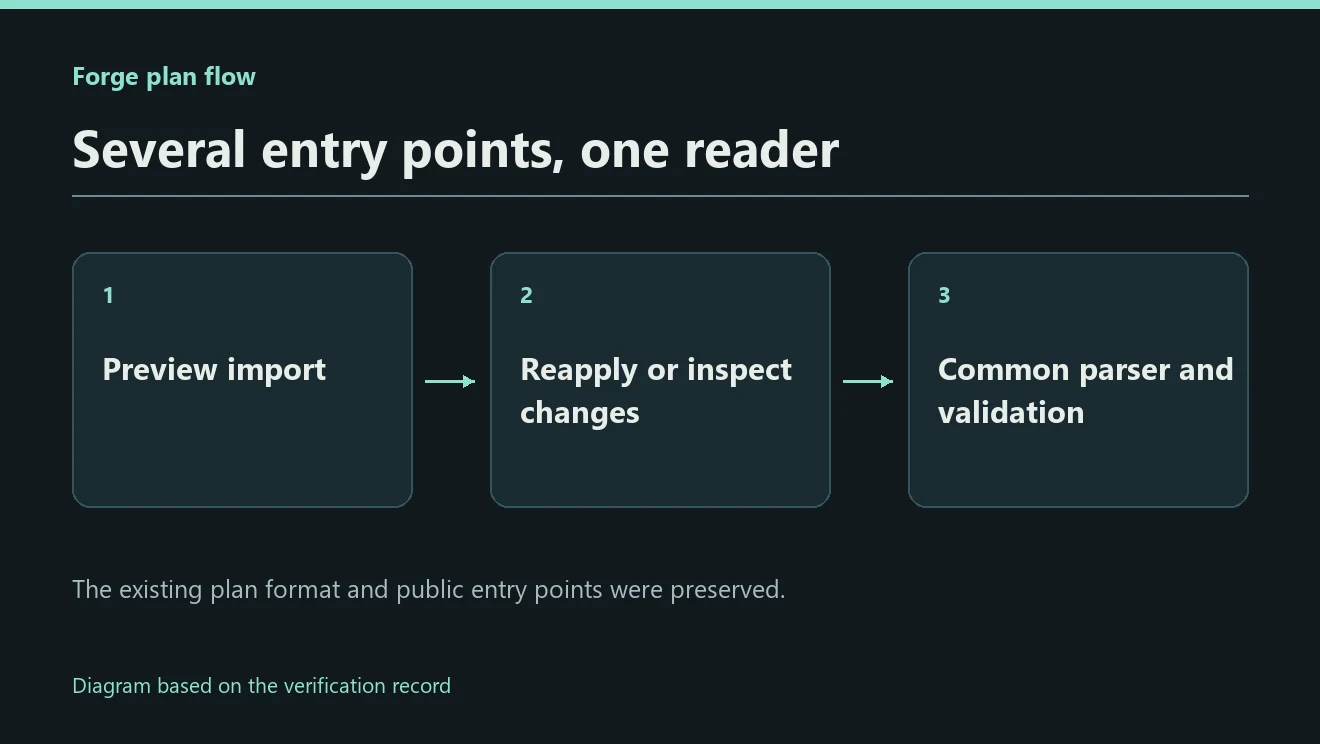
Forge starts by reading a building’s rough plan. It needs the same reading when previewing an import, applying a revised plan, or reverting changes by type. We moved the parsing and validation into a shared reader so those paths use the same rules.
One reader across several entry pointsRecord-based diagram of the common reader used to preview, reapply, and revert.
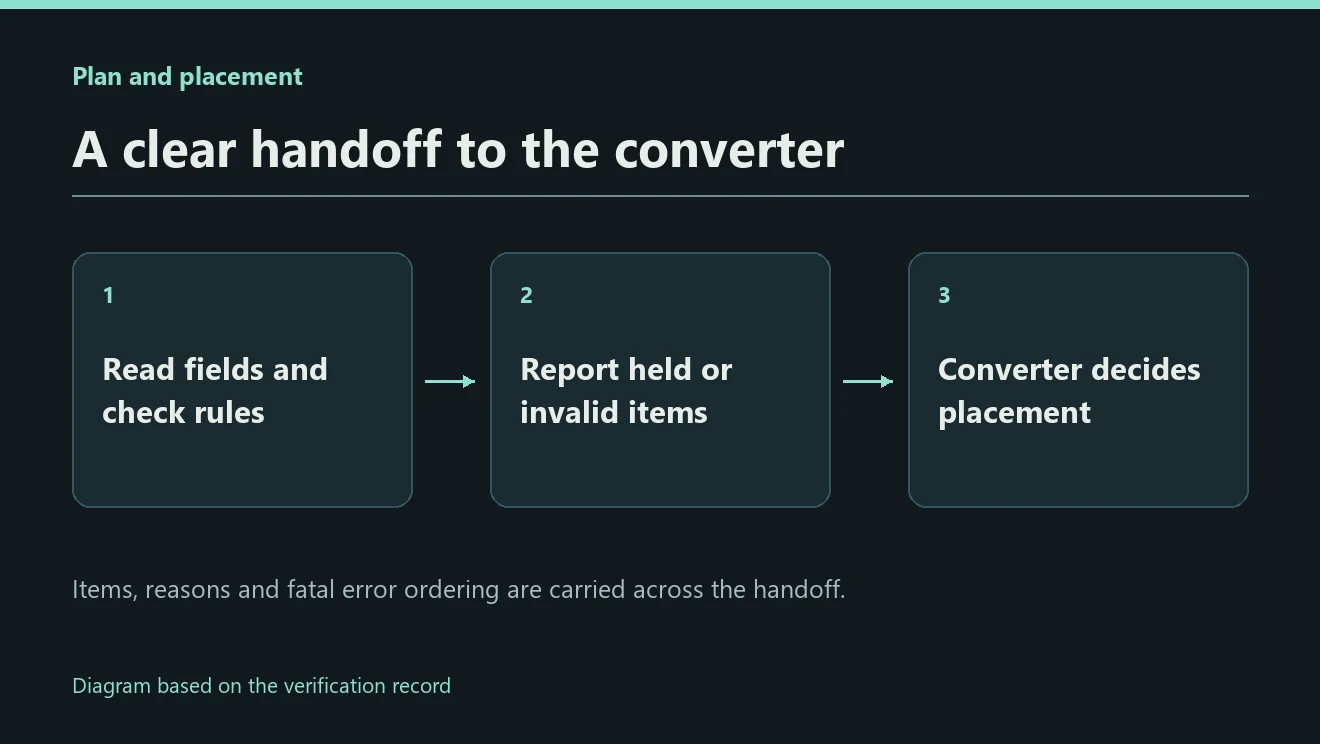
The reader reports what’s in the plan and which pieces have to wait. The converter decides what can be placed. Even the first error on a bad plan still comes out in the same order.
Reading the plan and placing itRecord-based diagram of the boundary between validation and placement decisions.
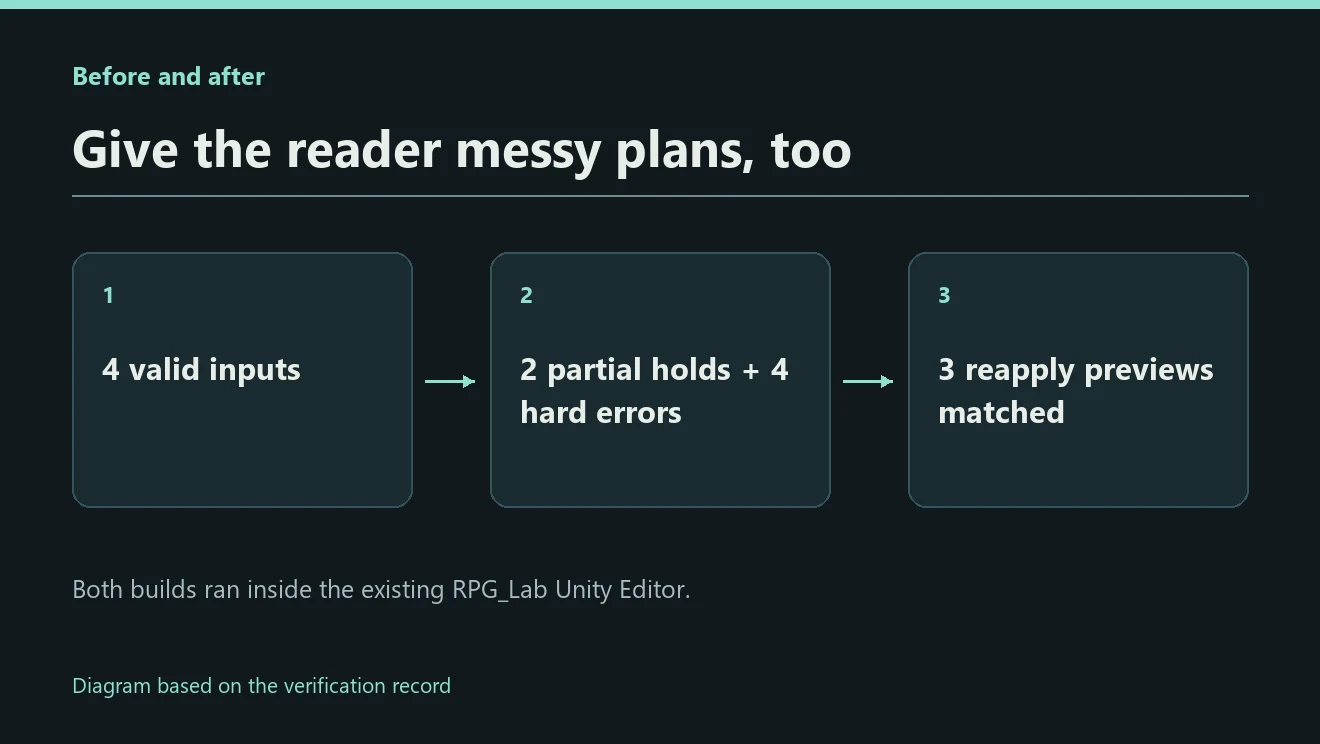
It would be easy to show up with ten spotless houses. Instead, we ran four valid inputs, two with some items on hold, and four with fatal errors in the existing RPG_Lab Editor. We also compared three reapply previews. The blockouts, hold reasons, and error limit matched.
Which plans we comparedRecord-based diagram of ten import inputs and three reapply previews.
We checked the integrated files on the project’s main branch. The shared scene was preserved. Running placement with the actual UI and saving the scene are still open checks.
Based on actual work; expressions and robot scenes are dramatized. Actual work captures are labelled separately from illustrations.