Three skies based on photos. All three need revisions.
We used moonlit, city and backlit mountain photos to propose initial sky settings, then compared actual Unity renders before and after. The pink horizon and dark clumps at dusk improved, but the moon halo, blue gaps and peach sunset color still need work; all three shots received an art revision verdict.
Day & Night / Art direction
This episode stars · Day & Night
A moonlit sky, a city afternoon, and a mountain backlit by sunset. Your eye quickly sorts the sky from the things in front of it. The tool had to learn that bit first. It corrects orientation, separates foreground such as buildings, and estimates sky colors, light direction, and cloud layers from the pixels.
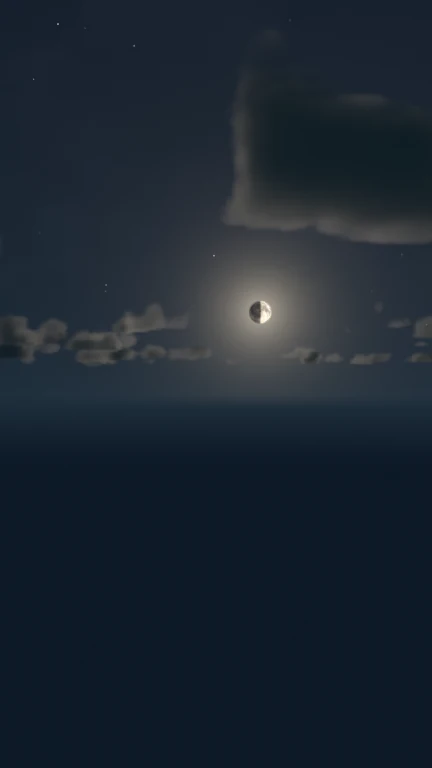
Moonlight in UnityThe second Editor pass used to check the moon position and surrounding glow.
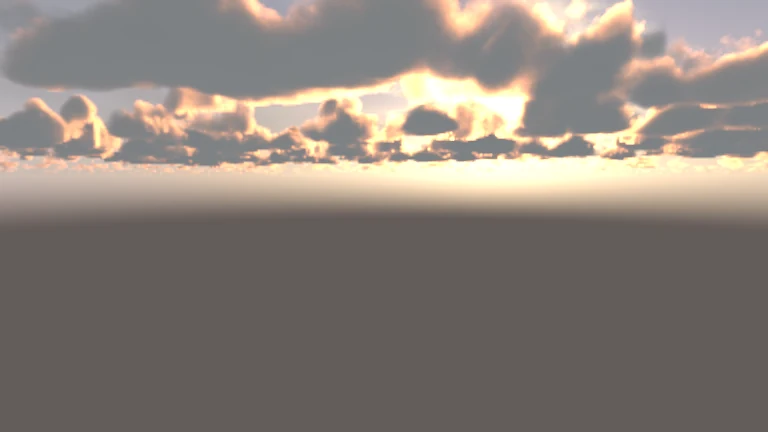
We tried those starting settings in Ragnie. The pink strip at the moonlit horizon disappeared, and detail returned to a dark mass in the sunset cloud. The tests compared the same camera with the main clouds enabled and disabled to see where the light and cloud colors were mixing.
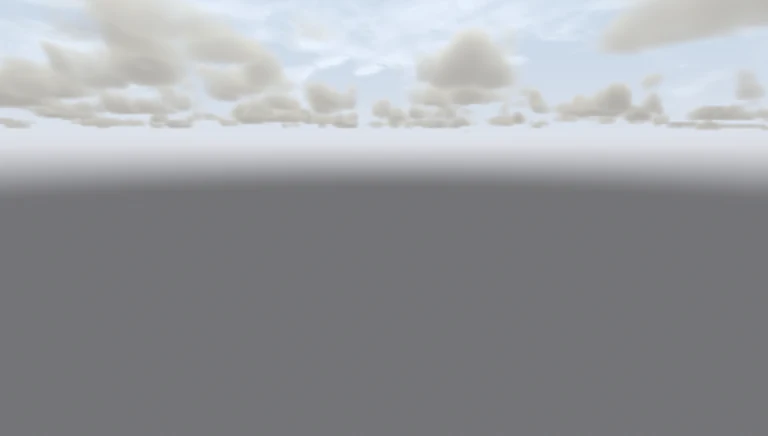
A sky prompted by the city photoThe Unity render still needs blue gaps and brighter upper cloud faces.
Art review left three notes on the desk. We still needed the moon’s cyan halo, the blue openings over the city, and peach light spreading into the sunset cloud. Where the colors sit is part of what makes each sky recognizable. The weather doesn’t sort its palette alphabetically.
A Unity pass for the backlit mountainsDark clumping improved, with the distribution of peach light still to tune.
All three shots came back for revision. We have places to tune, and the Unity scene returned to its prior state after the previews. The next comparison is another capture of those same skies under matching conditions.
Based on actual work; expressions and robot scenes are dramatized. Actual work captures are labelled separately from illustrations.