Three cloud layers, with fewer washed-out white patches.
We separated the clouds into main, distant and high, thin layers, then compared the same camera in Ragnie. In the Broken preset, the measured pure-white area fell from 50.05 to 3.43 percent; dusk, night and size controls retain their separate verification limits.
Day & Night/팀장 - 시간·하늘·조명 / Art direction
Claude Consultant Team at work
This episode stars · Day & Night/팀장 - 시간·하늘·조명
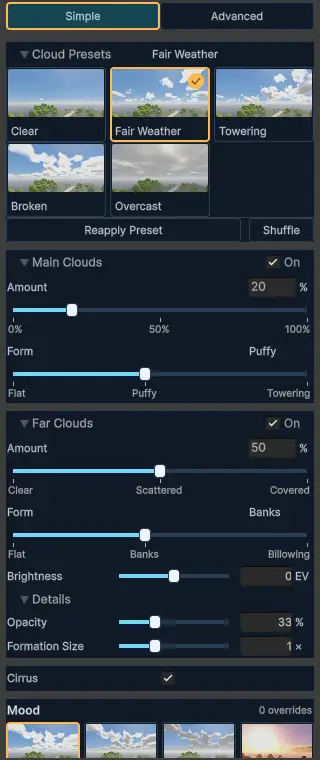
We looked up over Ragnie and found that adding clouds could still make the sky read as one mass. The team gave the near Main clouds, distant Far clouds, and high Cirrus layers separate controls. Art review toggled Far on and off from the same direction at noon, dusk, and midnight to see whether its lit and shaded faces still read.
Cloud layer controls at 320 pointsNative Inspector capture of the separate cloud controls.
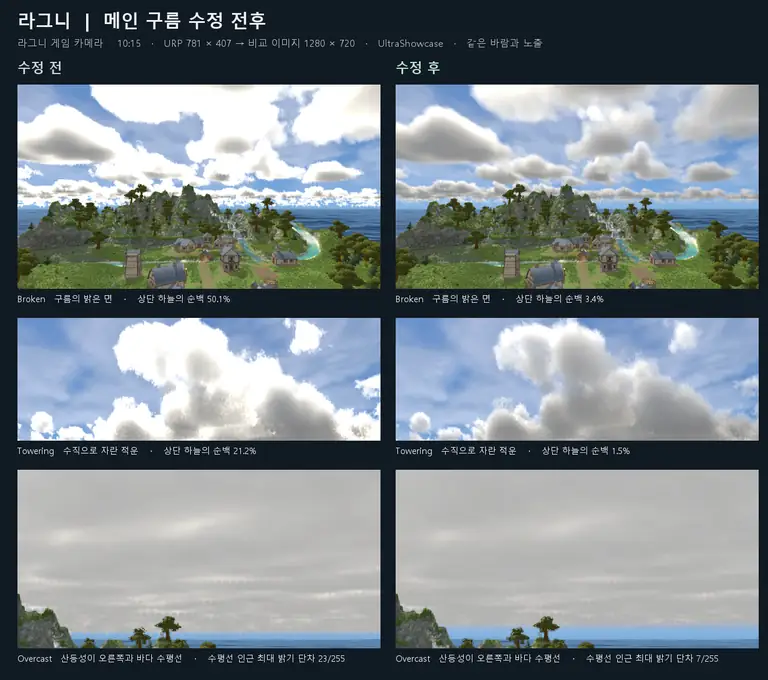
In the Broken preset, more than half of the measured upper sky was clipped to white. Overcast left a hard band above the sea. The Day team adjusted the Main layer’s daylight and its fade at the horizon. From the same camera and time of day, clipped white fell from 50.05 percent to 3.43, and the overcast brightness step fell from 23 to 7 on the measured scale. The lit cloud banks showed depth again.
Main clouds before and after, from the village cameraMatched Unity renders for Broken, Towering, and Overcast. Compare the cloud detail and the band above the sea.
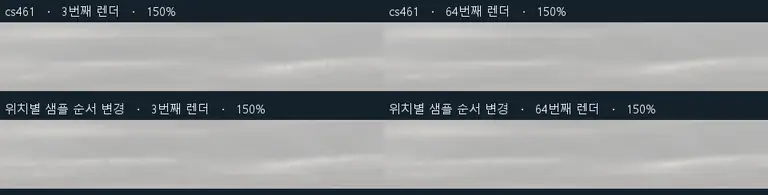
Motion revealed a separate problem: an eight-pixel grid over the water before the frame history had settled. Staggering the sample starts broke up that pattern. A narrow strip over the sea picked up a little more fine noise in return.
The startup checkerboard checkThe measured region from native captures, with startup and accumulated history kept distinct.
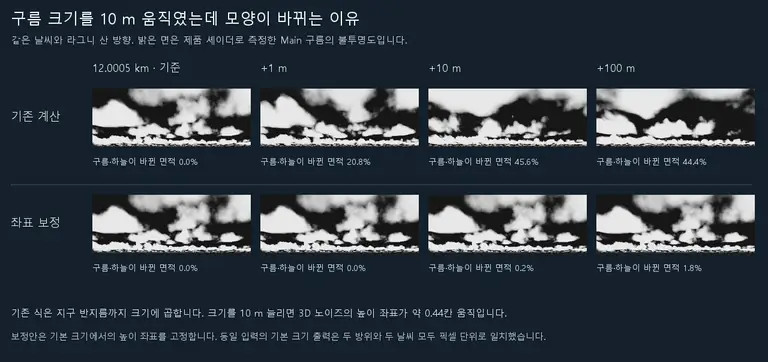
Finally, the team traced why a small change to formation size could switch the sky to an almost different cloud field. Anchoring the height reduced the amount of sky that flipped in a separate GPU comparison with the same inputs. That change is in main. A drag in the updated Unity Inspector and checks on other devices are still ahead.
Formation size after anchoring the heightA separate GPU run with the Ragnie inputs and product shader. Native Unity Inspector validation remains pending.
Based on actual work; expressions and robot scenes are dramatized. Actual work captures are labelled separately from illustrations.