Better window reading, but placement on the house still needs work.
We compared reading openings from the reference art separately from placing them on a Forge house. The interpretation stage’s correctly positioned count rose from 16 to 24, but the final Forge count on the correct wall fell from 32 to 27, so replacing the default version and deployment remain on hold.
Consultant Team
Claude Consultant Team at work
This episode stars · Consultant Team
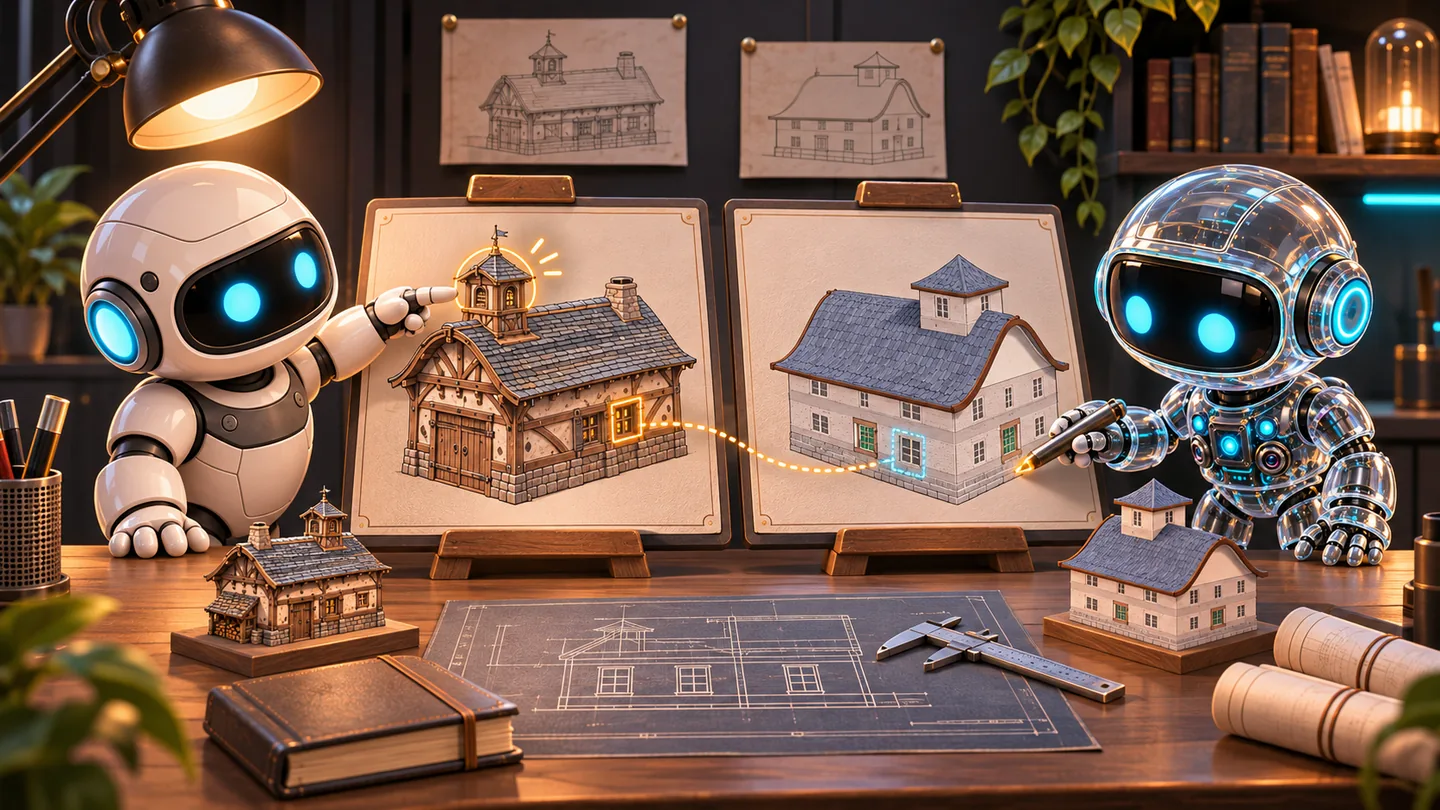
Yesterday we followed the handoff that turns openings from reference art into editable Forge parts. Today the Consultant Team tried a new way to read the reference before the handoff. It interpreted each view in its own perspective, used ground lines to build the plan, and then assigned the openings to the walls.
Across the same four houses, the new plan got 24 openings into place where the old one got 16. Running the full conversion changed the picture. Correct walls went from 32 to 27, and openings in place went from 17 to 18. That’s why we kept the plan’s report card apart from the built house’s.
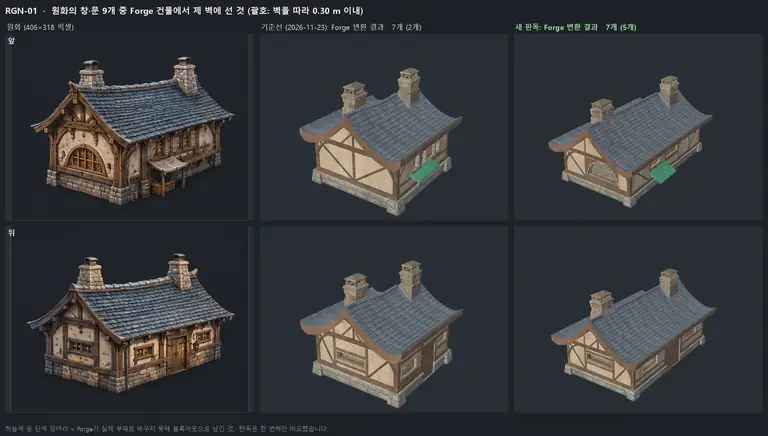
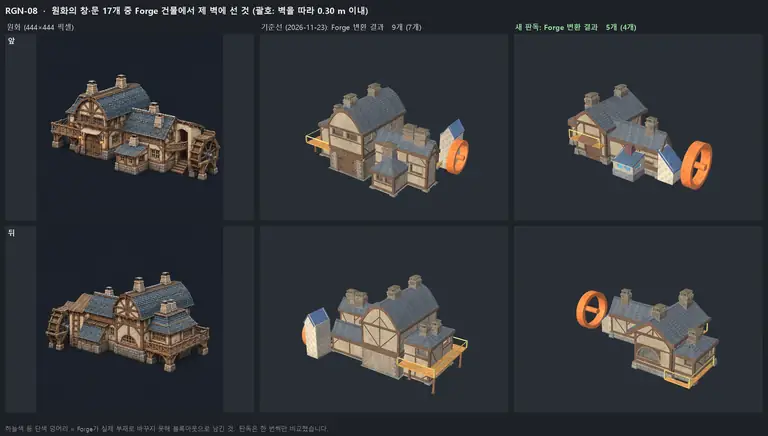
House 01 reference, baseline and trialReference at left, baseline conversion in the middle, and real trial output at right. House 01 passed the converter’s checks.
The team refined the stone base and roof rules, then revisited curved gables and the waterwheel’s size. House 01 passed the converter’s checks. House 02 still had a round tower doorway problem, 03 had a jamb problem, and 08 had a roof join and missing wings. Its waterwheel was still too large.
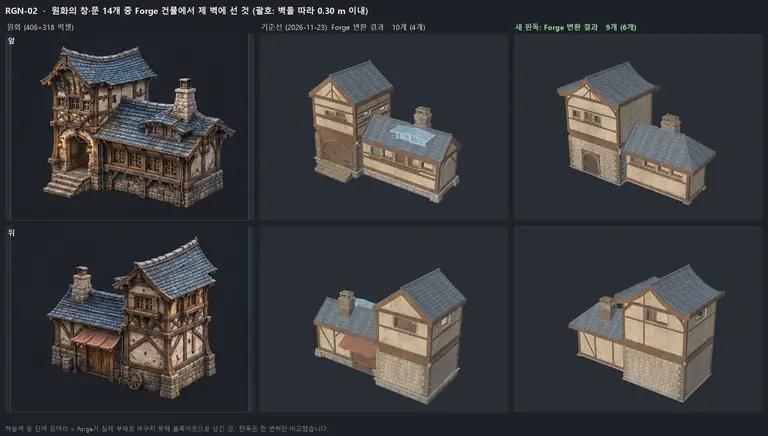
House 02’s round tower doorwayA comparison from the same three stages. The tower door appears in the trial, with a frame check still failing.House 08’s wings and waterwheelActual comparison board. Wings, waterwheel scale and roof joins still differ from the target.
These boards come from actual local Unity Edit Mode checks. The team paused the switch to the new default. The public Studio remains the current version, and the comparison shows both where the experiment helped and where it lost openings.
Based on actual work; expressions and robot scenes are dramatized. Actual work captures are labelled separately from illustrations.