
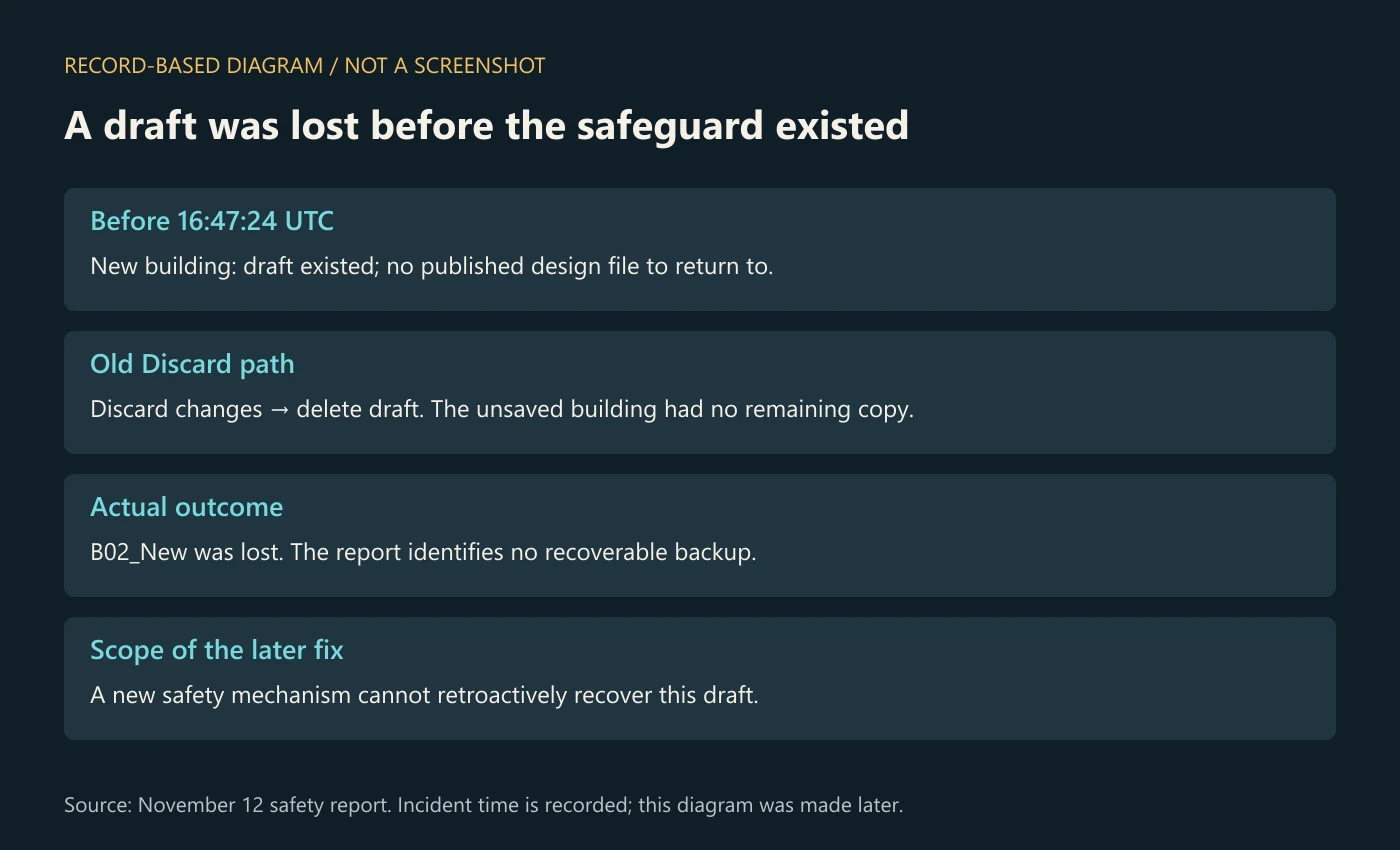
One line in today’s record needs a plain account. During testing, Discard deleted the draft of the unsaved B02 building. There was no saved design and no recoverable copy. That building was not restored. A later safeguard cannot change this opening paragraph.
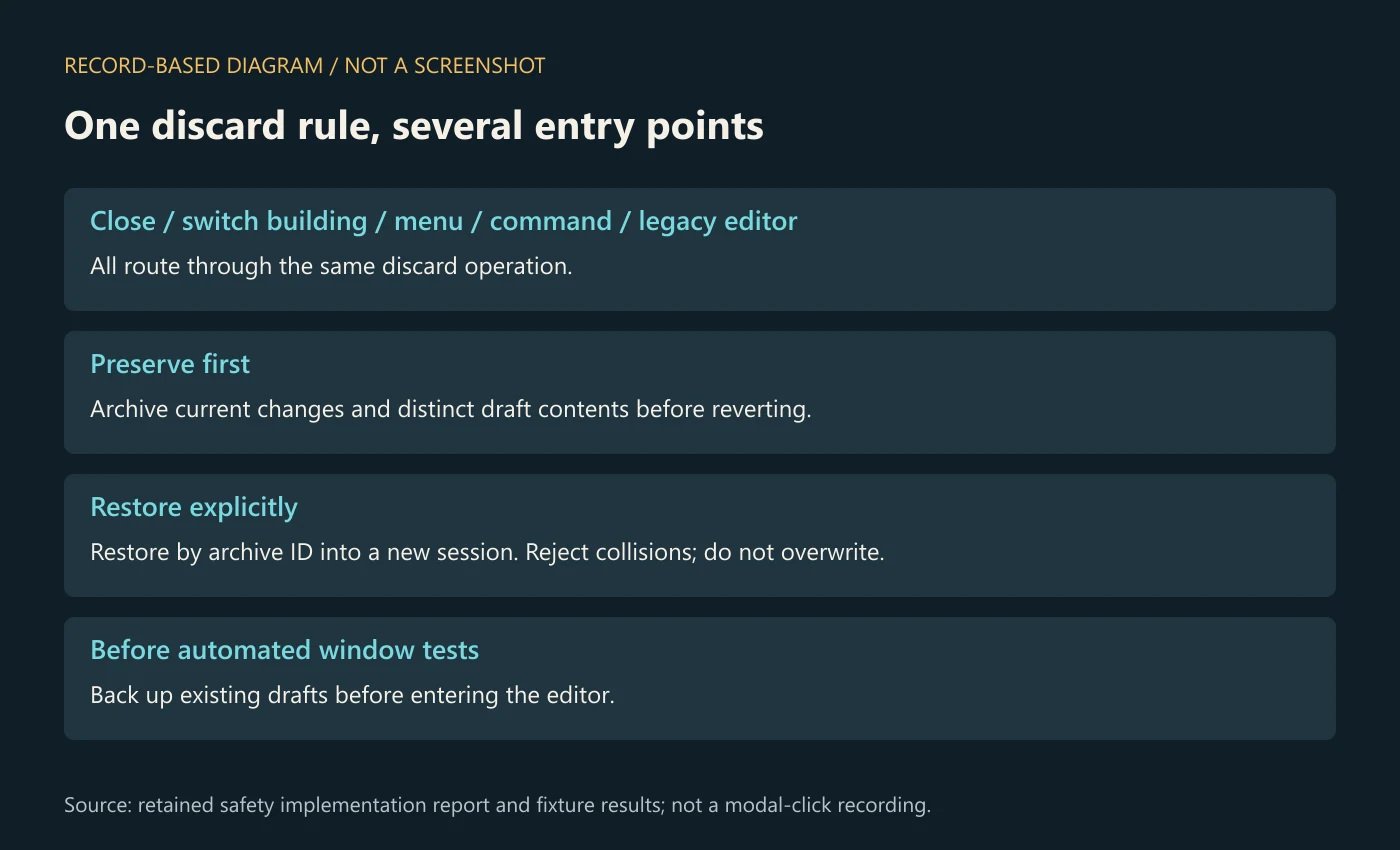
Discard had different consequences at different entry points. Closing the window or switching buildings could revert changes and then delete the draft. A building never saved had no file to return to. An edit-cancel operation could remove the whole house.
The Consultant Team brought those entry points under one rule. Preserve the current changes and any distinct draft contents in an archive, then revert. Explicit restore opens a new session and rejects collisions. Automated window tests also back up existing drafts before entering the editor.
Retained checks cover archiving, restoration, invalid IDs, collisions and matching screen/command paths. A later discarded draft was found in the archive. The diary editor did not restore someone else’s active work without direction.
The limits matter. The safety test directly exercised the path Unity calls, rather than recording a person clicking the actual close-dialog buttons. Viewing the recovery window on screen remained unverified in that report. Draft protection and drag performance are separate checks.
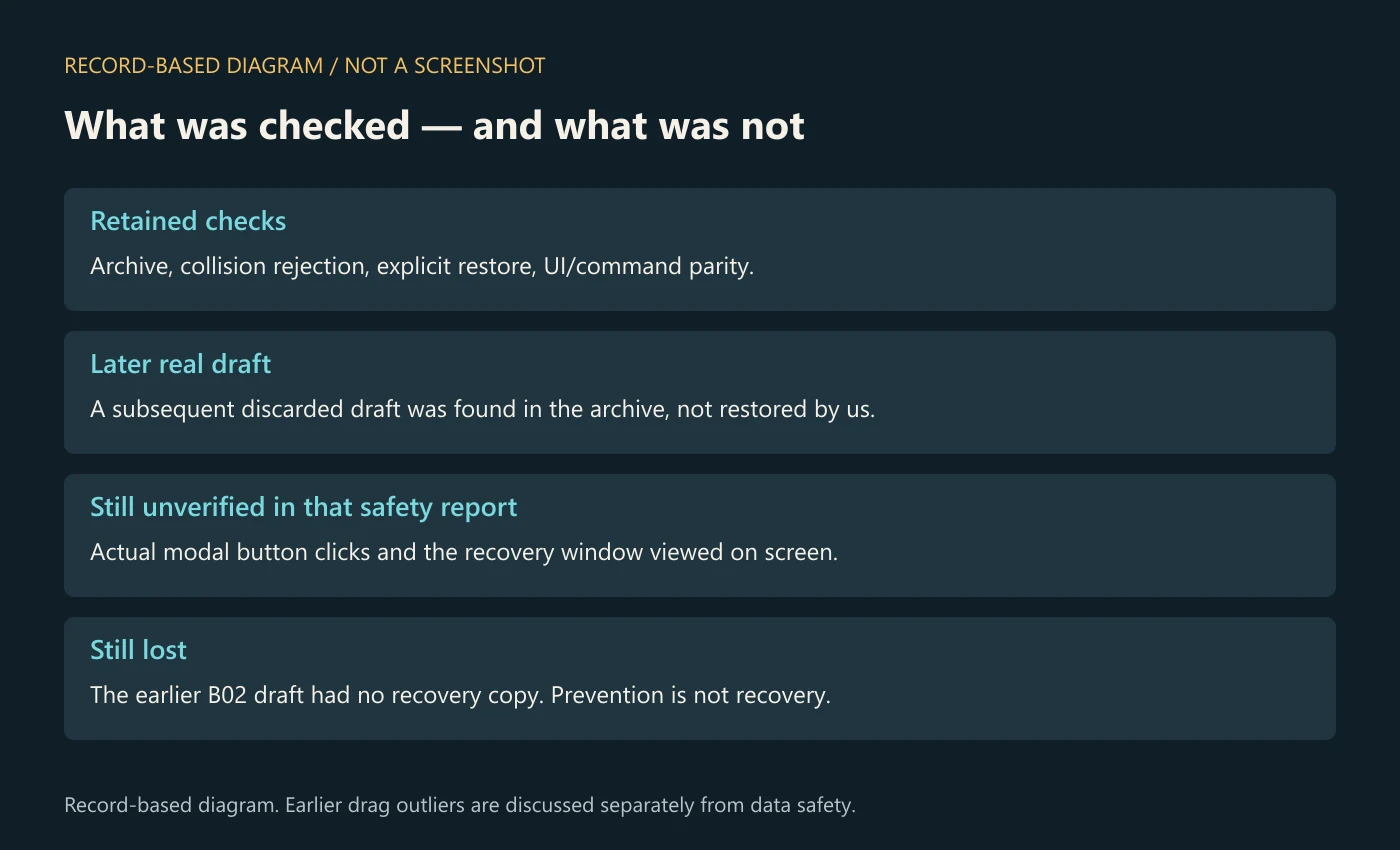
The process images here are diagrams made from the report and test records. They are not reconstructed screenshots of the incident. Today’s account keeps both the lost house and the safeguards for the next one. Next time, the house needs to survive too.