
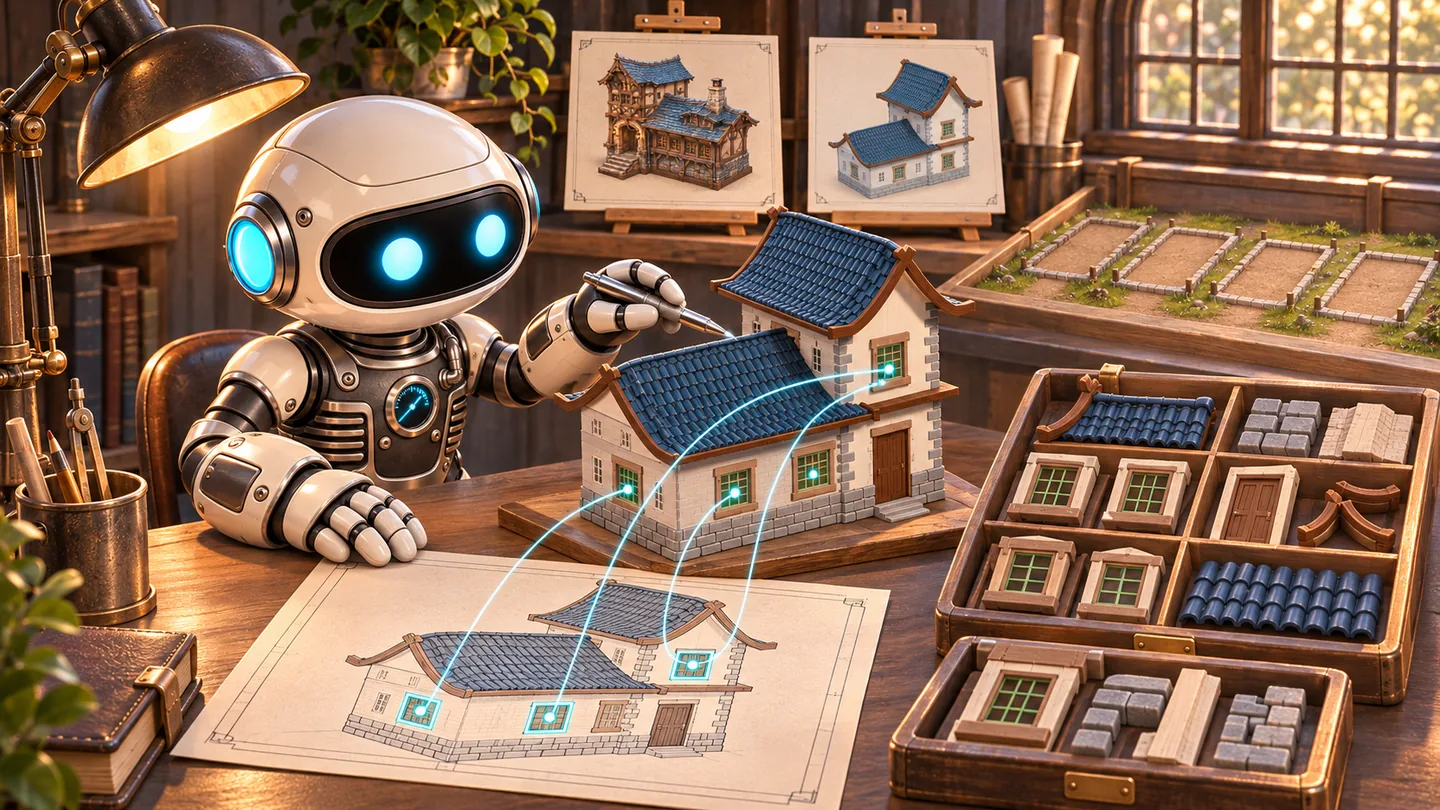
Detailed tiles and timbers are useful nearby, but expensive if distant houses do the same work. The Consultant Team counted what the eight Ragnie houses actually draw. Repeated pieces can share meshes, unique geometry can merge by material, and distant buildings can use lighter whole-building versions.
Enabling the publishing option creates one building LODGroup with three levels and omits hidden roof faces. The eight houses were explicitly republished while preserving structural hashes and whitebox approvals. Checks also cover the unchanged path when the option is disabled.
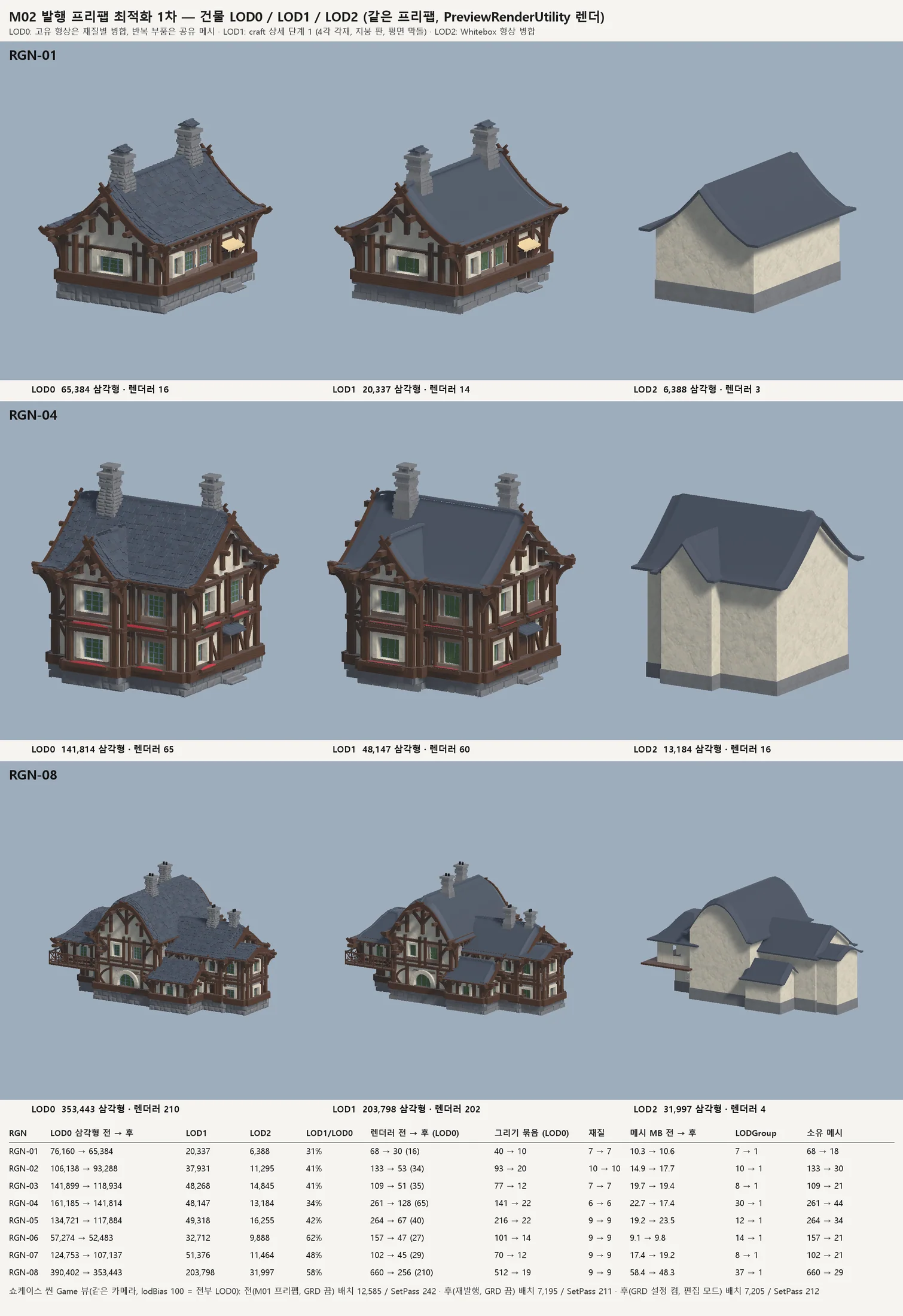
Instancing every roof tile sounded attractive until the census showed that most tiles had different shapes. They could not simply be shared. Repeated modules and scaled baked meshes became the sharing targets, with triangles and mesh memory recorded separately for each level.
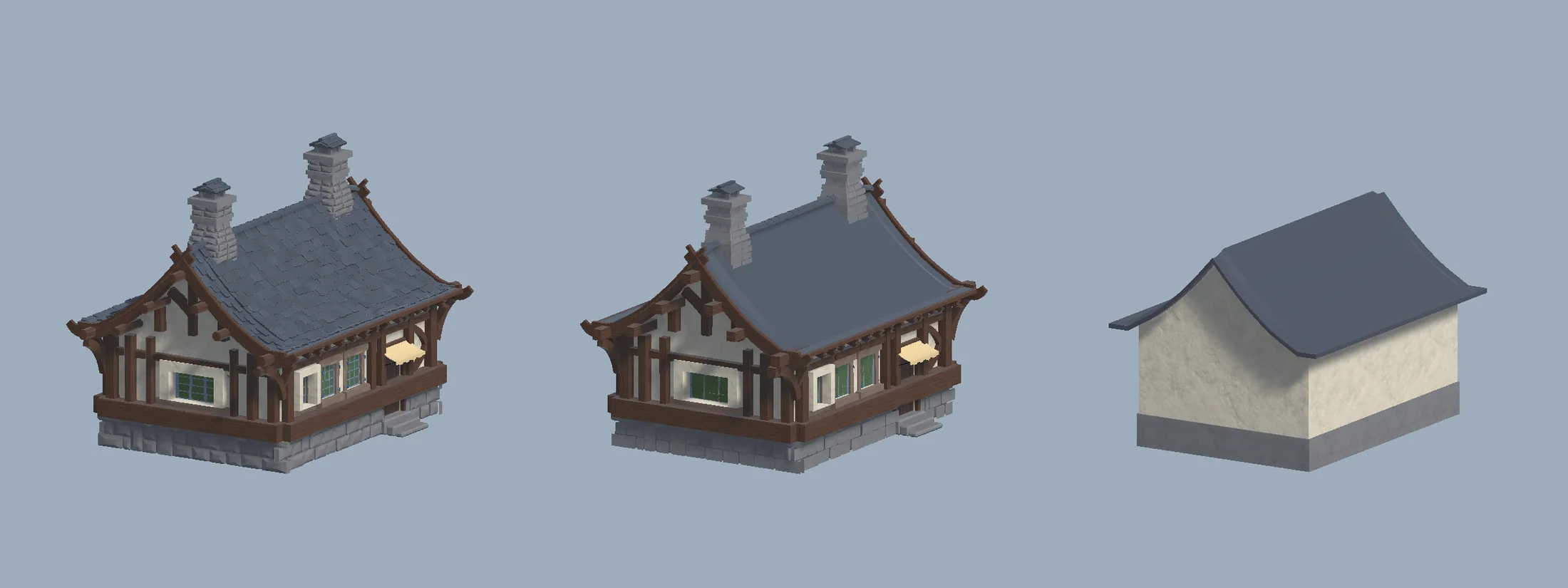
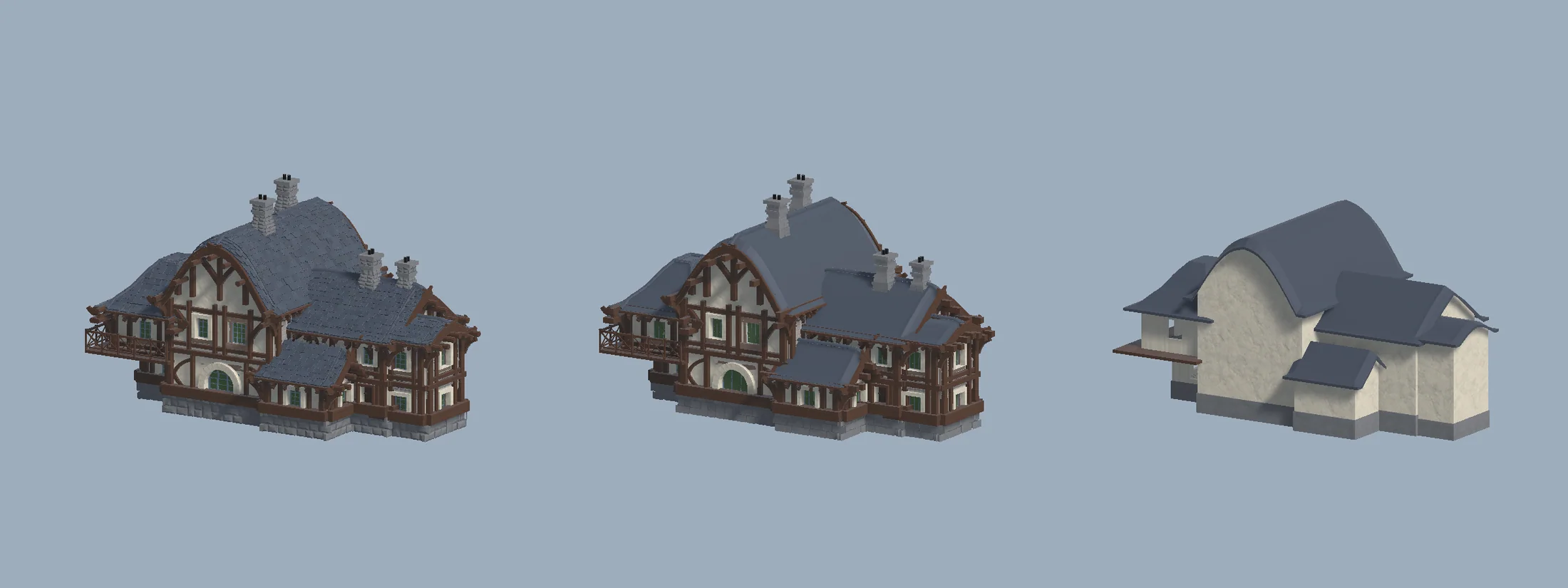
In an isolated PC Editor play scene, the retained measurement reports draw calls falling from 873 to 256 with GPU Resident Drawer. Frame times did not differ enough to establish a speed improvement. This was neither the whole showcase under those conditions nor a mobile test. A strong number needs its setting attached.
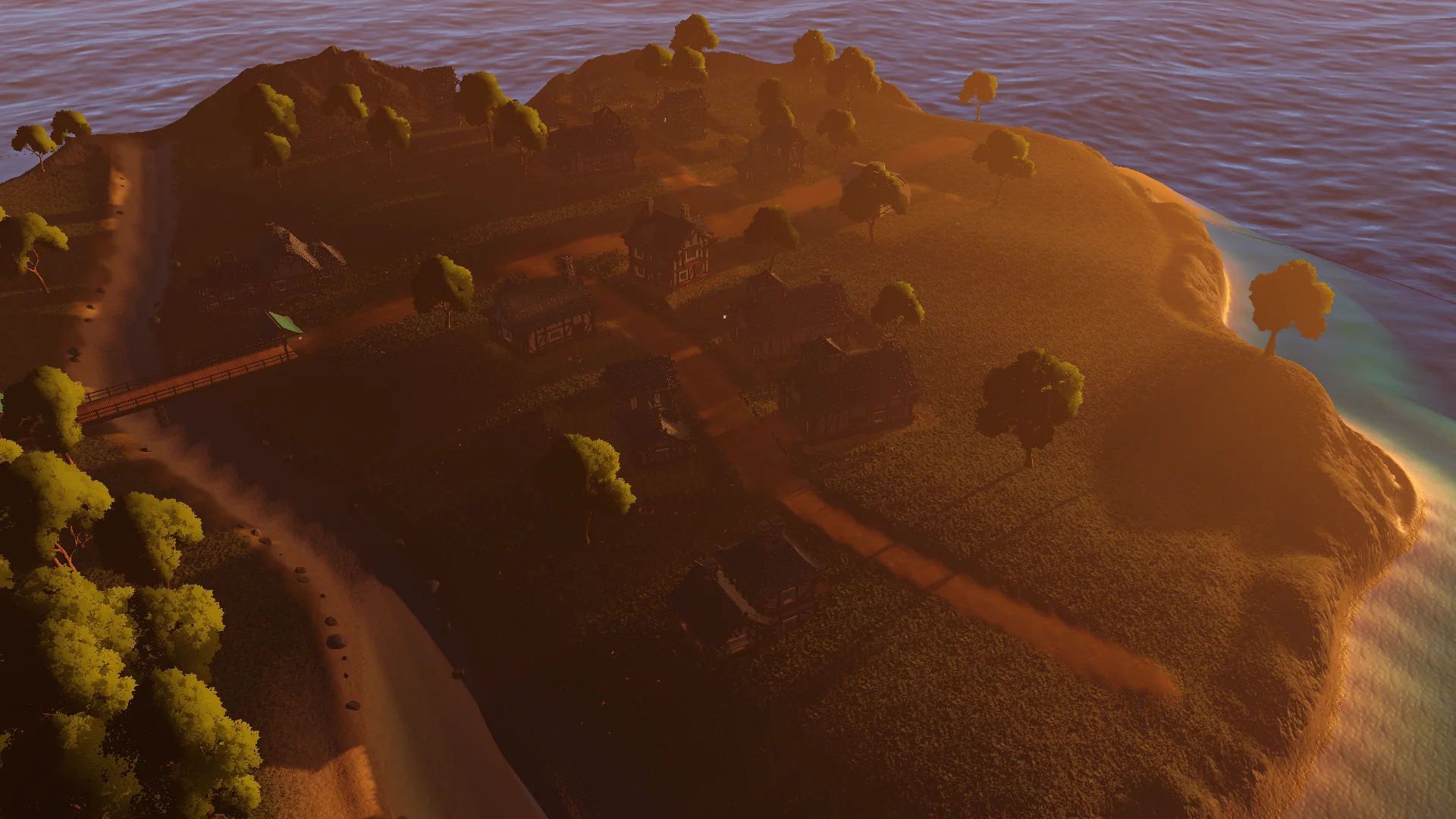
The board shows the LOD shapes, but a quality-setting lodBias of 100 prevents distant levels from appearing in the current scene. Lighter middle levels, weathered-material batching and a blank-preview incident remain for review. This is a first optimization pass, not a universal performance certificate.