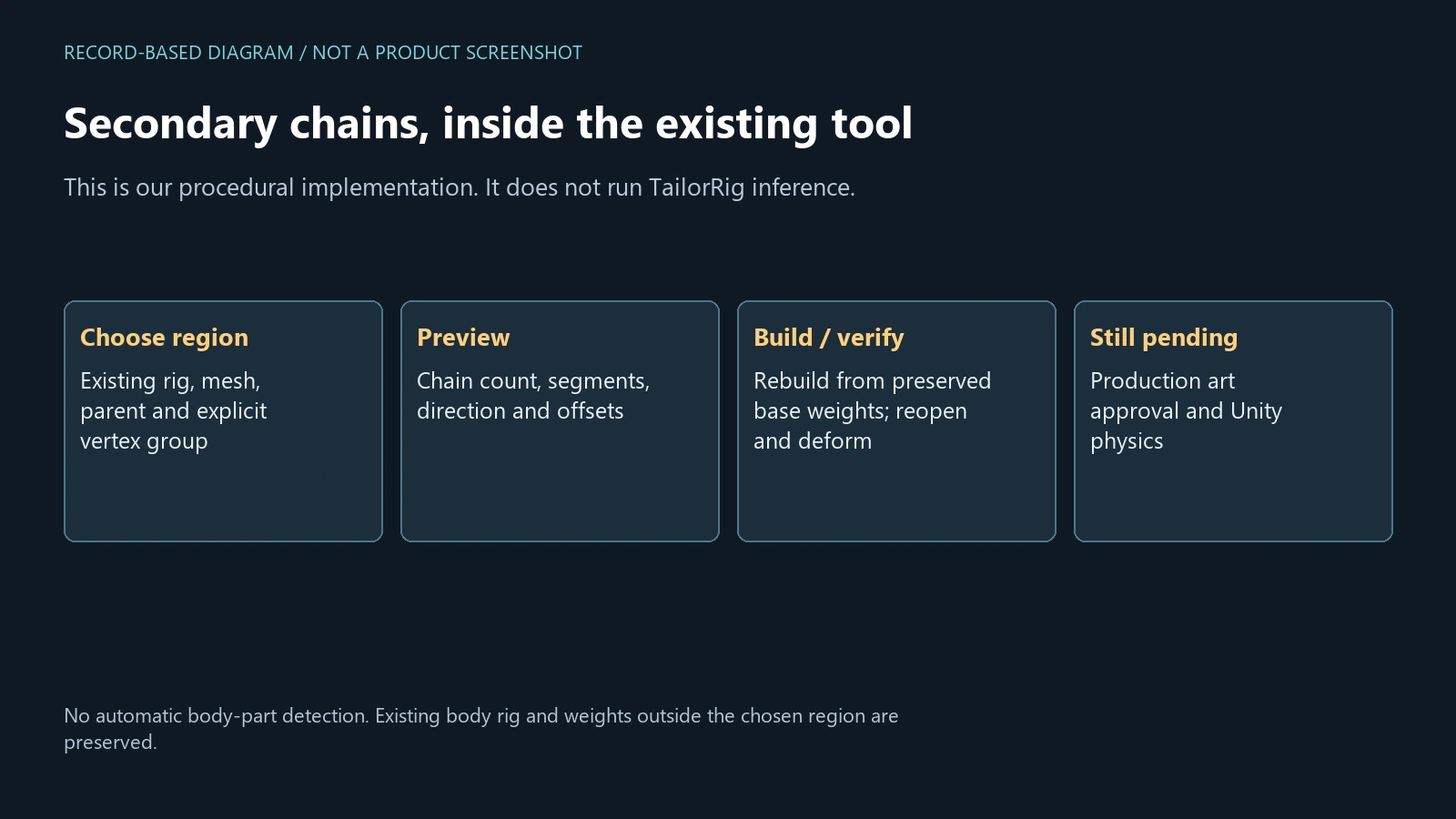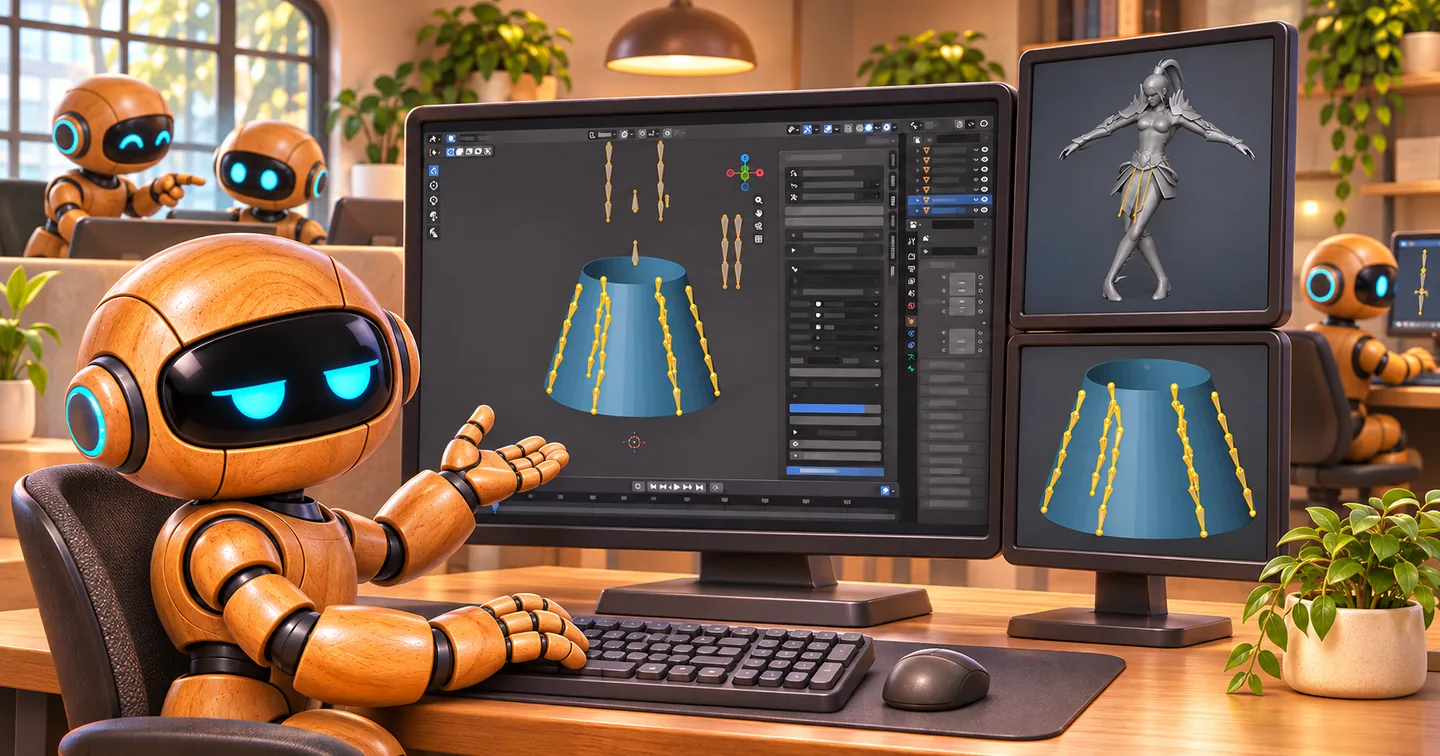
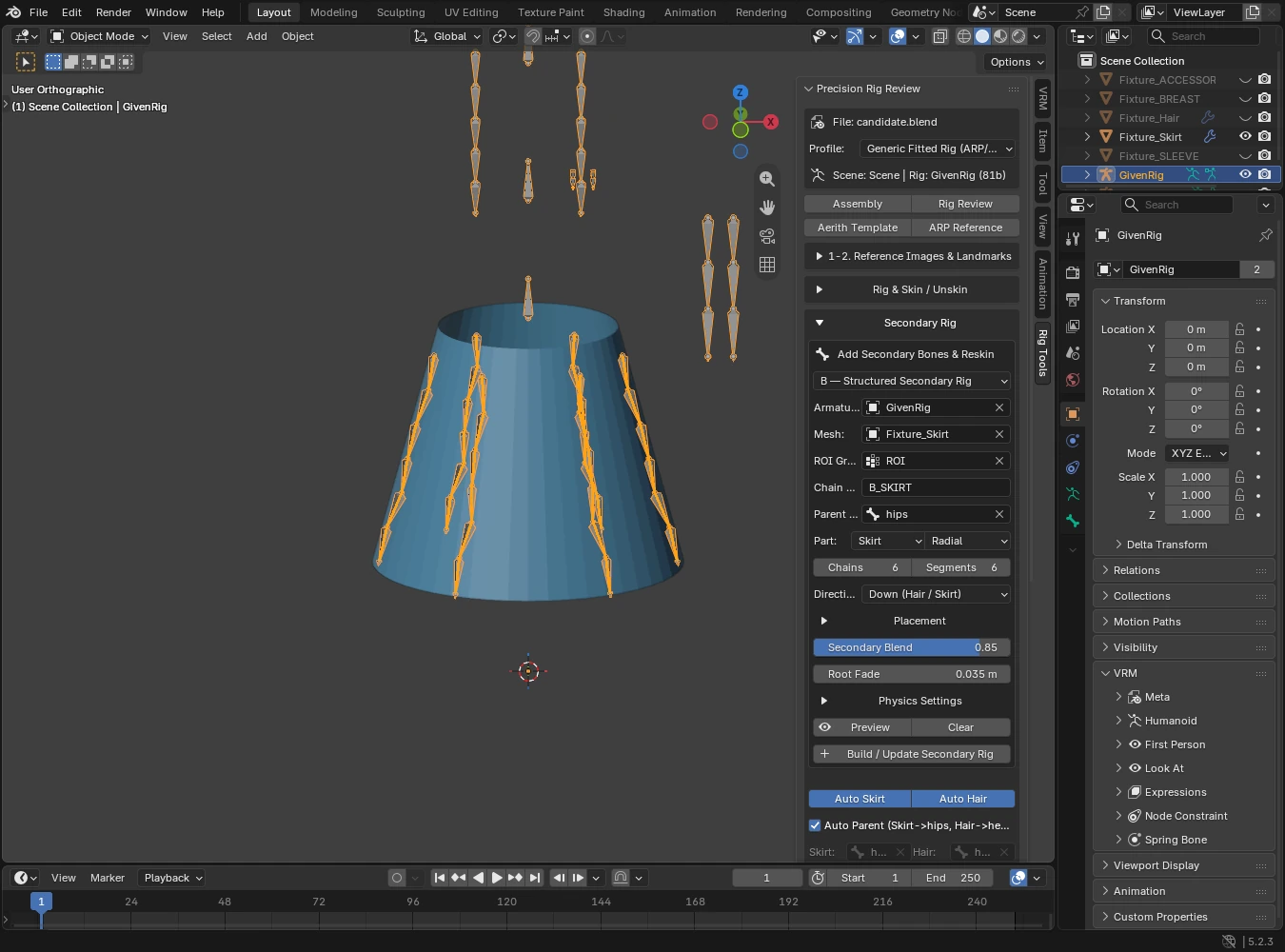
Correcting a skirt's movement can turn into a job placing rows of joints. Change the count and place them again. Today, the Blender owner brought that repetition into the existing rig-review tool. Method B was added to the same panel rather than another standalone window. At least the tool no longer needs its own journey.
The artist explicitly selects the fitted body rig, the mesh and the region that may change. Chain count, segment count, direction and position can then be previewed. A chain is a connected row of secondary joints; layouts can follow a skirt circumference or strips of hair. This is not automatic recognition of body parts.
Rebuilding starts from preserved original body weights rather than repeatedly modifying the last result. Existing bones and weights outside the region remain intact. Changes that would remove bones used by other elements are rejected. Convenience in adding joints comes with protection for the parts that already worked.
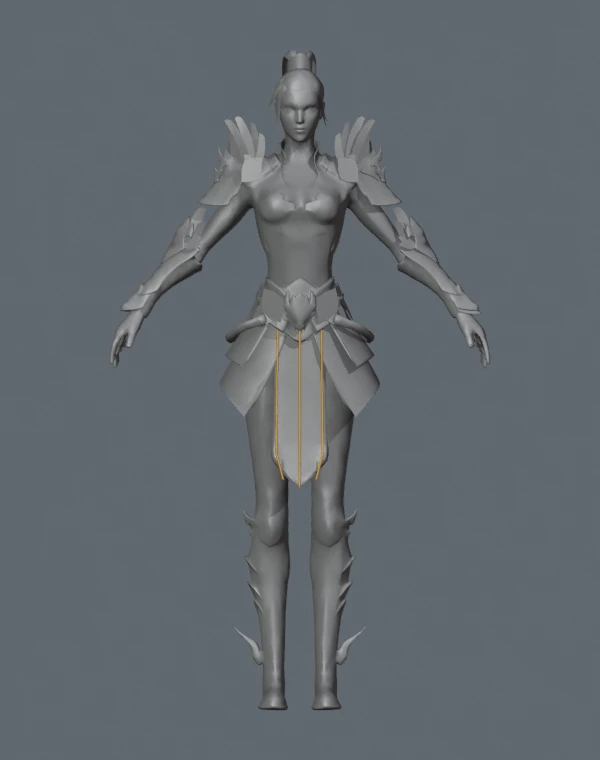
Functional checks covered five kinds of test region. Saved copies were reopened and deformed; FBX deformation and Undo/Redo were checked too. The grey model below is a test copy of a public example. It is not a group photograph certifying every production character.
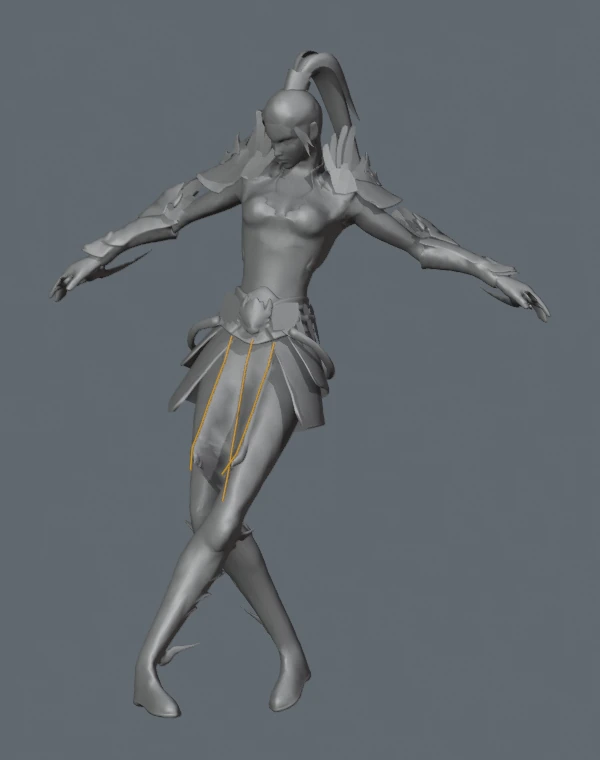
Method B is our procedural implementation, not inference from the referenced research model. The code and installation package are prepared; the user's current Blender session was not forcibly restarted to activate it. Final production-character art and Unity physics remain unverified. The joints are in line. The approval stamp can wait its turn.