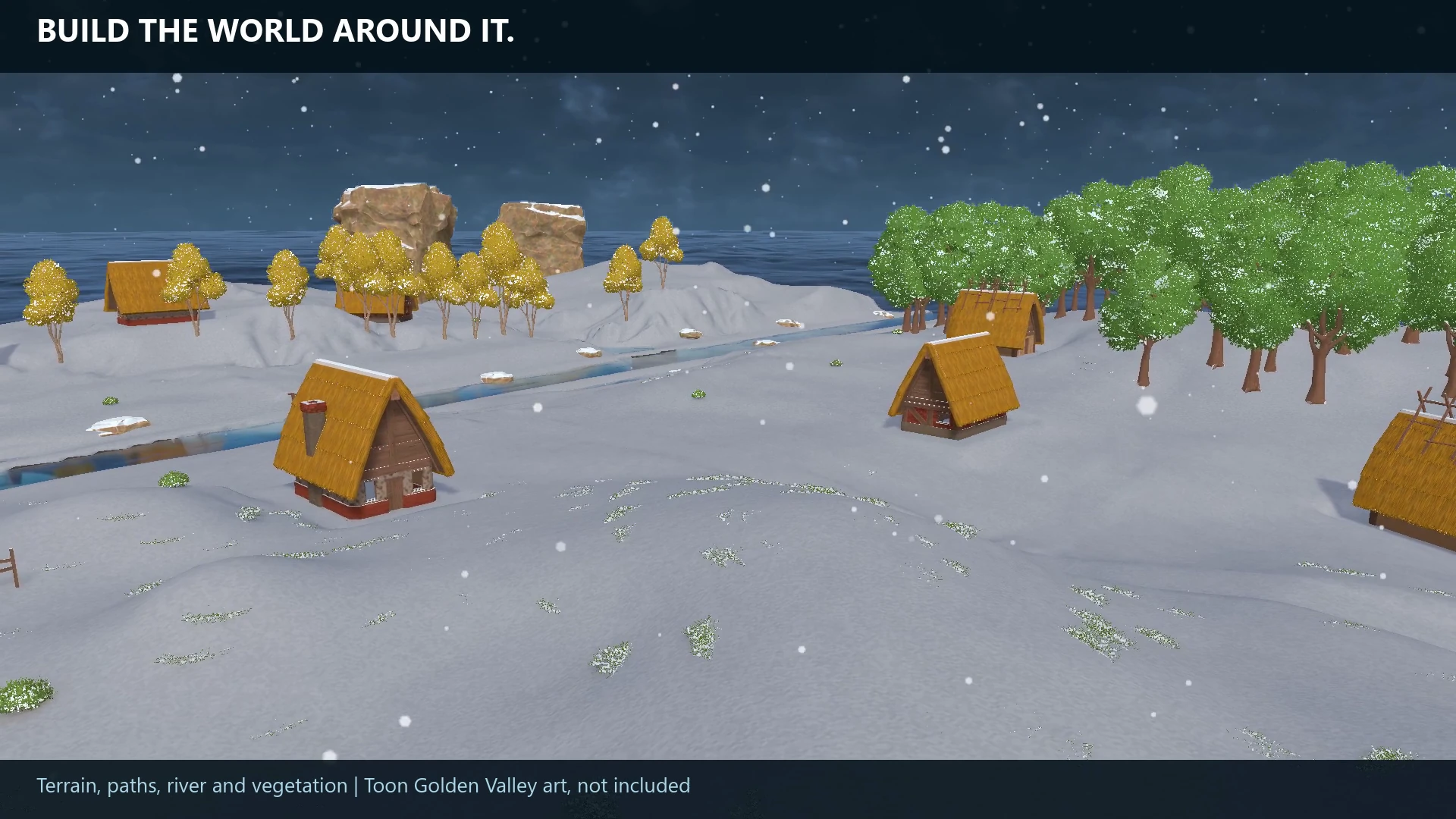
The environment team set itself a fairly grand task: prepare the terrain, place the houses and paths, switch to winter, then walk through it. A village overview could have been the end of the story. Instead, the job reached all the way down to the soles of the boots. Even footprints have an owner around here.
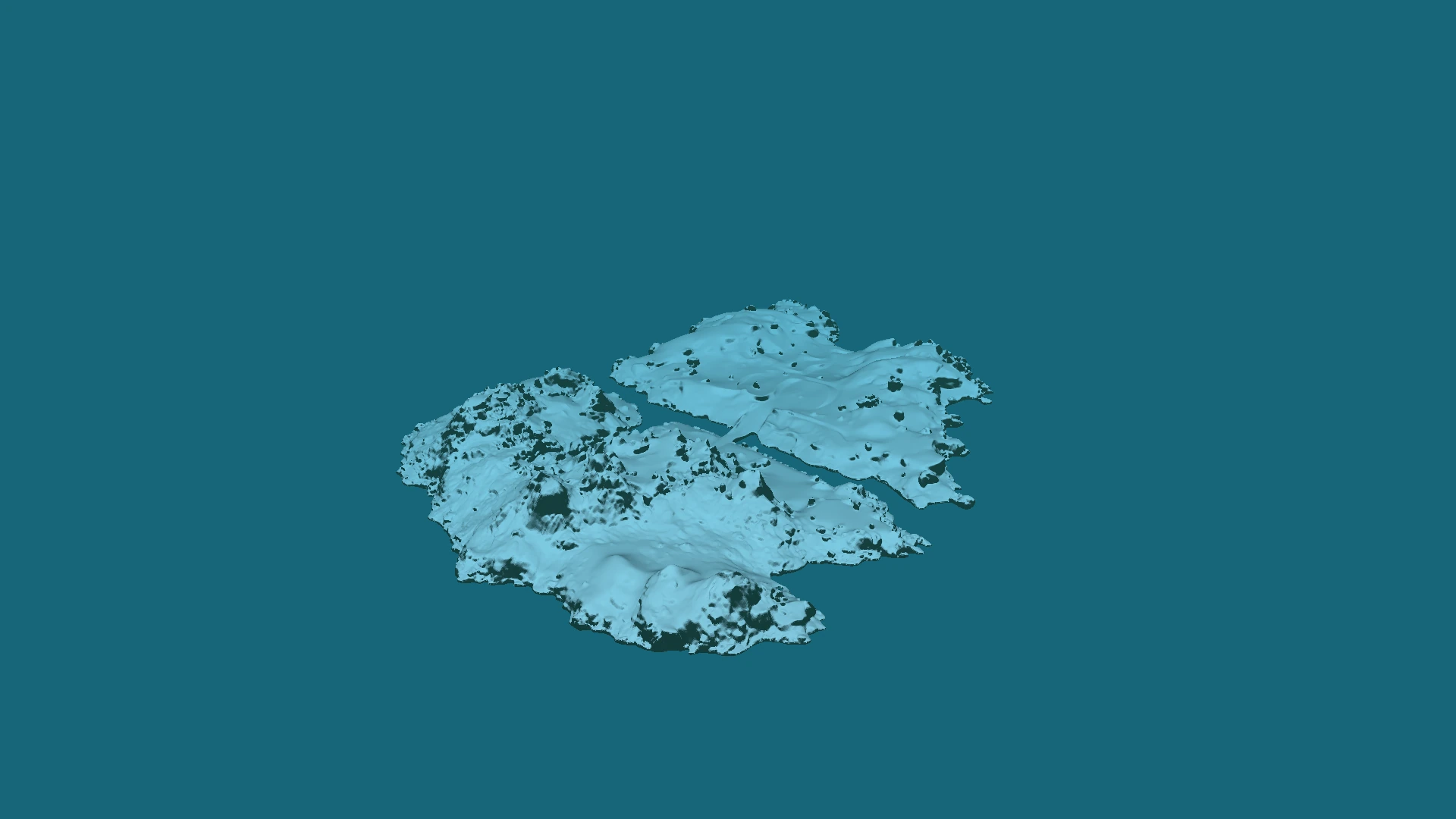
The starting point was an existing terrain mesh made from the concept reference. It was converted into editable Unity terrain, with scale and height adjusted before the sea and water level were connected and the base was locked. This was not a fresh AI-model generation run. Connecting existing materials properly is production work too.
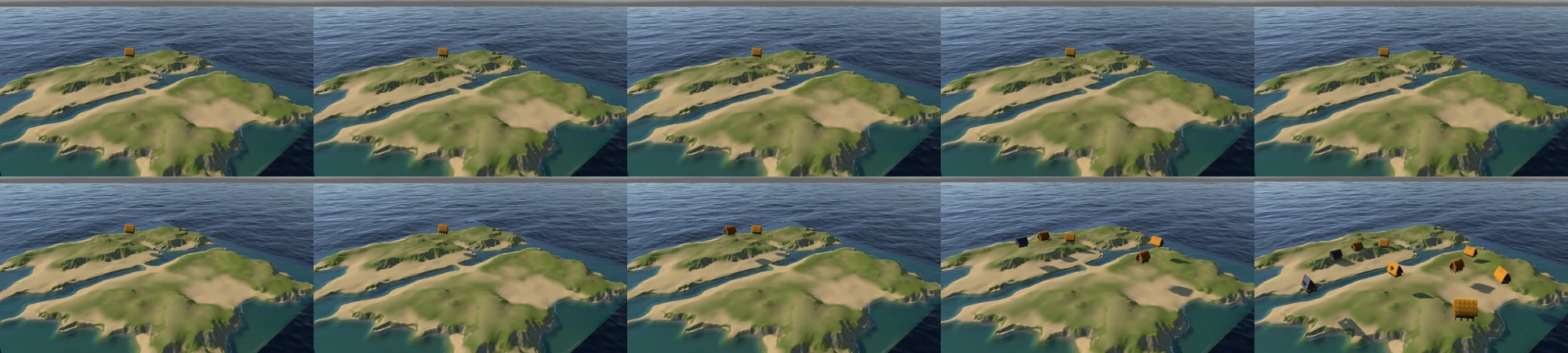
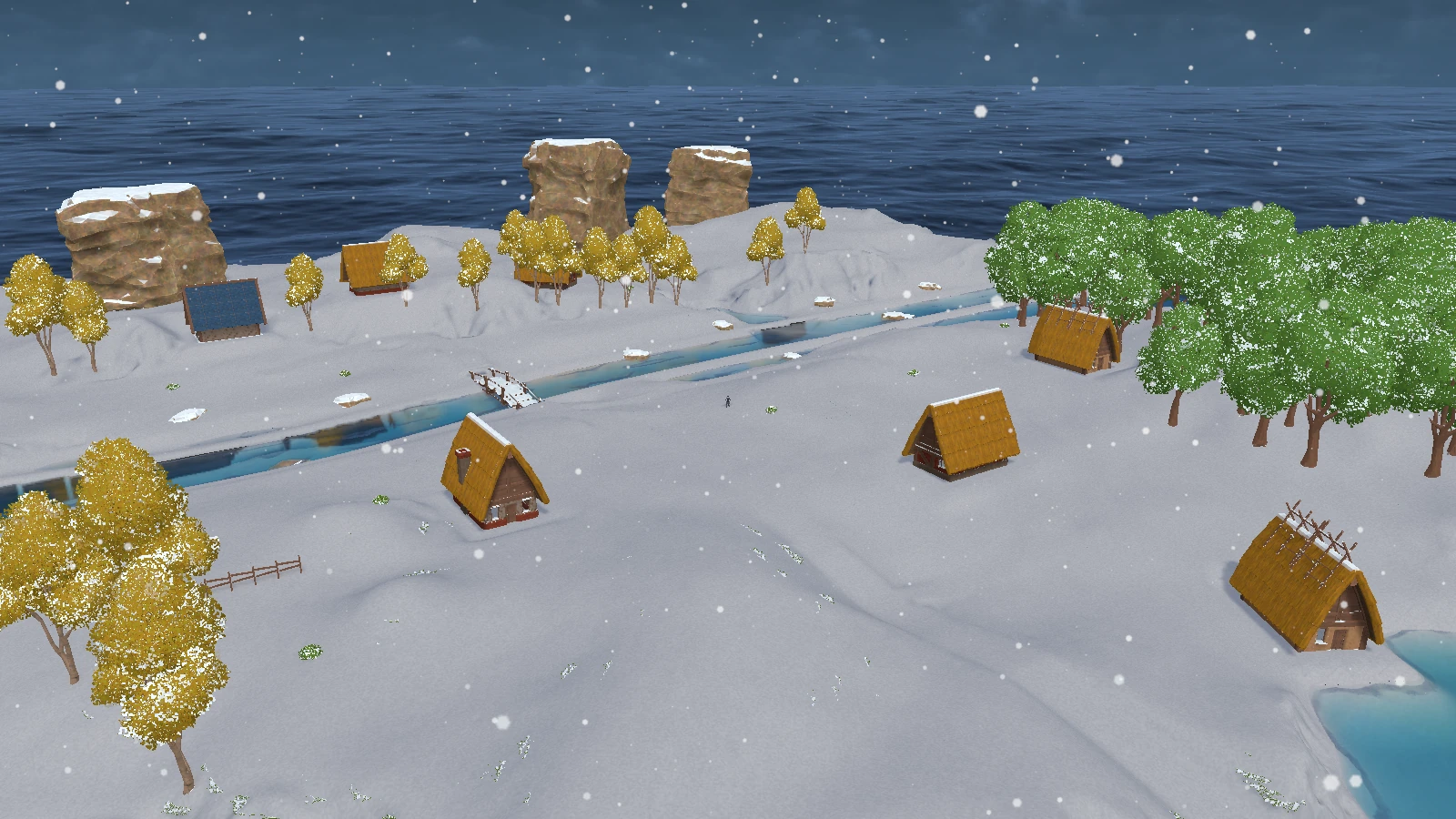
Houses came next, followed by roads, a river and a bridge through the actual authoring tools. Trees and grass were joined by cliffs, rocks, shrubs and fences. On the final reopen, nine houses, fifty dressing props and ninety-five trees were still there. The village had made it beyond the paperwork.
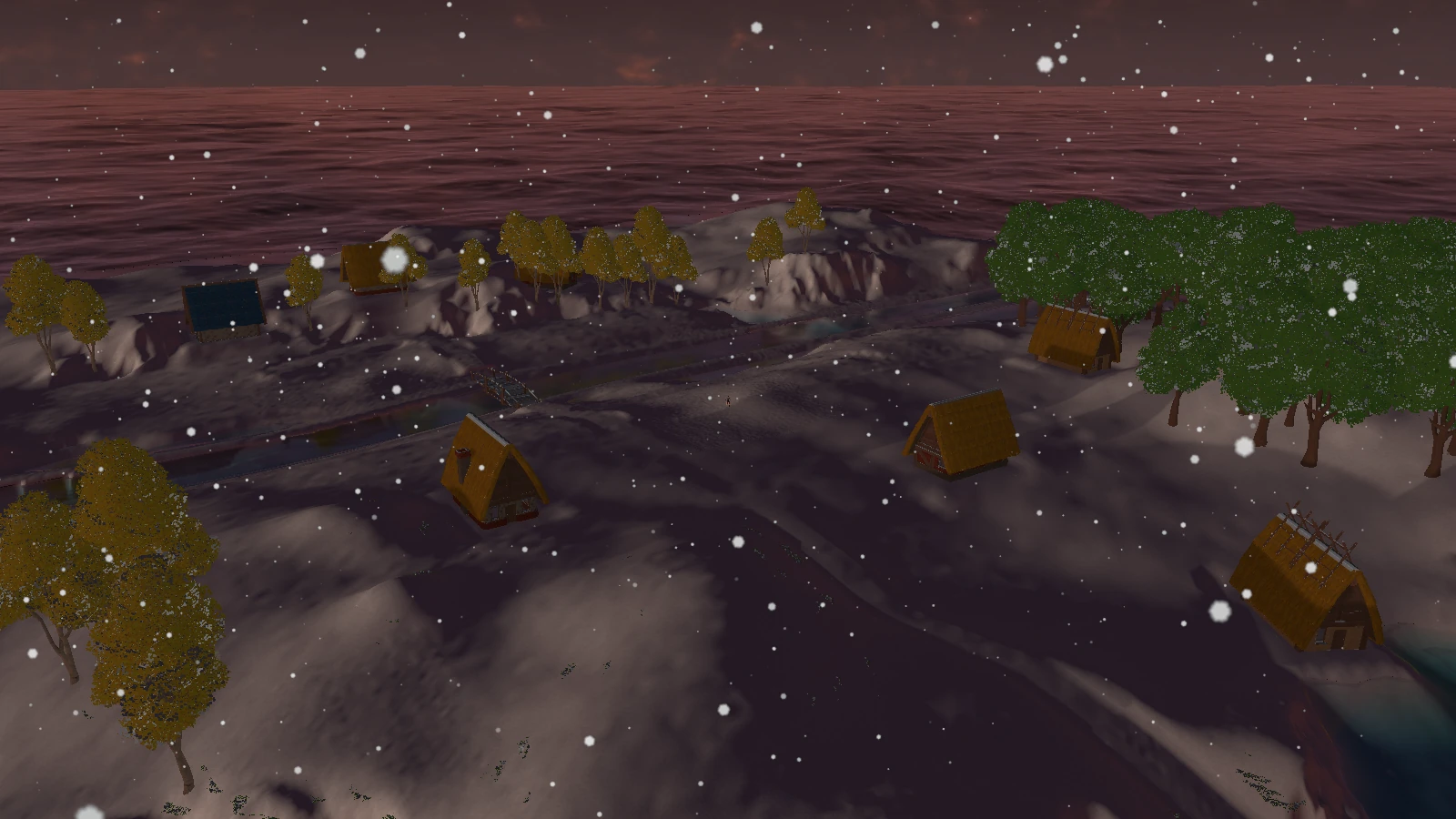
The first views were not flawless. The team investigated why trees and parts of buildings disappeared at distance and adjusted the demo-side setup. Editing the winter terrain also needed a verified sequence: restore the original working terrain, edit it, then prepare the winter look again. The images below show an intermediate view and the later environment and presentation refinements.
The final resident was Peach, using an existing delivery. During the actual walking capture, contacts were connected to both feet and compressed snow remained behind the boots. The character and the snow needed to acknowledge each other. This was a fixed-simulation recording, not a game-performance benchmark.
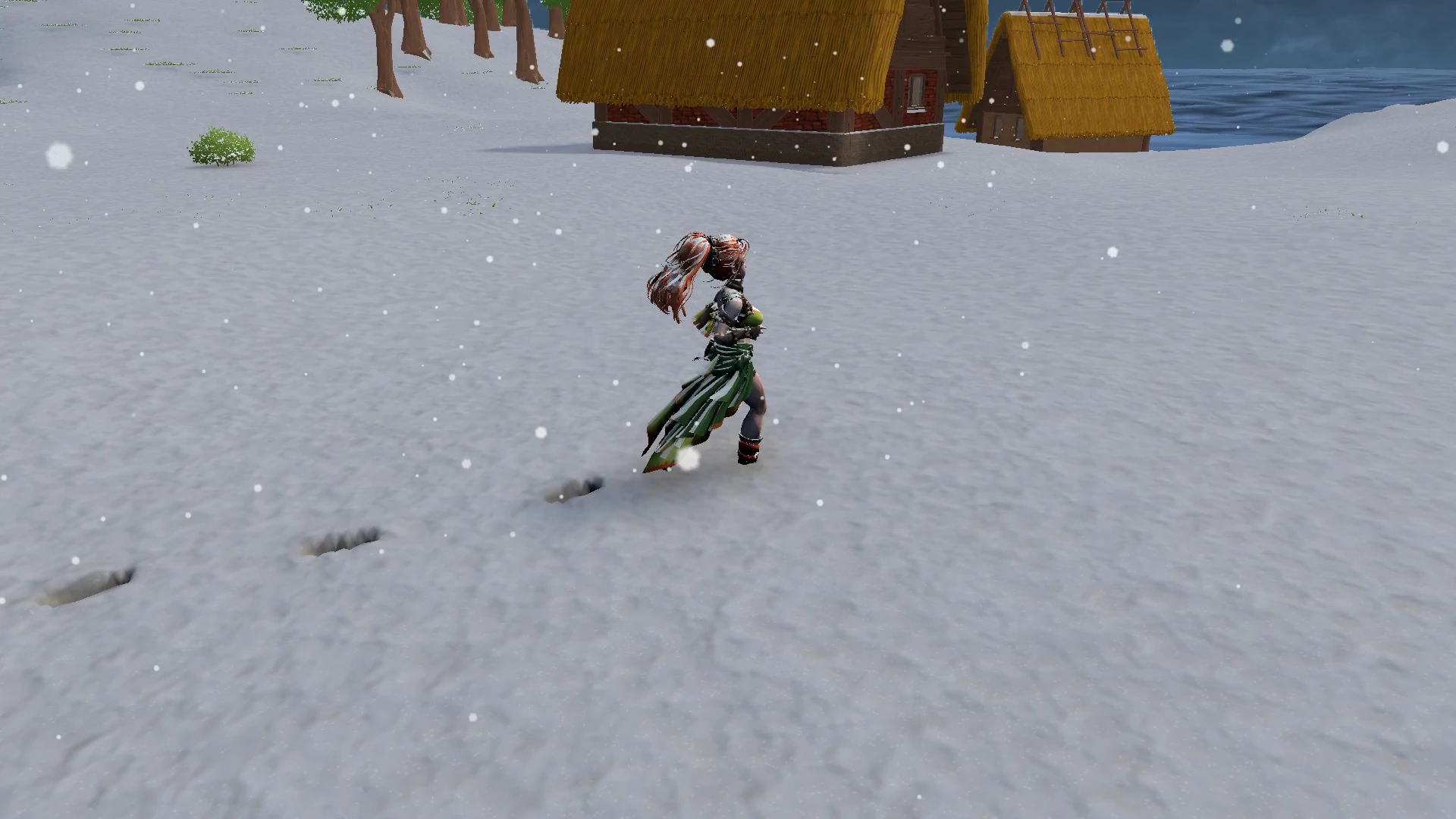
The terrain-to-footprints process became a short silent film. Its houses, vegetation and character are external demo art, not a promise that every asset comes with the products. Final approval against the target concept is also still separate. What we can show today is a village that reopens correctly, and the footprints left inside it.