
The environment team's declaration was simple: lock the ground first; the forest comes next. If the terrain recalculates while the trees are being planted, making a forest starts to resemble chasing one.
Six tabs lead through preparation, terrain baking, surface painting, building placement, vegetation, and paths. The first view pairs the reference with the terrain result; Texture exposes the actual surface and effects. The point is to show what is being settled, rather than test everyone's memory of tab names.
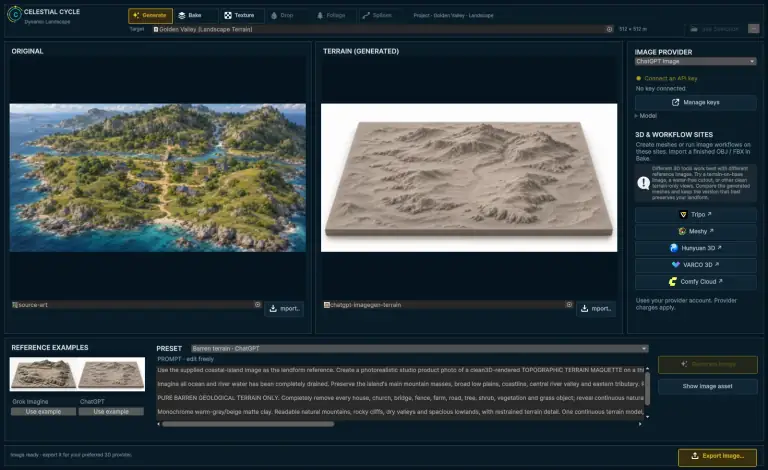
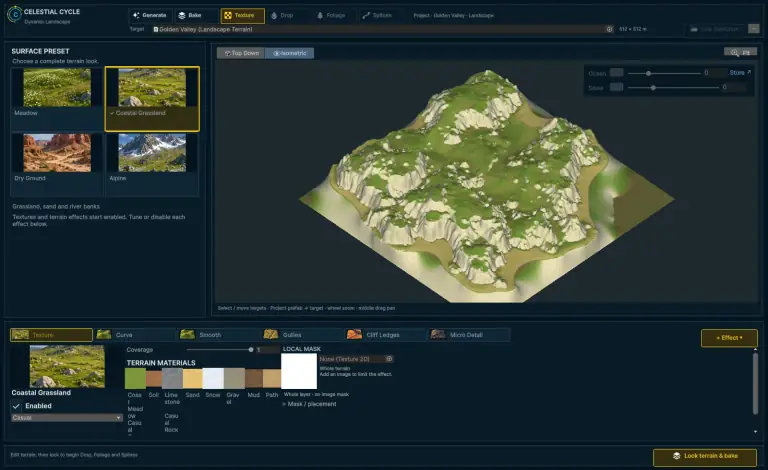
A lock action was connected to the third stage. Until the terrain is ready, the later placement tabs wait. Unlocking it for more editing should preserve building positions, path points and vegetation regions for the next lock.
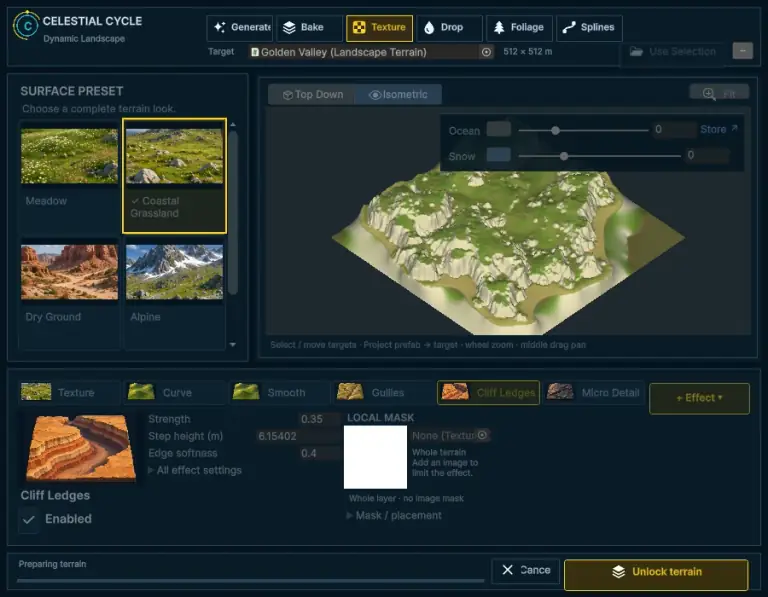
Review found a blank-map problem after unlocking. A UI path was trying to recalculate support for a hidden building, and that path was corrected. Adding a padlock icon and keeping the belongings safe when it opens turned out to have rather different workloads.
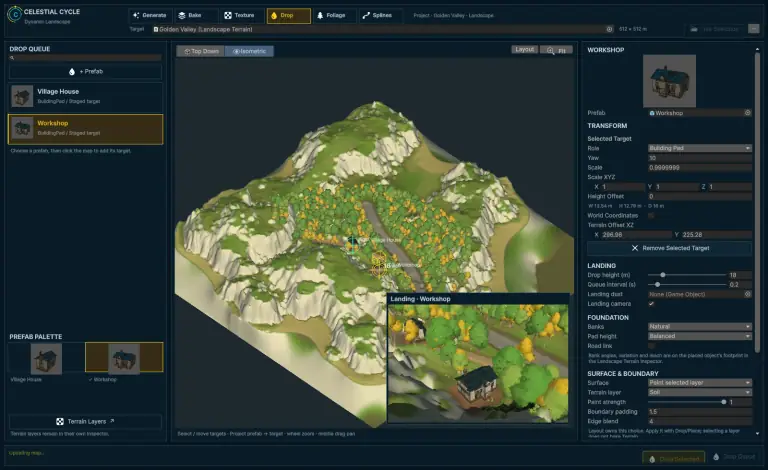
The actual review retained building-drop views and trees and grass following the same region. Large and narrow editor views, mid-drop and landing states were captured. These images come from an isolated review project, not the shared production scene.
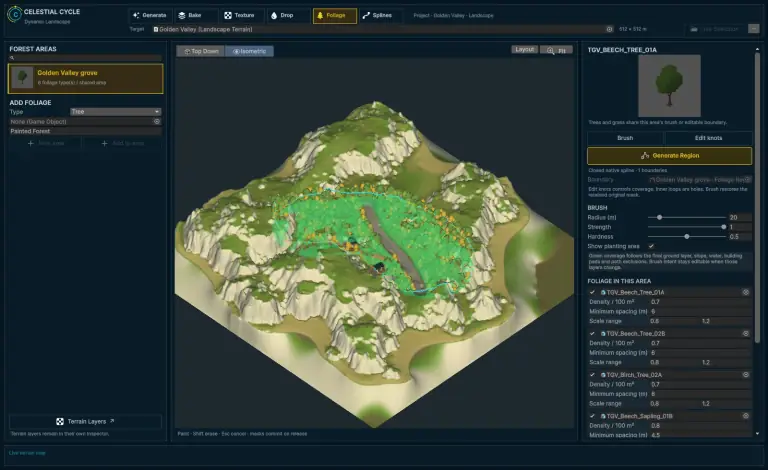
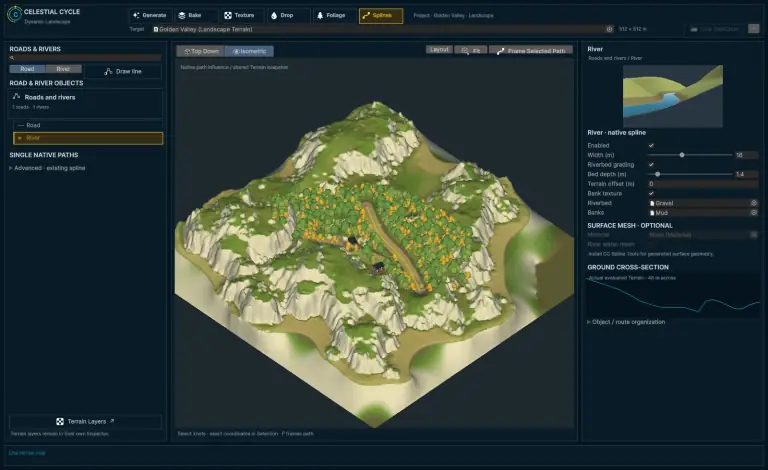
The saved checkpoint passed 35 checks, but final art approval and main integration remained. At 10:30 p.m. the team saved the evidence and continuation point when I asked it to pause. A team that can build a forest also knew when to stop. The following morning's snow-village results are not borrowed as this day's finished landscape.