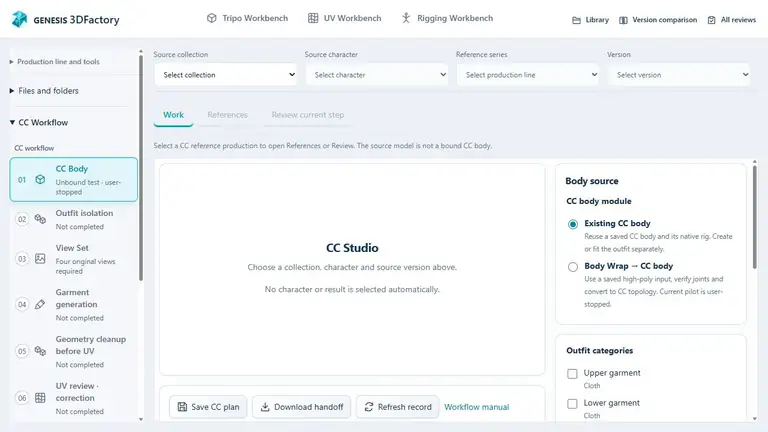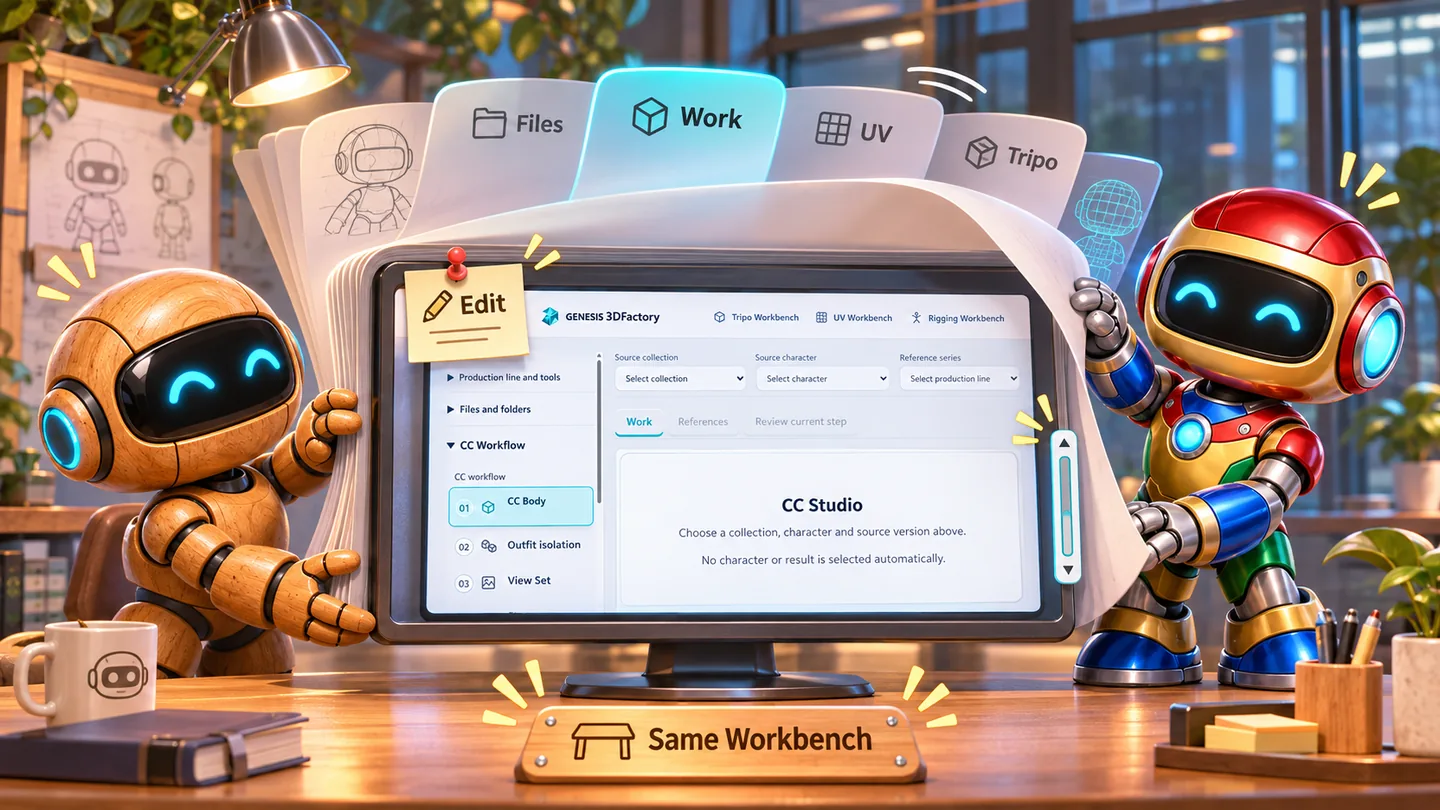
Many character screens are not helpful if each move requires explaining the job again. We connected concept analysis, generation, assembly, surface layout and review through a common workbench. The working screens needed assembly as much as the character did.
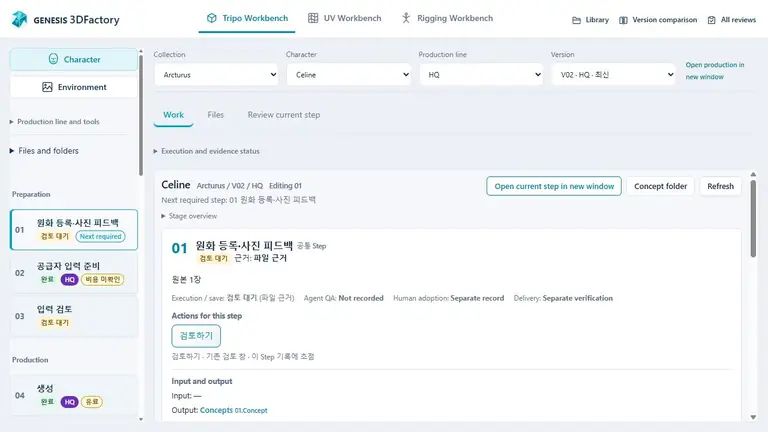
One file browser shares the chosen character, version and stage. Concept analysis joined that flow rather than floating on its own island. Inputs, outputs, stage records and next actions sit together. Fewer wrong turns mattered more than more windows. There were already plenty of windows.
We changed height, pinning and display mode, then moved through Files, Work, UV and Tripo. Edits needed to survive the trip; back navigation in one view could not pull another along. Visiting the next room should not return you to a desk experiencing amnesia.
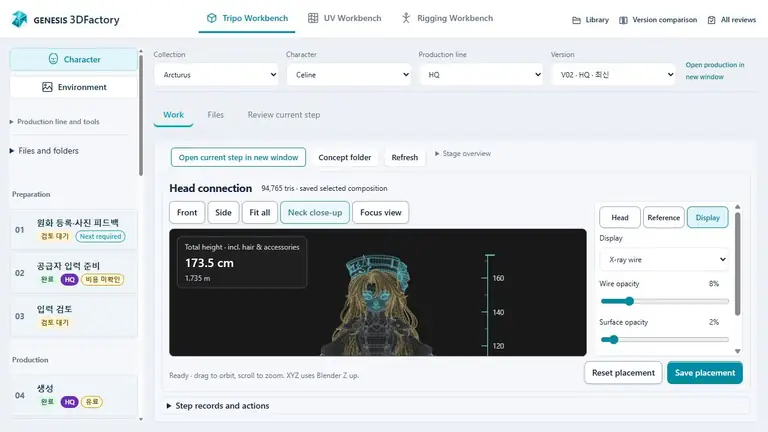
With no CC character selected, the screen explains why selection is needed and disables related buttons. A blank page is not a detective assignment. We checked stage drawers and height at phone width, plus surface and wire displays that should not overwhelm one another. Guessing is not a feature.
After the web director's recheck, thirty review points and 155 tests were recorded, with the public UI and retained state verified. These inspect the workbench, not new model saves, paid generation or rigging quality. A factory should not erase the operator's context before making the product.