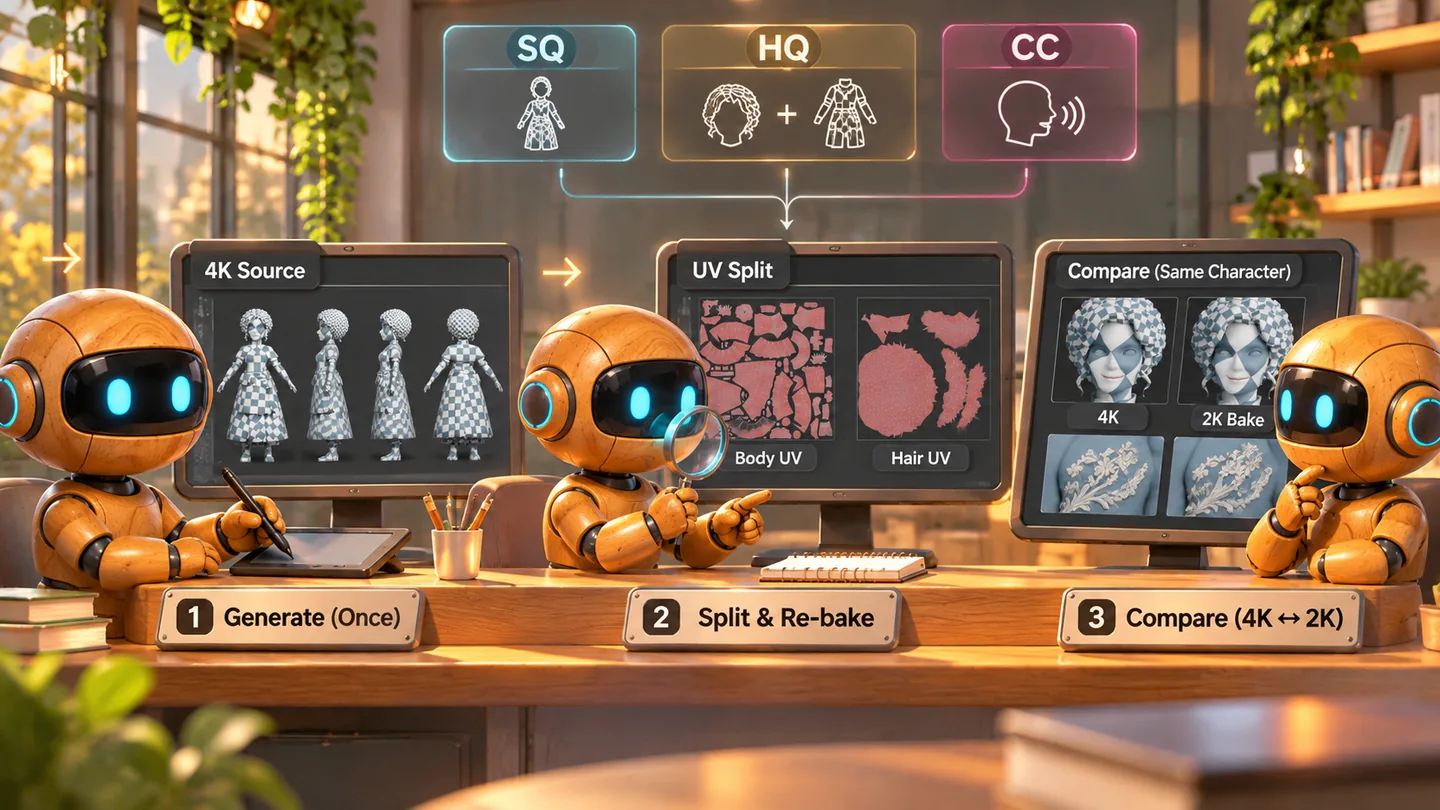
A visible character is not the end of production. Surfaces need unfolding, images need transferring and the next run needs a method. We followed those workbenches today. The opening image is the V04 bake checked on November 4. A useful picture does not get to arrive a day early.
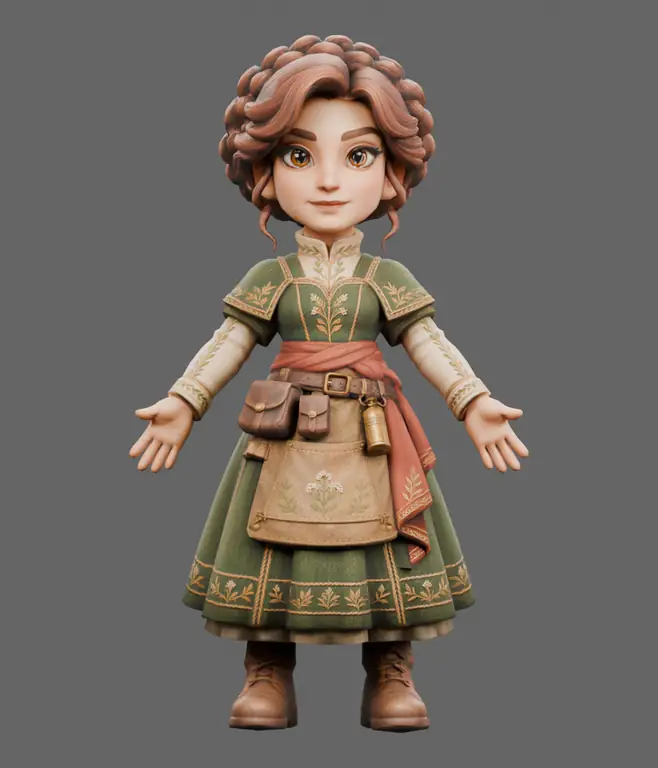
The selected concept fixes style, face and clothing. New HQ and SQ inputs start with front, left, right and rear sheets, exported separately. SQ uses one full-body input; HQ separates head and body. Preparing four views does not mean every tool accepts four simultaneous images. Intake forms have grammar too.
Economical SQ starts with generation count. In our comparison setup, separate head and body generation means two generations and two costs. We instead start with one character and 4K surface images, then split it. In the user's casual-character experience, hair often occupied 30–40% of the texture layout. Not a universal average. In those jobs, the hair was a substantial landowner.
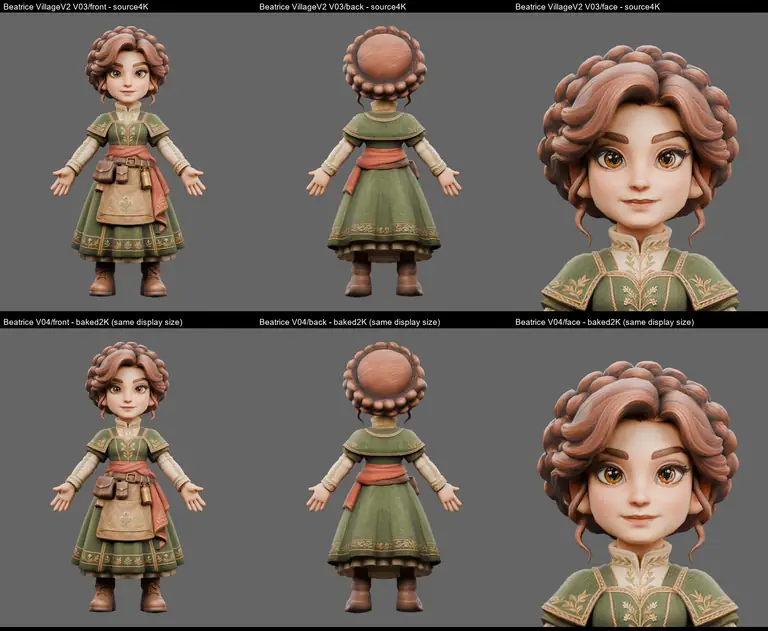
Separate hair and body receive new image layouts, with the original 4K colour and material information rebaked onto them. The workflow allocates 2K or 1K to need while protecting visible detail. November 3's Beatrice V02 used 2K for both; the November 4 V03-to-V04 comparison below also uses 2K each. Matching cameras and display sizes reveal what remains in faces, embroidery and hair. Reducing numbers should not quietly reduce the face too.
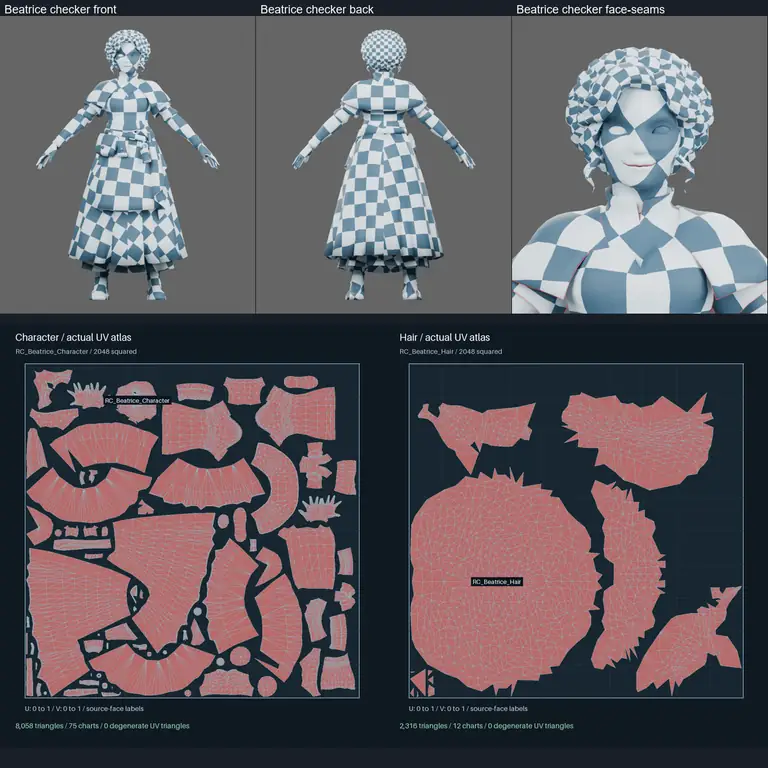
The UV artist used checker patterns for stretching and seams, checking body and hair separately. V02 retained two existing face pieces without adding internal face cuts. It did not make the whole face one sheet. Slight bake softness and original model simplification remain. Surface review is separate from rigging and Unity acceptance. Paperwork cannot perform cosmetic surgery.
High-detail HQ spends more on important close-up characters. Key parts are generated separately, with closer attention to proportions, decoration, joins and materials. SQ and HQ are not simply opposite ends of an image-quality slider. They allocate generation cost and review time differently. Not every resident gets a leading-role budget.
The CC route aims to connect the user's concept with Character Creator mouth shapes, expressions and facial rigging for a talking character. It began with the user's dissatisfaction with value from CC's own AI generation. Existing bodies, wrapping and separate clothing are chosen for the subject. Saving an outfit does not make the mouth start talking. Each step requires its own result.
Artists produce with the handed-over tools and check saving and reopening; specialists help with tools and difficult corrections. We do not queue every expert for every character's approval. Editable sources, deliverables, inputs and evidence support repetition. The factory cannot clock itself out yet. It is learning to stop looking surprised by the same problem.