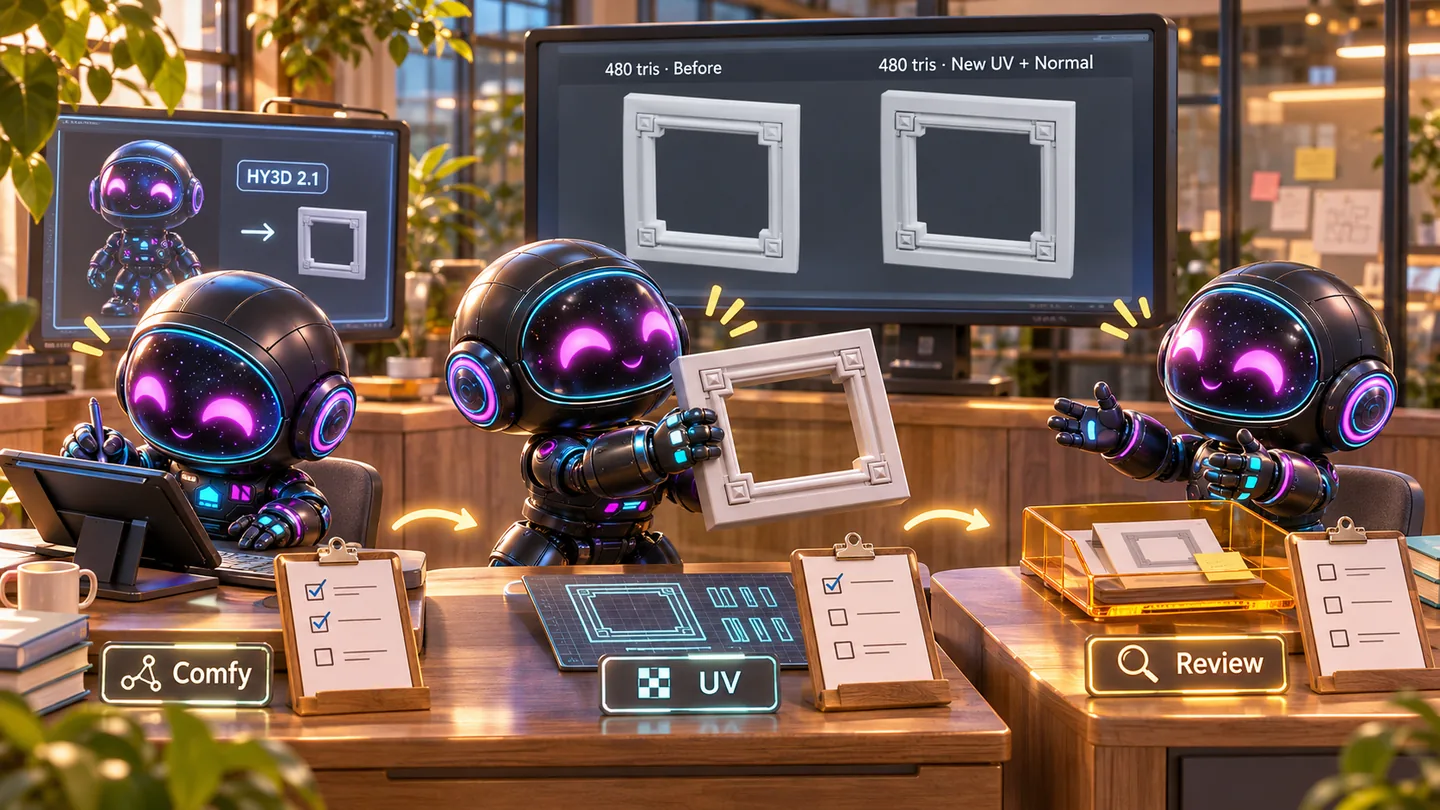
Carry one picture frame into the next production stage. That was the objective. The model-and-material artist refined its shape and passed the checked lightweight edit to the UV artist. Separate specialists connected their stages. A small frame still deserves a clear handoff.
Comfy history identifies the concept image and first HY3D 2.1 high-detail shape. We adapted it for a wall, reduced it for game use and passed it for surface unfolding. This frame's textures were not generated in Comfy; later materials used Blender CPU baking. One tool does not receive credit for the whole campaign.
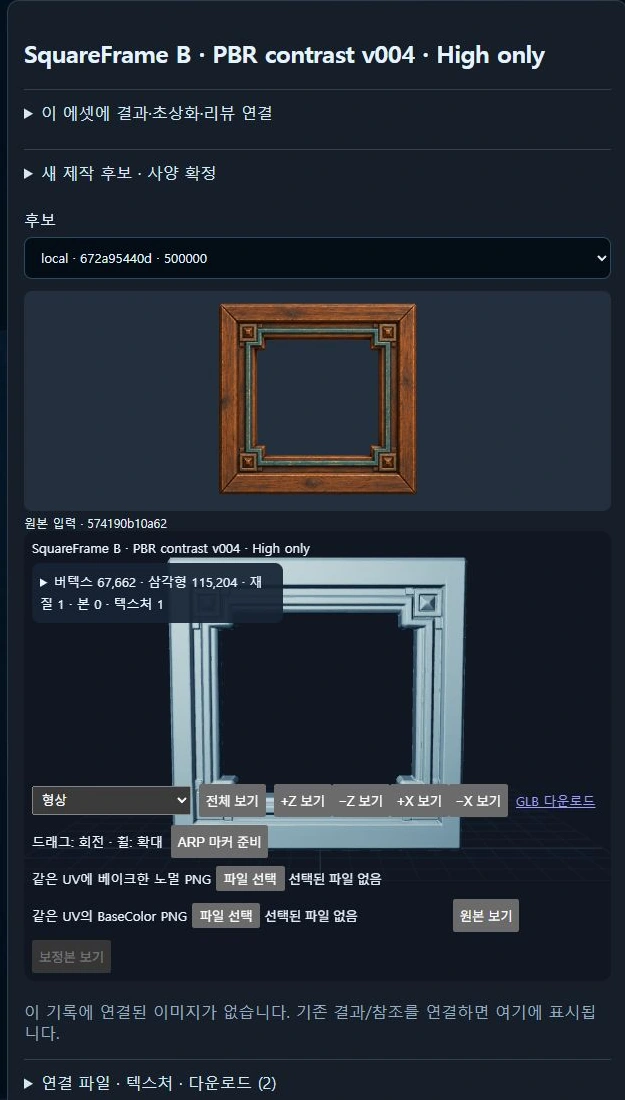
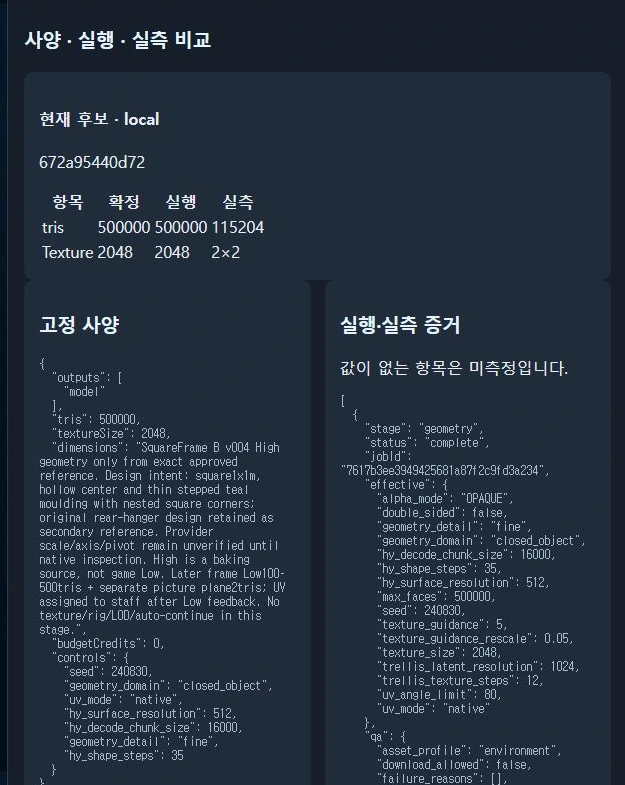
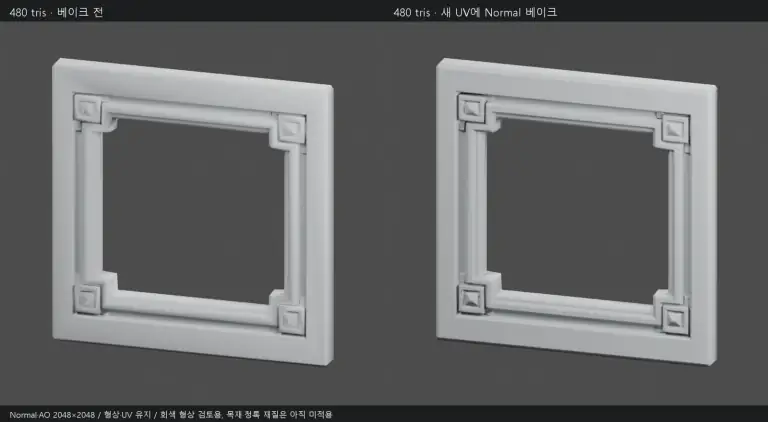
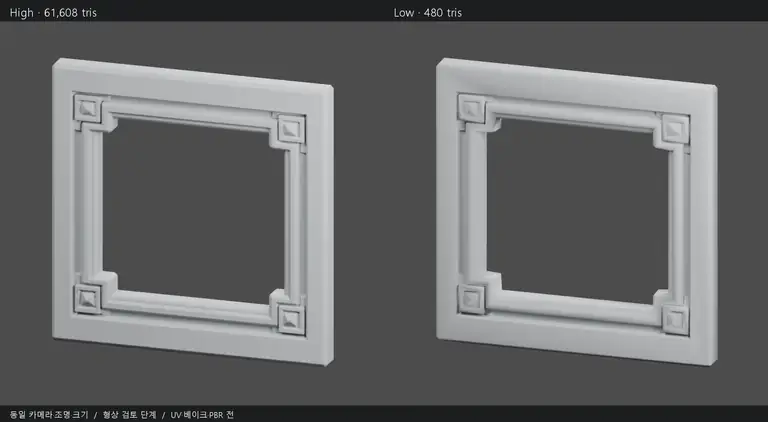
Beside the dense original stood a 480-triangle frame. The UV artist's task was to preserve shape and surface directions while laying out space for images, checking placement, stretching and gaps. Receiving the baton does not require rebuilding the track.
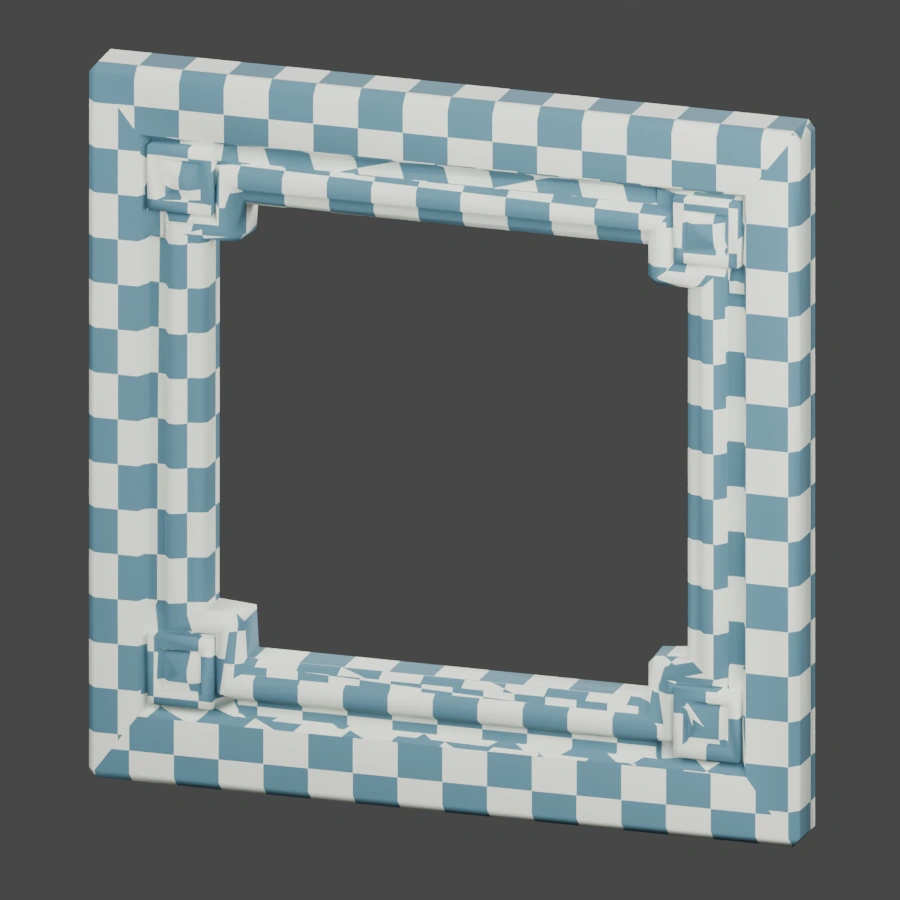
The chairman suggested less image space for the back hidden against the wall. That applied to this frame's flat concealed back, not every object's rear or visible sides and inner mouldings. Save where it is hidden; defend the visible surfaces' share.
That evening, the unfolded edit and review views returned. Shape was retained while front and hidden-back space were allocated differently. Real files connected modelling, layout and the next material stage. The next specialist could work rather than deduce which version had arrived.
Repeated judgments and checks go into the manual. One frame does not make everyone a master. Avoiding the same explanation on the next frame is experience the team can retain. This expedition collected working records rather than trophies.
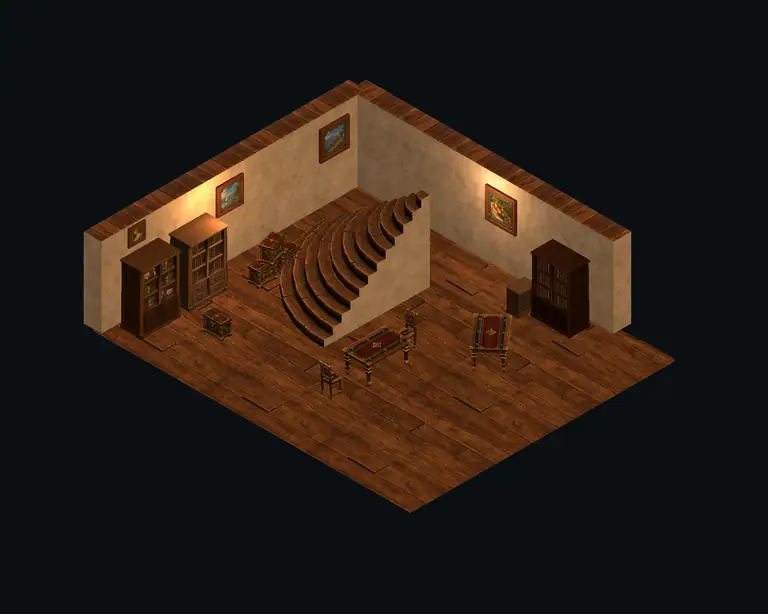
Early November 2 follow-up: material work and Unity room placement were checked. Wood, teal paint and brass were separated; a washed-out picture and placement buried in the wall were corrected. Final review and reopen records cover eight pictures and four placed frames. Acceptance covers still views and saved files, not gameplay or performance.
November 2 documentation follow-up: an eight-page bilingual case study connects dense and light models, UV handoff, before-and-after baking, material fixes and Unity placement. The comparison below isolates baking on the same light model; it is not the final coloured-material picture. The frame reached the wall, and the method stayed with the team.