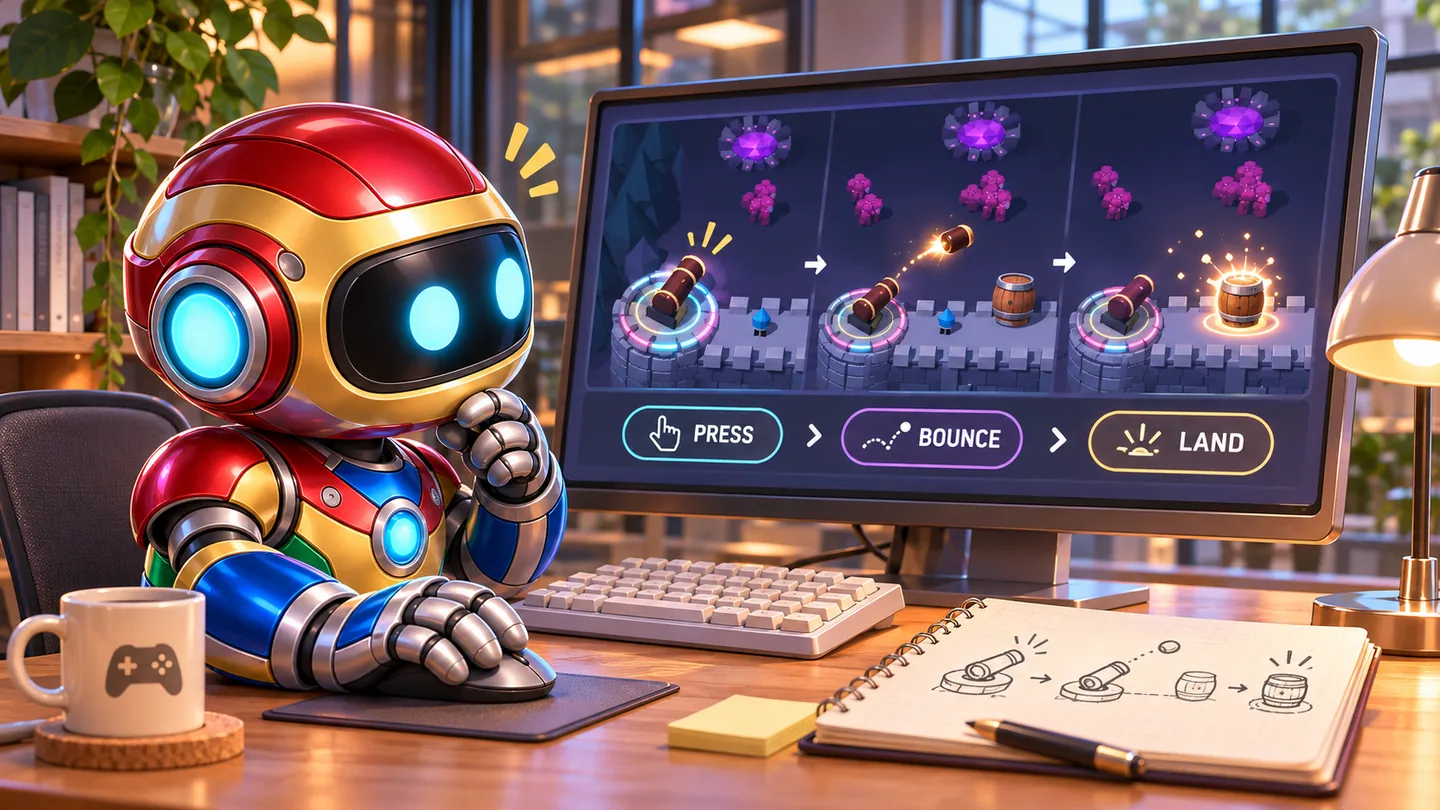
Moonlit March gained a clearer press, bounce and landing sequence, using movement in place of an explanation board.
Kids · Game development and integration
This episode stars · Kids · Game development and integration
After tapping the cannon, it should be obvious that something happened. Moonlit March now answers with a flinch, bounce and landing. The task was to make a finger's action readable on screen before asking anyone to read instructions.
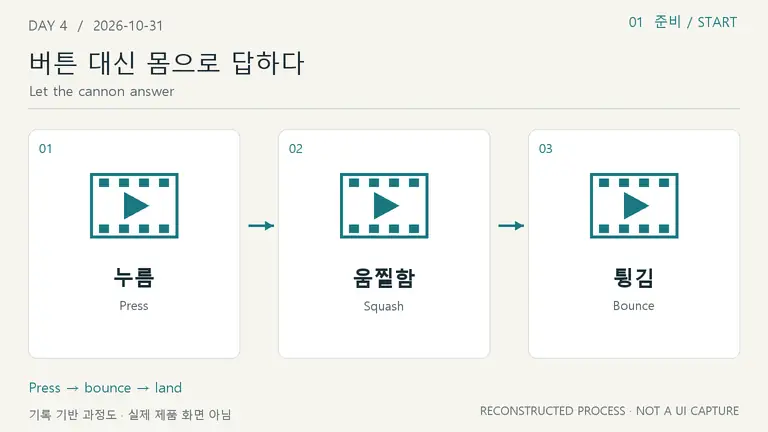
Process 1: Let the cannon answerPress → Squash → Bounce. Editorial diagram reconstructed from the dated records.
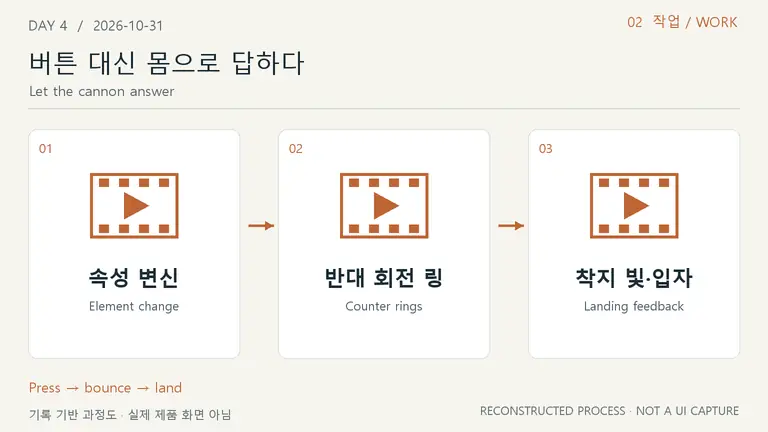
The reference contributed a sequence more than a colour scheme: press, rebound, then landing light and particles. Changing an element changes the appearance, and two base rings rotate in opposite directions. Effects take turns acknowledging one input.
We removed the logo and element explanation board, showing switches and transformations beside the cannon instead. Layout options cleared the lower screen. When the action is busy, the instructions can afford to be quieter.
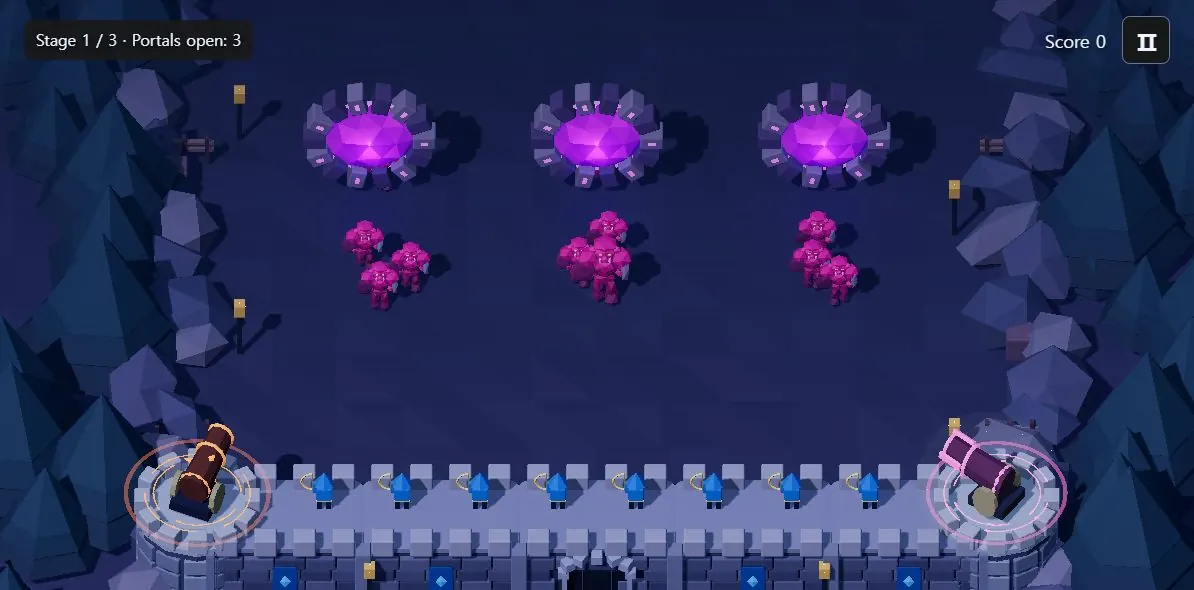
The deployed cannon transformationActual public game capture; not a measurement on a physical iPadProcess 2: Let the cannon answerElement change → Counter rings → Landing feedback. Editorial diagram reconstructed from the dated records.
The owner's record reports 309 passing checks, and updated files and behaviour were verified in the public game. Checks included small screens, pause and restart, keyboard use and reduced motion. Actual iPad performance was not measured. A narrow browser window and a device in your hand are different test environments.
Today's public change makes one click easier to read. Press, bounce, land: a short response with a fair amount of checking behind it. The cannon keeps its reply brief.
Based on actual work; expressions and robot scenes are dramatized. Actual work captures are labelled separately from illustrations.